Straight Women’s Fascination With Boy Love
Queer media, particularly queer romance, has been gaining traction in mainstream media. From the stunning phenomenon that is Heated Rivalry to Dan and Phil’s public announcement of their romantic relationship of sixteen years, queer audiences have longed for LGBTQ+ representation that doesn’t end in normalized tragedy or enhance negative stereotypes. Many queer individuals have even developed a kink for cathartic grief and heartbreak in queer media, as a decade’s worth of depictions of the “bury your gays” trope remain stagnant on the gay psyche. The de-emphasization of tragedy in modern queer pop culture has given queer fans a space to fully obsess over popular stories that highlight slow-burn gay romance—with the enthusiasm from straight women, too.
Why do female fans, specifically straight women, love men-love-men (MLM) romance?
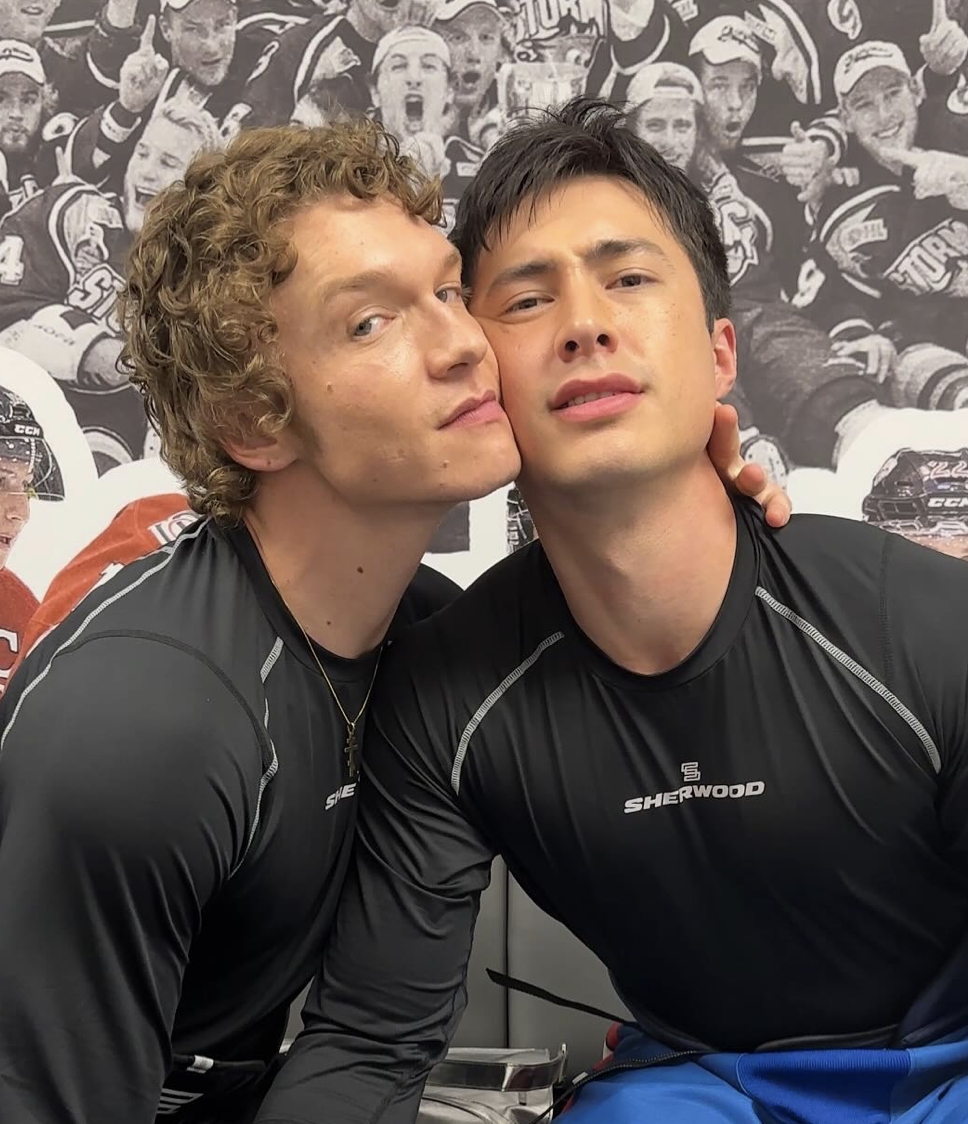
Connor Storrie and Hudson Williams from Heated Rivalry | Instagram
The female audience has always been a part of fan culture for decades, despite a lack of “straight women” representation in gay relationships. The first known gay slash pairing was Kirk and Spock from the 1960s Star Trek series, according to slash fiction scholar Henry Jenkins, with fangirls pioneering zines (tiny magazines made by fans to share fan content) that contained boy love (BL) fan fiction. Star Trek never explicitly mentioned a romance between the two characters. Still, the friendship between Kirk and Spock provided female fans with enough moments to fabricate a romantic relationship, one that remains popular enough to this day, with stories still being written decades later. While the show’s myriad of characters always chart in the most popular ships on fanfiction websites, nothing compares to the explosion of Spirk (Spock/Kirk) stories that sparked the foundations of fandom culture we see today.
From here, we’ve witnessed more MLM relationships pop up sporadically online more than ever. Tumblr, an online oasis for fandoms, hosts an annual Top Ship of the Year, where the social media platform posts the 10 most talked about ship pairings of the year. Without fail, a gay ship holds top spot. There was the massive appeal of Klance (Keith/Lance) from Voltron, who reached the top spot on the shipping scale for years and was considered one of the “founding fathers” in the fandom shipping community. The popularity surrounding Klance was so viral that it broke into the mainstream. However, even with the global recognition, the two characters never had a blossoming relationship; Keith and Lance were “rivals” in the beginning, regularly butting heads in their tug-of-war, usually goaded by Lance. Their rivalry slowly shifts from feud to a genuine friendship, undergoing the most development in the series. While the fans obsessed over the pair’s ship tropes, the series’ creators—while teasing the audience with LGBTQ+ undertones between Klance—never made the ship canon, breaking the trust of millions of their viewers.
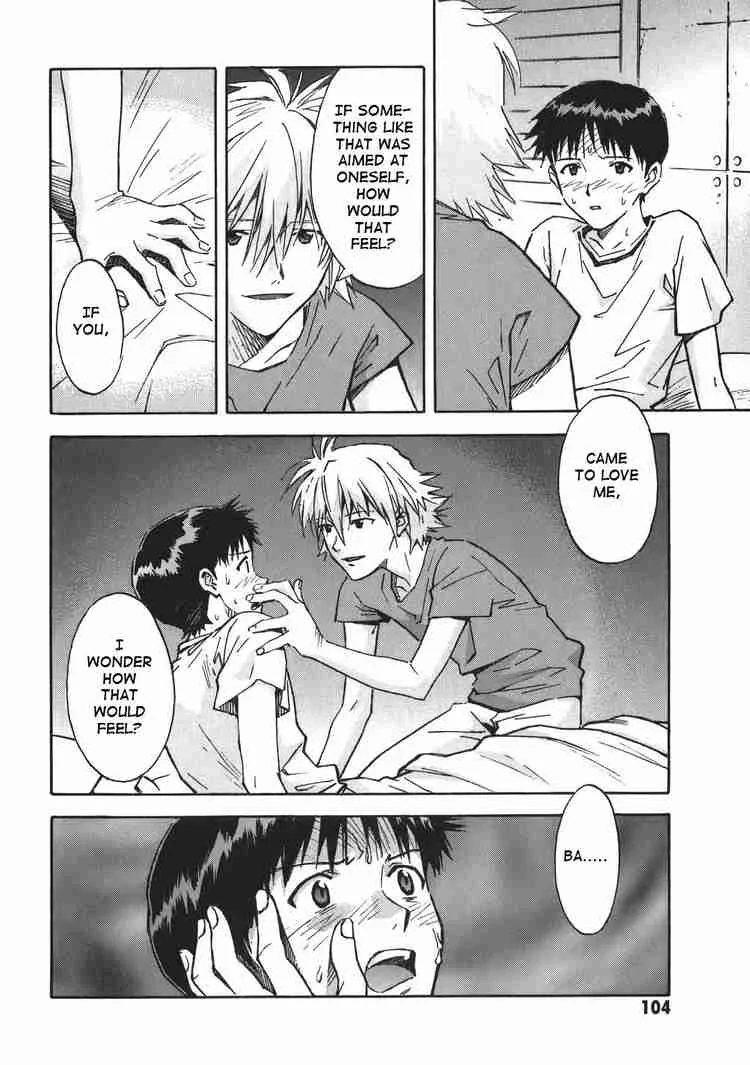
Shinji Ikari and Kaworu Nagisa from Neon Genesis Evangelion, illustrated by Yoshiyuki Sadamoto | Fandom WIKI
Straight women marvelling and investing their time and energy on MLM ships transcends language barriers, as there’s also the growing popularity of “fujoshi”, aka “rotten girl”, which is a Japanese term for women who consistently seek out gay romance content, whether the material is fluff (cute and pleasant moments) or smut/lemon (filled with highly sexual scenes). In anime, the term “yaoi” is increasingly used to refer to explicit MLM homoerotic works, usually created by women and for women readers. One of the most popular yaoi pairings is NaruSasu (Naruto/Sasuke) from Naruto, making it one of the most written about anime ships across fanfiction sites. Although Naruto and Sasuke have a canonically platonic friendship and are already in marital relationships with women in a subsequent series, fans continue to fantasize about the pair’s classic enemies-to-lovers trope, with the author, Kishimoto, giving them copious scenes to fuel more compelling yaoi fantasies.
Clearly, women enjoy BL media. But when a love story strictly involves gay men, what do female fans gain from it?
Unfortunately, some female fans fetishize the idea of something they consider “exotic” or “taboo” with the element of attraction, as the desirous concept of two sexy men in a springing romance turns a handful of women on. In this genre, fetishisation is nothing new, and it strips gay men of sexual agency just enough to make them feel ornamental and easily consumable. Fetishisation flattens queer spaces built specifically for queer individuals, and with more straight women using gay aesthetics without engaging seriously with the community, these media get repurposed for heterosexual leisure, whilst the audience for whom it was originally intended gets sidelined.
This also affects queer—and straight—men in real life, dangerously crossing the border of obsession. Straight women don’t experience homophobia firsthand, so it’s easy for them to fantasize about situations outside someone else’s reality. Members of popular bands or actors in shows and movies are shipped across different media, causing potential drift between fans and celebrities, like Harry Styles and Louis Tomlinson from One Direction, or Ryan Ross and Brandon Urie from Panic! at the Disco. Many straight celebrities couldn't care less about the nuisance from straight female fans, but queer people face harassment differently, as their issues are often misunderstood or ignored.
Though this is a recurring issue in fandom culture, it isn’t the main reason why women enjoy and even prefer BL stories.
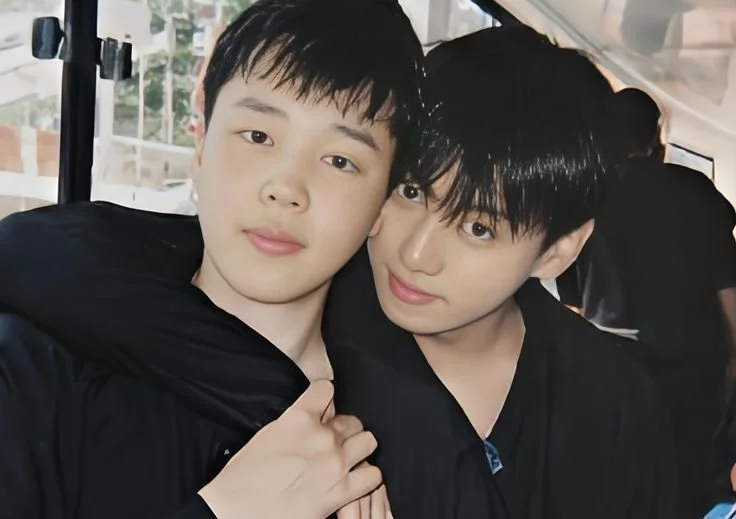
Park Jimin and Jeon Jungkook from BTS | Are You Sure?! Season 2 Photobook
Women’s engagement with male intimacy on screen or in YA fiction is both sustained and structurally significant, rather than incidental. Queer love, and its subversion of traditional, “heteronomative” depictions of physical intimacy, is different—for women, the stereotypical flow of straight romance and sex doesn’t leave room for imagination and expression compared to gay romance and sex. The fluidity of queer relationship dynamics allows women to envision themselves in equitable alternatives, possibly arranging their own heterosexual relationships to mimic gay ones. It’s not a deterrence for them—it’s ultimately freeing.
Depictions of straight sexuality can often be reductive, with women subjected to media containing misogynistic language and domestic violence for decades, generally created by male writers. The modern hetero love landscape is filled with elusive commitment and falsified interest, and many straight women fear this kind of romance blossoming in their real world. The omission of sexist themes, or even the removal of women altogether, relieves that conditioned pressure and allows female fans to truly bask in a complex love story about people who are on equal footing with each other.
Among fandoms of popular franchises, queer love will always take center stage. With growing representation, new challenges against queer individuals surge, reinforcing harmful tropes crafted by straight writers that gloss over the queer experience. Although it’s important to support queer stories, straight fans should learn to carefully navigate gay media without short-handing empathy.
Strike Out,
Linette Garcia
Miami
Linette Garcia is a senior at Florida International University, majoring in Psychology and minoring in Public Relations, Advertising, and Communications. Linette's work explores the intersection of fashion and pop culture trends, examining their profound impact on our daily lives. Her writing has appeared in Strike Magazine's Print Issues 08 and 09. When she is not writing, she enjoys watching niche animes and star-gazing at the nearest park.