
A Nervous System Built in Haus
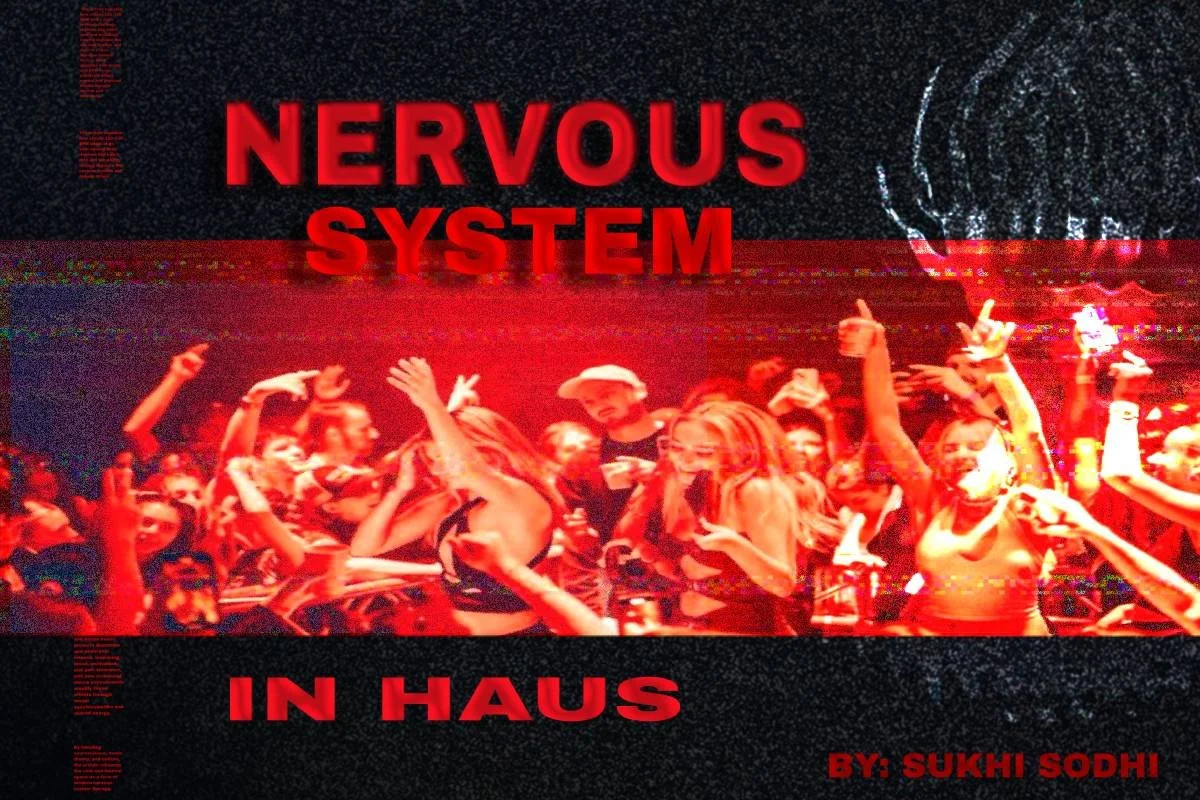
Image Courtesy: Lexee Baker
House music does not announce itself. It arrives quietly, like a tide finding its way back to shore, steady and inevitable, slipping beneath the surface of the body before the mind has time to interfere. Its pulse echoes the oldest rhythms we carry: the heartbeat, the breath, the soft certainty of something alive and continuing. In a world that pulls the nervous system in too many directions, house music offers a center, a place where everything can finally settle.
The genre takes its name from the Warehouse, a legendary Chicago nightclub where DJ Frankie Knuckles, known as the “Godfather of House,” blended disco classics with electronic rhythms, transforming them into something entirely new. His sets and production style became the blueprint for the genre. They emphasized steady four-on-the-floor beats, crisp hi-hat rhythms, and repetitive bass lines that created a sense of euphoria and immersion. As house music spread through the mid-1980s and early 1990s, it traveled across the Atlantic to the UK and Europe. There, it evolved into subgenres such as deep house, acid house, and progressive house. Clubs in London, Manchester, and Ibiza embraced the Chicago sound and infused it with their own textures and influences. In Ibiza, house music became closely tied to festival culture, sunrise beach parties, and communal dance sessions. Together, these spaces helped shape a global culture rooted in connection and celebration

Image Courtesy: Pinterest
Its appeal lies not only in its rhythm but in its ability to evoke emotion through minimalism. The genre often pairs vocal loops, subtle chord progressions, and atmospheric effects to create hypnotic soundscapes. It encourages a kind of flow state, allowing the nervous system to sync with its pulse and listeners to lose themselves in movement.
The nervous system responds to house music by recognizing its steady patterns. As the rhythm continues, the body relaxes. Muscular tension decreases, breathing slows, and mental noise fades. Stress gives way to a sense of openness. The predictable structure of house music helps the brain stay engaged without becoming overstimulated. The bass line offers a grounding foundation, while higher melodic elements maintain attention without demanding it. Together, these layers support sustained engagement without anxiety. Perception of time often shifts, feeling less linear and more continuous, as attention remains anchored in the present moment.
As movement begins, the music’s structure becomes physical. Repetition encourages synchronized motion, even among strangers. Shared rhythm creates a sense of cohesion in the space. Self-consciousness fades as attention shifts toward collective movement. Participation feels natural and unforced, and a sense of belonging emerges through shared presence.
Light joins the rhythm, not as decoration, but as dialogue. Blues cool the chest. Purples stretch the imagination. Warm tones flicker like quiet sparks beneath the skin. Strobes arrive and vanish, brief moments of intensity that dissolve back into flow. For some, sound becomes color entirely, bass settling into shadow, melodies blooming in soft neon behind closed eyes.
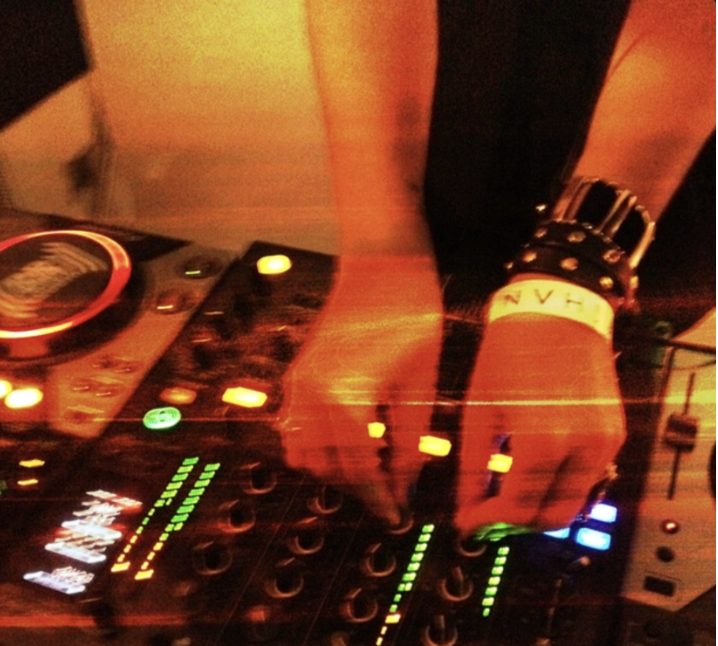
Image Courtesy: Pinterest
For others, the effect is subtler but no less real. The senses begin to overlap, enriching the experience rather than overwhelming it. The body remembers that it can feel deeply without becoming undone. Away from the crowd, house music becomes intimate. Through headphones, it wraps around the listener like a second skin. Thoughts line up or drift away entirely. The world quiets, not into silence, but into rhythm. The music does not demand attention. It keeps you company, steady and patient, allowing rest without emptiness.

Image Courtesy: Pinterest
House music carries history in its undercurrent, born in spaces where freedom had to be created, not given. That legacy hums quietly beneath every beat. To listen is to touch something communal. To dance is to remember the body as a place of safety and expression.
It does not rush you forward.
It holds you where you are.
Strike Out
Writer: Sukhi Sodhi
Editor: Abby Marshall
Graphic Designer: Lexee Baker
Tallahassee