A Personal Reflection on Context
A little over a year ago I had a realization: most of the things I was talking about I had no real understanding of. When I spoke about interesting facts or news stories, I was only regurgitating the surface level bits I had gathered online. I couldn’t tell you the full story, who my sources were, or if what I was saying was even true. Even lighthearted things that I brought up in conversation - books, movies, TV shows, even memes - I seemed to lack original opinions on. I caught myself rephrasing the reactions of others; parroting a comment beneath a TikTok that made me laugh, a Letterboxd review, or the points made in a YouTube video essay. Most of the time I didn’t even realize it was happening, but whenever I did I felt embarrassed. It felt like I couldn’t think for myself anymore, like I was just a vessel of content. My lack of understanding of the media I consumed, along with similar habits I’ve observed in others, has led me to believe that we are suffering from the death of context.
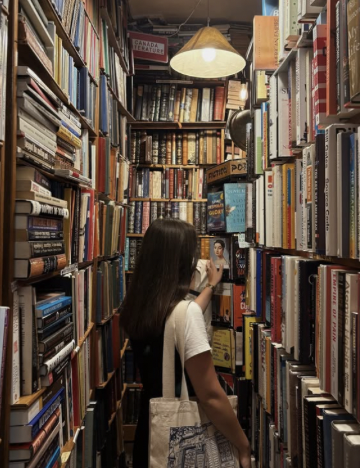
Image Courtesy: Instagram
But what is context, to begin with? I’m sure most people already know, but just to have a nice definition, Merriam-Webster’s defines context as “1: the parts of a discourse that surround a word or passage and can throw light on its meaning” and “2: the interrelated conditions in which something exists or occurs.” Context is important, and it's what I realized I had a real lack of when it came to most of the media I consume. This upset me for multiple reasons. For one, it made me feel a little unintelligent. I don’t expect myself, or anyone else, to know everything about anything they’re interested in, but the sheer lack of context I had put a limit on how much I could say about the media I was interested in. I noticed this a lot when I had TikTok; I’d often come across a video which was a clip of something longer. Even if I liked the clip, 90% of the time I didn’t put in the effort to find out where it came from - why would I? Sometimes I didn’t even know the basic details about what I’d watched (like the names of the people in the video) and so when I brought it up to people, all I could say was “I watched this video that I liked.” This brings me to the second thing that upset me about my lack of context: it made me feel less connected to the media I consumed. Everything I was consuming felt shorter, condensed, and bite-sized. I watched short-form videos, read only snippets of the news or texts, watched parts of shows and movies, only listened to select songs and skipped around them as much as I pleased. All of this made me feel cut off from the media that I love. Again, that’s not to say that you need a PHD level grasp of the history behind every album or movie you love, but there is something special about knowing a little about where something comes from, why it was made, who made it, and how it fits into the rest of the world. It takes media out of a vacuum and gives it shape and meaning. Having context, in my opinion, can transform “content” into art.
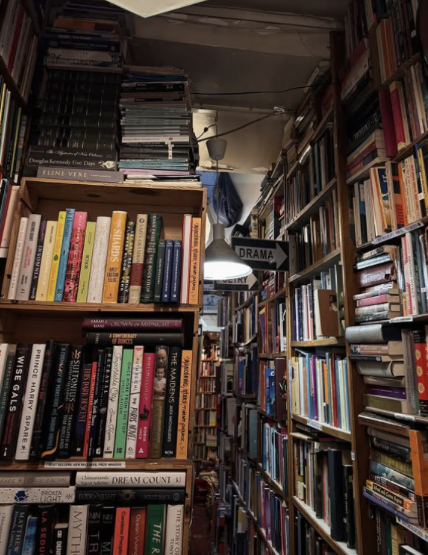
Image Courtesy: Instagram
While it is true that the digital age has rapidly changed the way we interact with media, it is also true that every advancement in technology has done this. Maybe not at this fast of a rate, but still. The technology we create has and will always change the way we think, live, and interact with the world. While it’s easy for me to blame my lack of context on the internet, I also have to hold myself accountable. The internet certainly makes it easy to opt for contextless consumption - to mindlessly scroll and accept whatever blurb, snip, clip, or text floats before my eyes - but I have the power to do more. I’ve realized that while I’m not in control of the way media is distributed in the digital age, I am in control of how I consume it. I can take the time to gain context, and I want to because I miss it. I want the media I love to feel rooted and real. I want to understand it. I want to know its history. I want it to have shape, color, texture, and meaning. I believe context can give it that.
Strike Out,
Georgia Witt
Editors: Amia King, Kaya O’Rourke
Saint Augustine
Georgia Witt is a blog writer and poet for Strike Magazine, Saint Augustine. She loves reading, writing, fashion, nature, and collecting CDs. She hopes to work in the publishing or journalism field after college. You can reach her at georgiawitt3000@gmail.com.