
Ballads of the Bible Belt: Ethel Cain’s Sophomore Album

Image Courtesy: Rolling Stone
Ethel Cain released Willoughby Tucker, I’ll Always Love You in August, the climax of Southern summer. Cicadas drone, the humid air presses down like a heavy weight, life decays faster, and the heat is as relentless as the end of Ethel Cain’s story. The atmosphere runs deep through Ethel Cain’s sophomore album, grounding her story in a landscape where love, religion, and abuse live together uneasily.
Ethel Cain is the stage/character name of the Tallahassee native Hayden Silas Anhedönia. She started releasing music under alternate stage names in 2017 and then released the Carpet Beds EP under the name Ethel Cain in 2019. Her music revolves around Southern Gothic themes, focusing on religious trauma, abuse, love, and death. Her most notable project is her 2022 debut album Preacher’s Daughter, which tells the story that follows the storyline of Willoughby Tucker. Both albums focus on the character Ethel Cain, a teenage girl whose father is a preacher, raised in a toxic, intensely religious household. She experiences sexual abuse, heartbreak, and substance abuse and is eventually killed and cannibalized. While there’s more to the haunting story of Preacher's Daughter, Willoughby Tucker is the beginning and the end of the saga.
The title track of Cain’s sophomore album is “Janie”. This is the beginning of the sixteen-year-old Ethel Cain’s story. It centers on Ethel speaking to her best friend, Janie, who has recently gotten a boyfriend. Ethel feels her closeness with her best friend slipping away as she grows more in love with her boyfriend. Ethel begs Janie to “please leave open your most quiet door” and speaks directly to Janie's boyfriend, “I know you love her, but she was my sister first.” She pleads for any access to her best friend, but Janie and Ethel ultimately drift apart. The song circles themes of loneliness and isolation after losing someone who is still alive.
The next track is titled “Fuck Me Eyes.” The song narrates Ethel’s complex feelings towards Holly Reddick, a promiscuous classmate who hangs around Willoughby, whom Ethel believes is in love with her.
“I’ll never blame her, I kinda hate her, I’ll never be that kind of angel”
Ethel is jealous of Holly and the way she presents herself as a sexual and popular girl. Throughout the song, Ethel doesn’t bash Holly’s flaws, but instead simply points them out and focuses on her envy for Holly. She believes Willoughby is in love with Holly and yearns to be more like Holly to get his attention. This song is the beginning of how Ethel oversexualizes herself for validation, revolving around themes of female sexuality.
“Nettles” is one of the most emotionally packed tracks. It’s the beginning of Ethel and Willoughby’s love story, where Ethel already imagines what could happen to their relationship to cause its demise. She imagines a nearby plant blowing up and injuring Willoughby, or Willoughby drifting away to “fight a war” as he grows up as a man. Willoughby tells Ethel throughout the track:
“Tell me all the time not to worry
And think of all the time I'll have with you
When I won't wake up on my own”
This song foreshadows the end of Willoughby and Ethel’s love story as it highlights death, insecurity, and growing apart. Unlike songs that swell into climax, “Nettles” drifts steadily, with a lack of resolution that mimics the sense of inevitability: no matter what reassurances Willoughby gives her, Ethel knows death or separation will come. The slow pacing feels like the dread of inevitably losing your loved one.
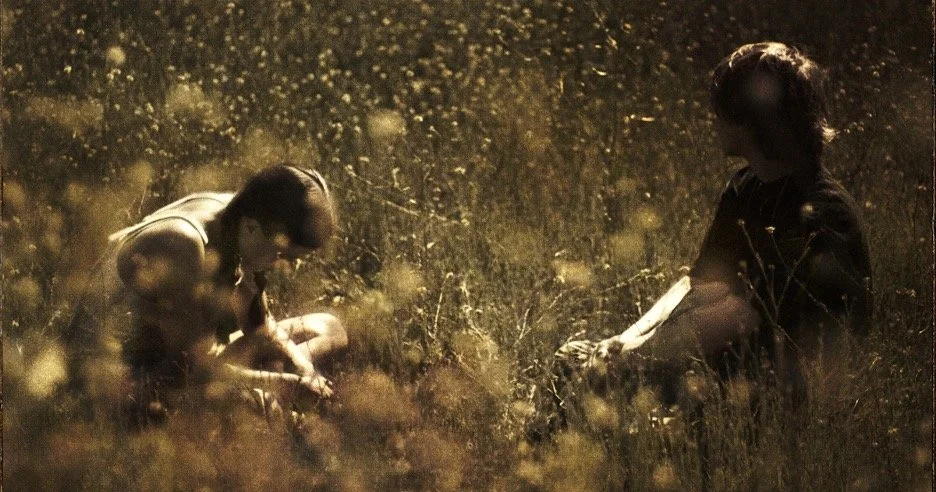
Image Courtesy: JamBase
“Dust Bowl” is a slow and haunting track that frames the album’s central tragedy: the loss of Willoughby. The song is both memory and eulogy, where Ethel recalls her ill-fated young love through vivid, unsettling imagery. The Dust Bowl becomes more than a historical reference to the destruction and poverty of the American South; it symbolizes the void left behind by grief. At its core, “Dust Bowl” is a Southern Gothic love song with themes of intimacy, death, and devotion, setting the tone for the rest of the album’s traumatic ending.
“Pretty boy
Consumed by death”
Next, “A Knock at the Door” is a soul-stirring track with pure, raw emotion, with only an acoustic guitar and Ethel’s trembling voice. This song is intimate and built on the inevitability of death, loss, or “the knock at the door.” Lyrics like “everything I’ve loved, I’ve loved it straight to death” relate to Cain’s recurring cycle of attachment and loss, while darker lines about addiction and childhood friends collapsing on the floor evoke the violence of growing up surrounded by trauma and death.
The second-to-last track, “Tempest”, is sung from Willoughby's point of view in the entirety of Ethel Cain’s story. Lyrically, the song circles Willoughby’s attitude towards Ethel and the upcoming storm, soon to hit their town. Willoughby views Ethel as someone desperately trying to save him, but he believes she has never truly looked at him for who he is. Willoughby begs Ethel to see that he is not the idealized boy she projects onto him, but rather the lost and broken boy he truly believes he is.
“Don't ask me why I hate myself
As I'm circling the drain
'Cause death takes too long
And I can't wait”
The tempest is both a natural disaster that precipitates the disappearance of Willoughby. It also serves as an inner tempest, a metaphor for the destructive intensity of love, loss, and grief. This is where Ethel and Willoughby’s story ends.

Image Courtesy: Omega Music
The final track is “Waco, Texas” (W.T. for Willoughby Tucker), a fifteen-minute reflection on Willoughby and Ethel's love affair. It mirrors the rise and collapse of their relationship, using the 1993 Waco siege as a metaphor for passion blinded by obsession and ultimately destroyed by its own intensity. This song toggles between Ethel’s self-blame and refusal to let go, despite their emotional disconnect.
“I loved you when it hurt inside to
But in the low light
You know I'd do anything for you.”
And darling, time may forgive me
But I won't.”
Willoughby Tucker, I’ll Always Love You cements Ethel Cain as one of the most creative and haunting storytellers in modern music. Across Ethel’s story, she captures the South in its core contradiction —tender and violent —while building a devoted love story destined for destruction. Through ballads of intimacy, abuse, isolation, and death, Cain creates a Southern Gothic album that feels both deeply personal and moving. By the time “Waco, Texas” fades into silence, it is not the end of Ethel and Willoughby’s story, because a lingering ache of devotion, memory, and loss lives on.
Strike Out,
Writer: Parker Snaith
Editor: Salette Cambra
Graphic Designer:
Tallahassee