

Image Courtesy: ABC News
Bad Bunny did not just perform at the Super Bowl. He transformed it. On a field that often represents competition and spectacle, he created something communal. At a time in America when we often see headlines about tension and division, he offered celebration. He offered love.
He opened in an off-white football jersey marked with the number 64, layered over a shirt and tie. The look felt restrained and intentional. The number honored his late uncle, the man who introduced him to the NFL and whose memory he carried onto that field. Even before the music swelled or the choreography intensified, his clothing grounded the performance in family, remembrance, and gratitude.
That choice mattered. The Super Bowl is typically about dominance and scale, yet his look softened it. The jersey, tailored and personal, bridged American football culture with Puerto Rican identity, acknowledging diaspora without separating the two. He stood at the center of an American institution dressed in tribute to his roots.
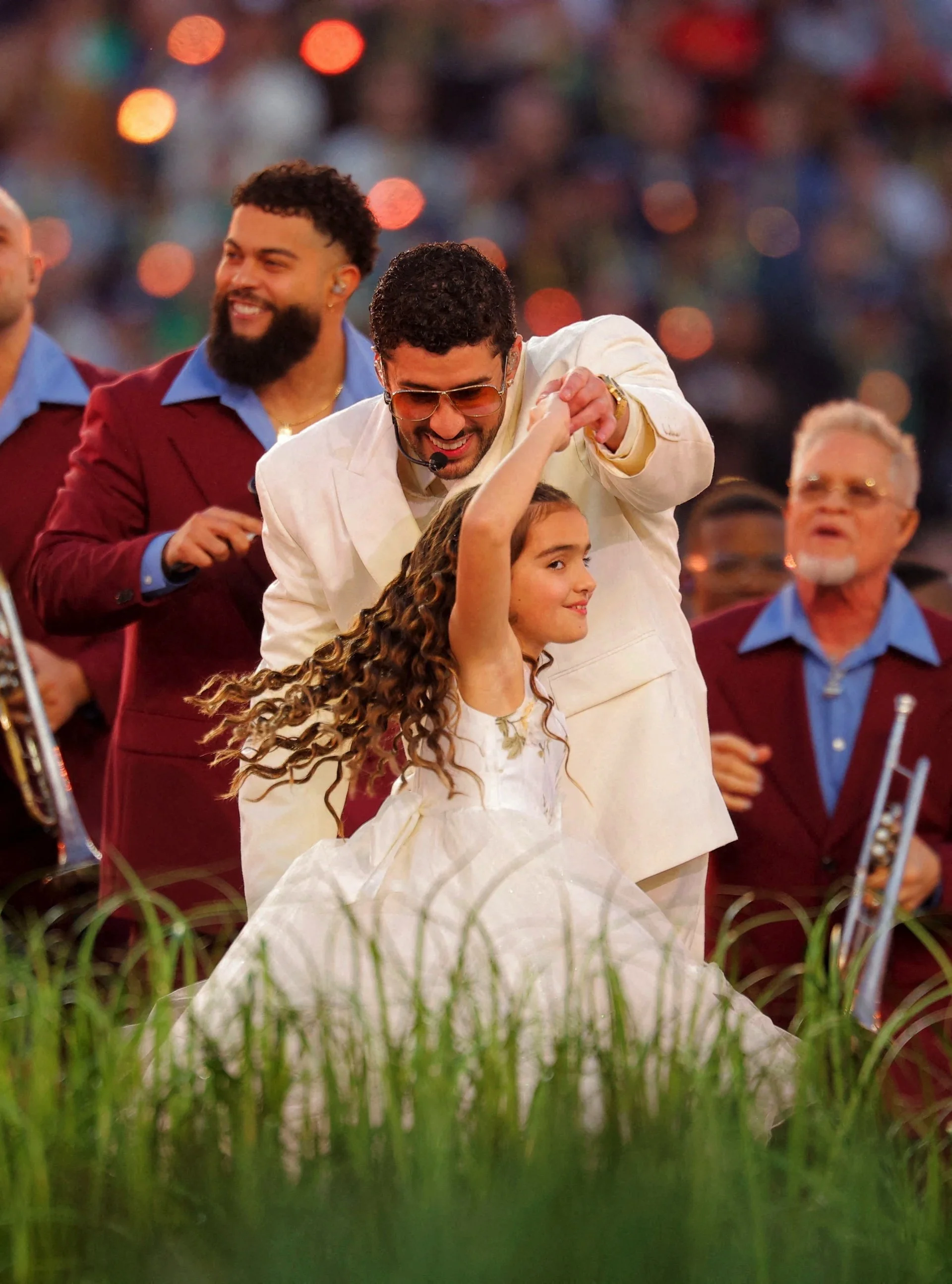
Image Courtesy: Reuters
The set design expanded that message. Sugar cane fields, domino tables, a piragua stand, girls doing their nails. The imagery felt like home. His dancers moved in silhouettes that blended rural memory with contemporary streetwear, honoring tradition while allowing it to evolve. Culture was not placed on display for explanation. It was lived in and moved through.
When he changed into a white suit that echoed the elegance of classic salsa icons, the tone shifted toward celebration. Ricky Martin’s appearance reinforced lineage and continuity. Lady Gaga’s rendition of “Die with a Smile,” staged within a wedding scene and backed by a live salsa band, deepened the message. Love was not abstract in that moment. It was witnessed, sung, and shared.

Image Courtesy: People Magazine
The visuals carried the same intention. He handed his Grammy to a young boy, danced with a young girl, and celebrated a real wedding between two fans. On a stage built for millions, he chose intimacy. He made a stadium feel like a family.
He sang entirely in Spanish, choosing not to translate himself or soften his voice. Meaning traveled through rhythm, movement, and clothing. The jersey and the suit, along with the dancers’ pavas and flowing skirts, framed the performance but also anchored it. They reminded viewers that identity is not something to edit to belong.
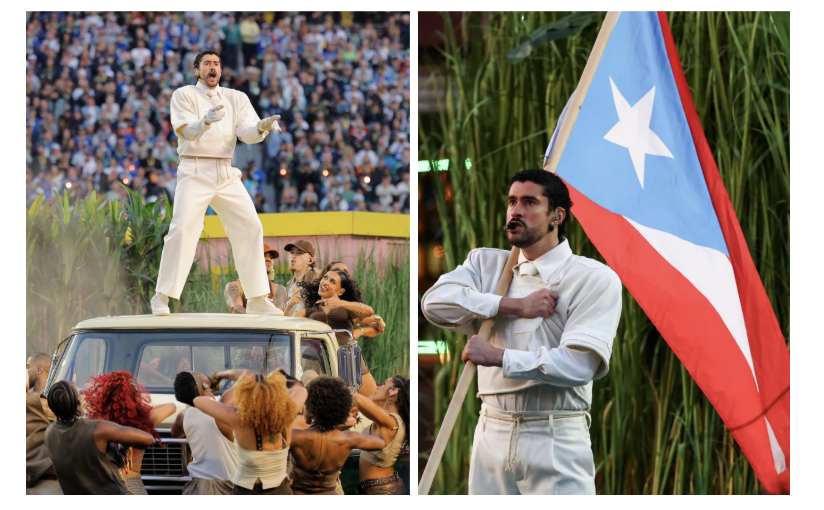
By the end, as he named countries across the Americas and the stadium beamed with the colors of dozens of flags, the message became clear. The only thing stronger than hate is love. Not as a slogan, but as practice expressed through family, culture, and community.
The performance was beautiful because it felt generous and rooted. It turned a football field into a shared space and reminded millions watching that celebration itself can be an act of unity. His clothes were not just styling choices. They were declarations. Through them, he made one of the largest stages in the world feel like home, not just for himself but for many who have ever wanted to see themselves fully and proudly represented there, and in doing so, he widened that sense of belonging for anyone watching.
Strike Out,
Writer: Madison Steidley
Editor: Abby Marshall
Graphic Designer: Emma Murphy
Tallahassee