Coping In A Compartmentalized World
Is our obsession with having an esthetic really a fashion statement or is it just a coping mechanism for our compartmentalized world?
Our society presents identity problems with quick solutions. Feel like you're crashing out? That's ok, go buy a light pink Aritzia workout set and Stanley water bottle to transform into a “Clean Girl.”
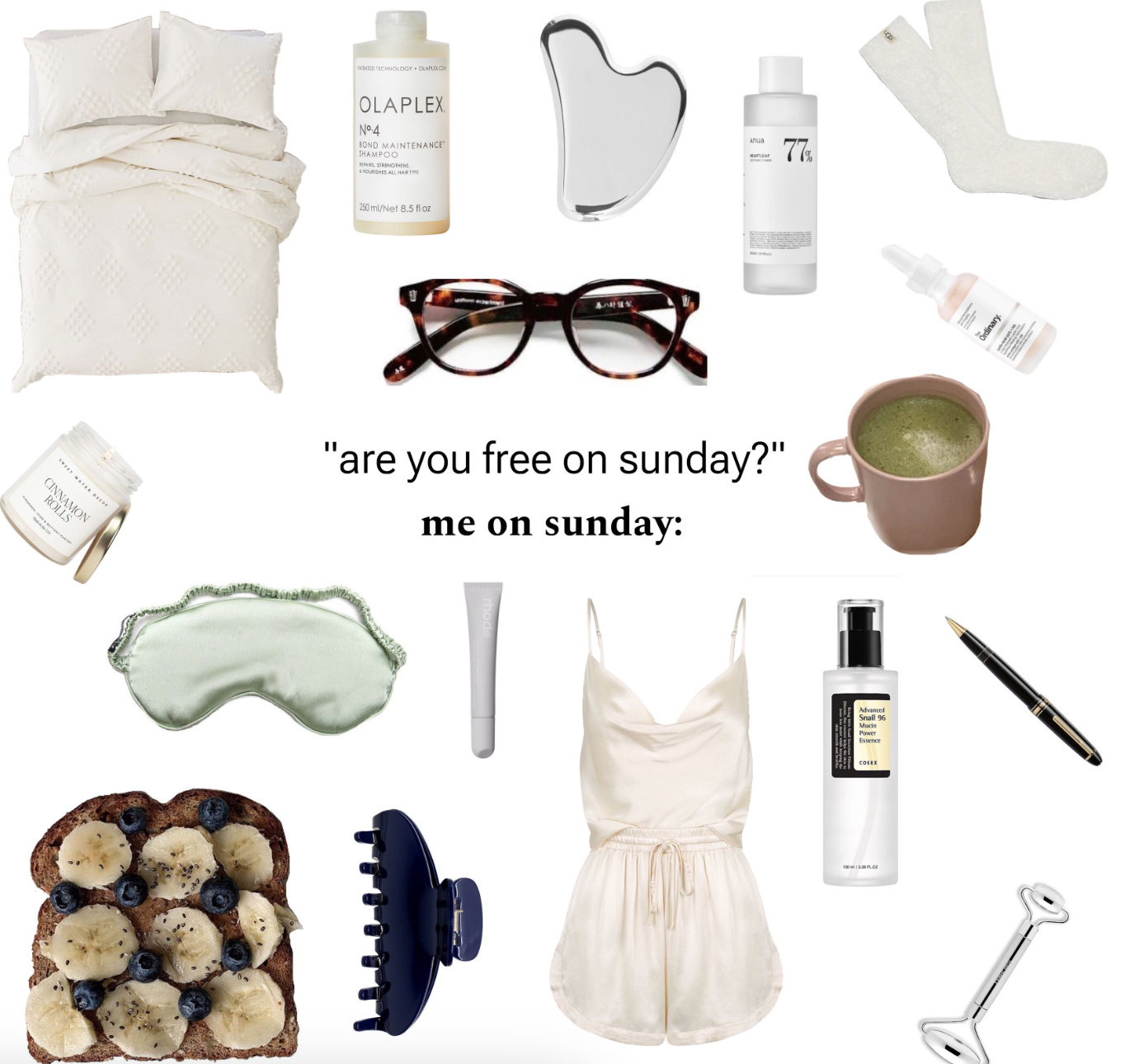
Image Courtesy: Instagram
Are you wishing your life was more rural, cozy, and nature based? Adopt the “Cottage Core” clothing style; buy yourself some white blouses, light floral patterns, and you too can share in the whimsical rural culture that Pinterest tells you will bring you peace. No need to move to the countryside and buy your own farm.
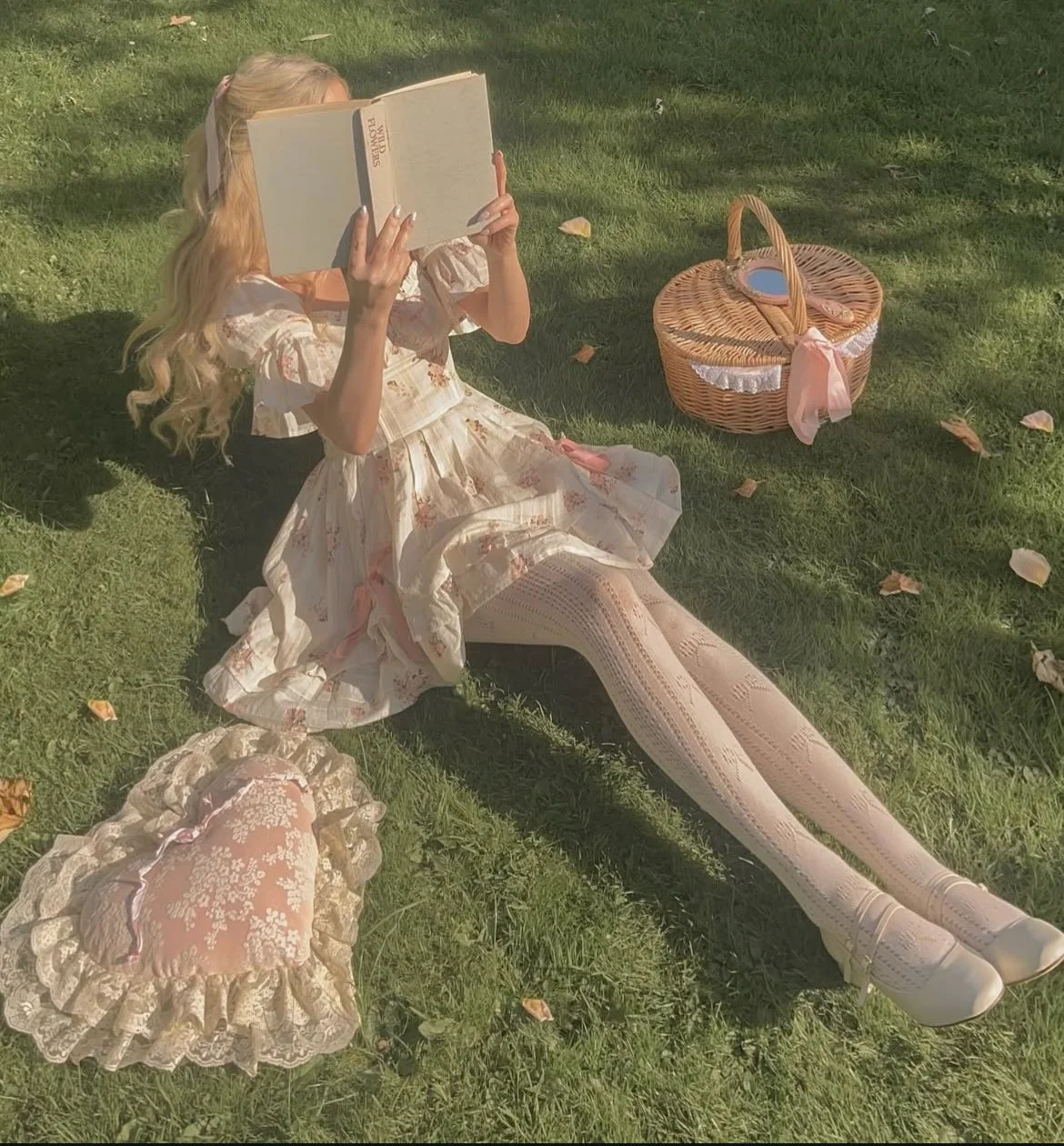
Image Courtesy: Instagram
You don't need to create life for yourself or write your own story, if you dress like these aesthetics that's good enough. At least everyone on social media will think you have it because of course their opinion matters more than your own reality.
In many ways, aesthetic culture is stunting necessary personal growth and soul searching by providing everyone with a quick fix. It begs the question of why we feel the need to belong to a labeled group in order to be able to say we know who we are.
Fashion is a great medium to express ourselves, but it is increasingly becoming a way for us to externally assume an identity in the hopes that it will fix all of our problems.
This has a lot to do with social media and its effect on our psyches. When we spend the greater portion of our waking hours on our phones, constantly seeing other people experience life, we then begin to compare it against our own life. Humans are not meant to consume media as much as we do today. We are meant to create. Instead, we see everyone's perfect facade; life becomes a highlight reel, a perfectly curated Pinterest board, or compared against a slate of Tik Tok day-in-my-life videos. Our nervous systems are overloaded and we spend all of our time trying to mirror a digital blueprint for the perfect life.
The reality of the human experience is far less perfect than these digital portrayals, but for some reason our media intake pressures us to pull it together to be like the people we see online. This leaves you feeling inferior and offers unrealistic expectations. Online you do not see the hardships that lie beneath the cropping and filters.
Instead of naturally maturing, we are left feeling like we need to be the best version of ourselves immediately and that any imperfections are definitive of our character and future. In the midst of that chaos in “finding yourself,” adopting an established aesthetic seems like an easy fix. The idea that you will have that lifestyle and identity if you dress a certain way can feel reassuring.
This isn’t a new trend but a historic tradition re-established in a modern font. Ancient Greek and Roman culture glorified murals that painted everyday objects so well people thought they were real. Many years later, the French coined the Trompe l’oeil to describe this artform.
According to the Royal Academy “Trompe l’oeil is French for "to deceive the eye", an art historical tradition in which the artist fools us into thinking we’re looking at the real thing.” The problem with these beautiful portrayals is that they establish an unrealistic standard to aspire towards.
I can remember being in Europe as a child admiring the facades of town homes, questioning how such intricate sculpture could withstand the test of time and nature with perfection, and my mom telling me that they used Trompe l’oeil.
This gave plain, flat homes ornate details, offering the impression they were adorned with crown molding, intricate window frames, columns, and more. From afar, passersby believe them to be real, but after further up-close examination it is evident that they are flat two dimensional objects.
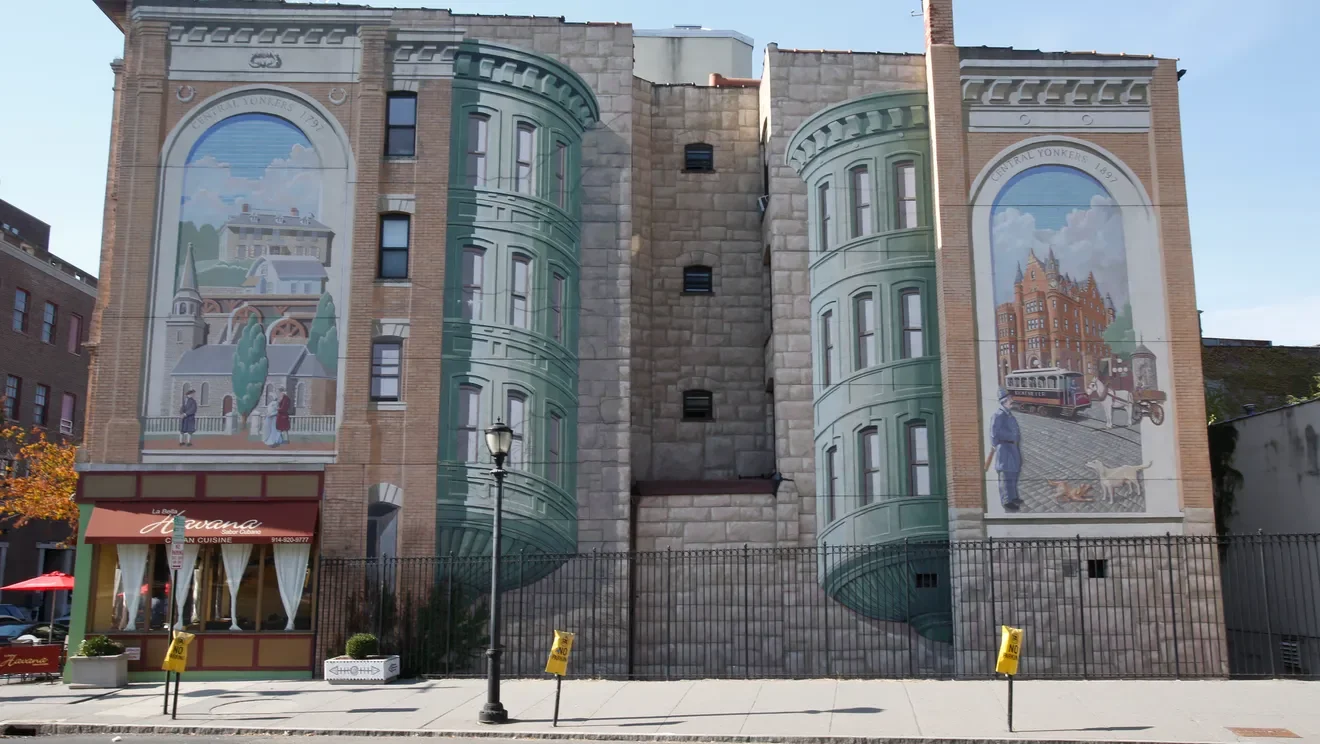
Richard Haas Mural in Yonkers.
Image Courtesy: Instagram
This artistic concept is proof that we have always feigned to be more aesthetic than our own reality, and offers an explanation for our modern day yearning for assimilation into a socially accepted aesthetic.
The difference between ancient concepts of Trompe l’oeil and modern day aesthetics is the compounding effect social media has. It is one thing for buildings to have deceiving facades, but another when everyone you see online is masquerading under the guise of a perfect life. It would be different if we still had the same face-to-face culture that used to be the norm, but the reality is that in-person interactions are increasingly becoming an antiquated ritual.
We supplement personal connection with the relationship we build with our phone. The context of our view of the world is shaped by what we view on our screens, and oftentimes when it comes to fashion that is largely tied to our identity. There is a subconscious current that is pushing us towards conformity because it feels like the path to least resistance.
When life gets messy we look for comfort and want to see ourselves through those same rose-colored lenses we see others in. In my opinion, adopting a fashion “aesthetic” is a coping mechanism for this phenomenon. In an ideal world we would feel comfortable with the unknown and understand it as what makes our lives unique and exciting. Embracing free will and charting a path born out of curiosity is our birthright, but somewhere along the way we have found it akin to purgatory.
As someone who is trying to break this cycle for themselves, I can safely say that the first step is getting off of social media. It is been over a year since I deleted Instagram, Snapchat, and Tik Tok. At first I felt an overwhelming wave of isolation and influx of boredom, but eventually I found peace in abandoning the overstimulation.
Strike Out,
Ruby McKeown
Saint Augustine
Editor: Amia King, Jessica Giraldo
Ruby McKeown is a writer for Strike Magazine, Saint Augustine. She has worked as a reporter with news outlets such as The New York Times and Tucson Sentinel. Additionally, she has worked in Cambodia and Thailand with Oxfam International, International Rivers, and Khmer NGO for Education.