Girls Don’t Want Diamonds, They Want Victorian Hair Jewelry.
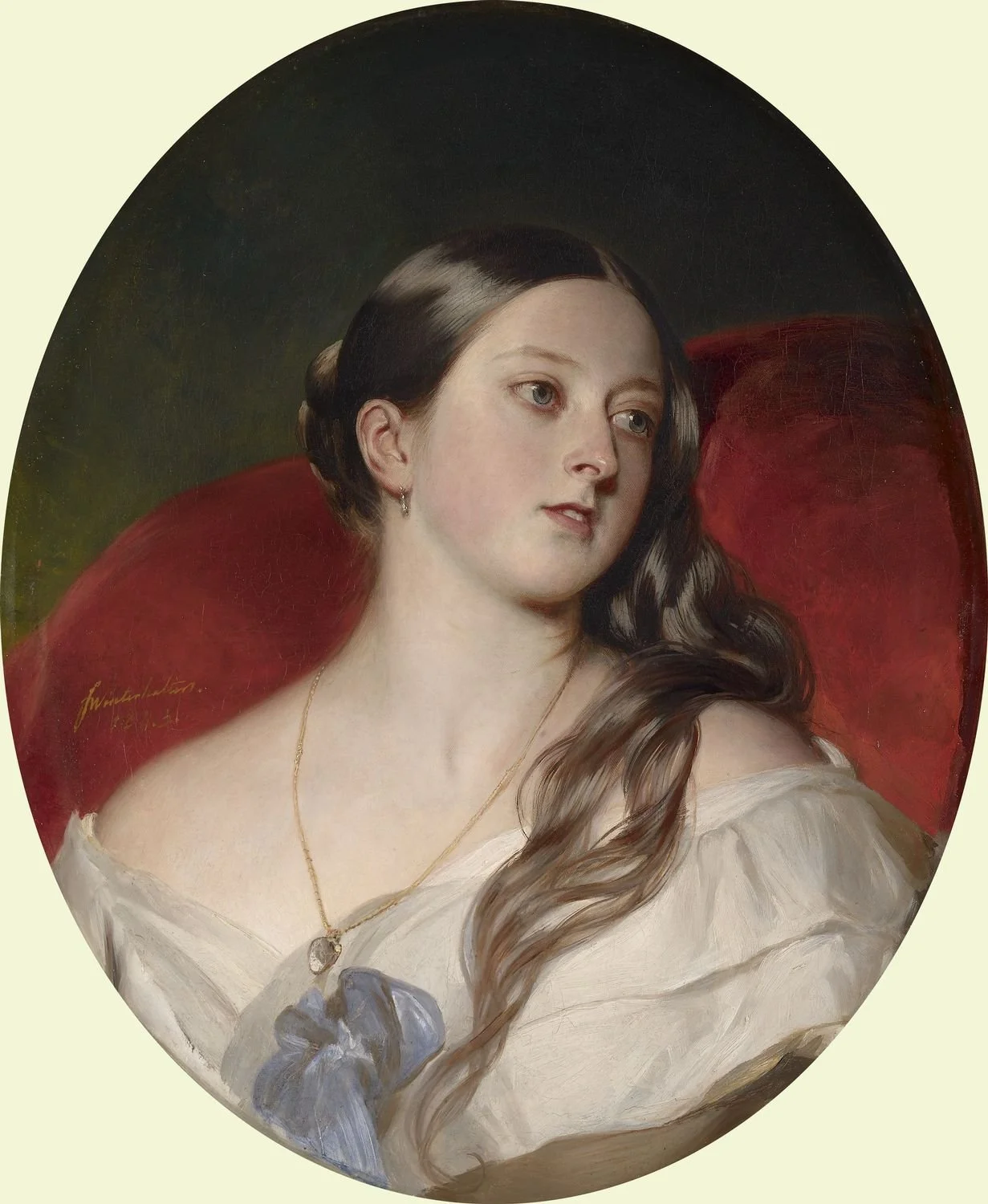
Queen Victoria by Franz Xaver Winterhalter (1805-73) | Royal Collection
Victorian girls were Pro-level gift givers. Hair work in the Victorian era was huge amongst lovers, friends, and family members. Romanticism and the rise in Spiritualism at the time gave way for such unique tokens of love.
Most commonly, hair jewelry was worn as a form of mourning. The mourning ring was used for remembrance of deceased loved ones, decorated with small strands of the hair of said loved one, cut straight off the corpse. These mourning rings were symbolic of the closeness one felt to their loved ones– they were not exclusive to gender or class, and became the gateway for much more intricate designs and pieces of jewelry. By wearing hair jewelry on one’s person, one is announcing their love– the Victorians were an extremely romantic folk.
Hair work, as an industry, reached its peak around the 1860s, when hair jewelry became less so a token of mourning, and more so an accessory. See the hair of a lover (secret or official), of a soldier off to war, a child, or a mother, alike were fashioned into braids, twists, and even images to suit the arm, neck, finger, or blouse of the wearer. This process was relatively affordable, making it extremely attainable for those of lower and middle classes to wear– meaning, that the trend reached far and wide. This process was originally called ‘table worked hair’ and it consisted of weaving the hair like a lace…The hair was prepared and molded to taste, and afterwards a goldsmith would manufacture custom fittings so that the hair could be worn like jewels. Hair charms were all the rage for the Victorians, families and persons to all four corners were wearing their love’s hair on their wrist– iconic characters like Queen Victoria herself wore hair jewelry.
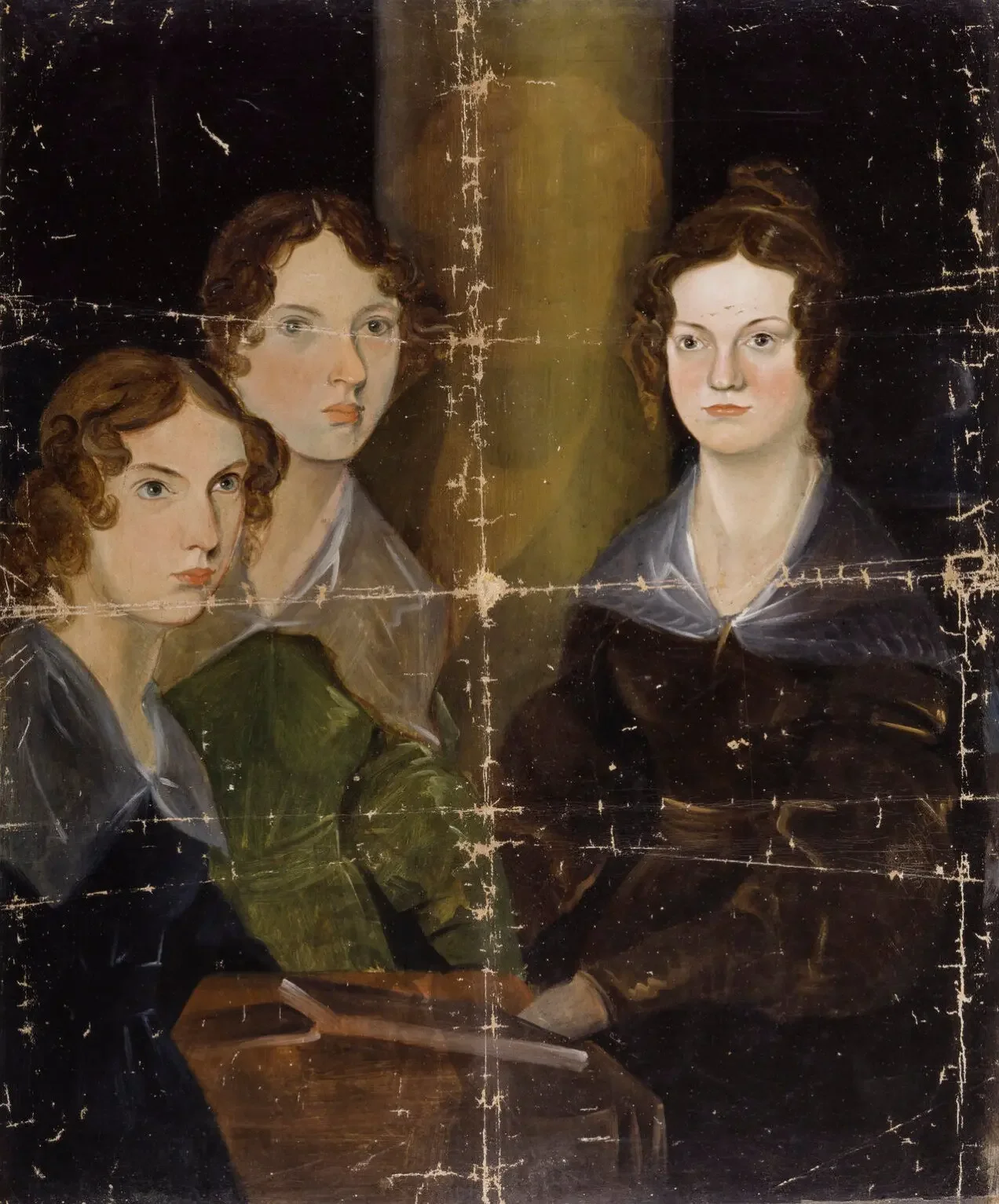
The Brontë Sisters (Anne Brontë; Emily Brontë; Charlotte Brontë), by Patrick Branwell Brontë, circa 1834 | The National Portrait Gallery
The world renowned Brontë sisters are no strangers to Victorian hair charms either. In fact, one of the most popular, well-kept, pieces of Victorian hairwork belongs to the Brontë girls. Housed in the Brontë Parsonage Museum in Haworth is a small bracelet composed of six light brown braids belonging to each of the three sisters, Emily, Charlotte, and Anne. Though the bracelet is unwearable, as the clasps are open and one of the braids has come loose, it is one of the most impressive pieces of hairwork– probably not because of the intricacies, as the braids themselves are simple up close, but because of who it belonged to. This piece of hairwork shows the popularity of hair charms amongst all peoples seeing as the Brontë sisters belonged to a lower-middle class in their lives. Simplicity aside, this bracelet is one of the more talked about pieces of hairwork in this day and age. Notably, with the release of Emerald Fennell’s take on Wuthering Heights, star Margot Robbie attended a London premiere of the film. At this premiere’s red carpet, she wore a dress adorned with light brown braids (sound familiar?) inspired by the Brontë bracelet… In fact, Robbie even accessorized her look with a replica of the Brontë bracelet.
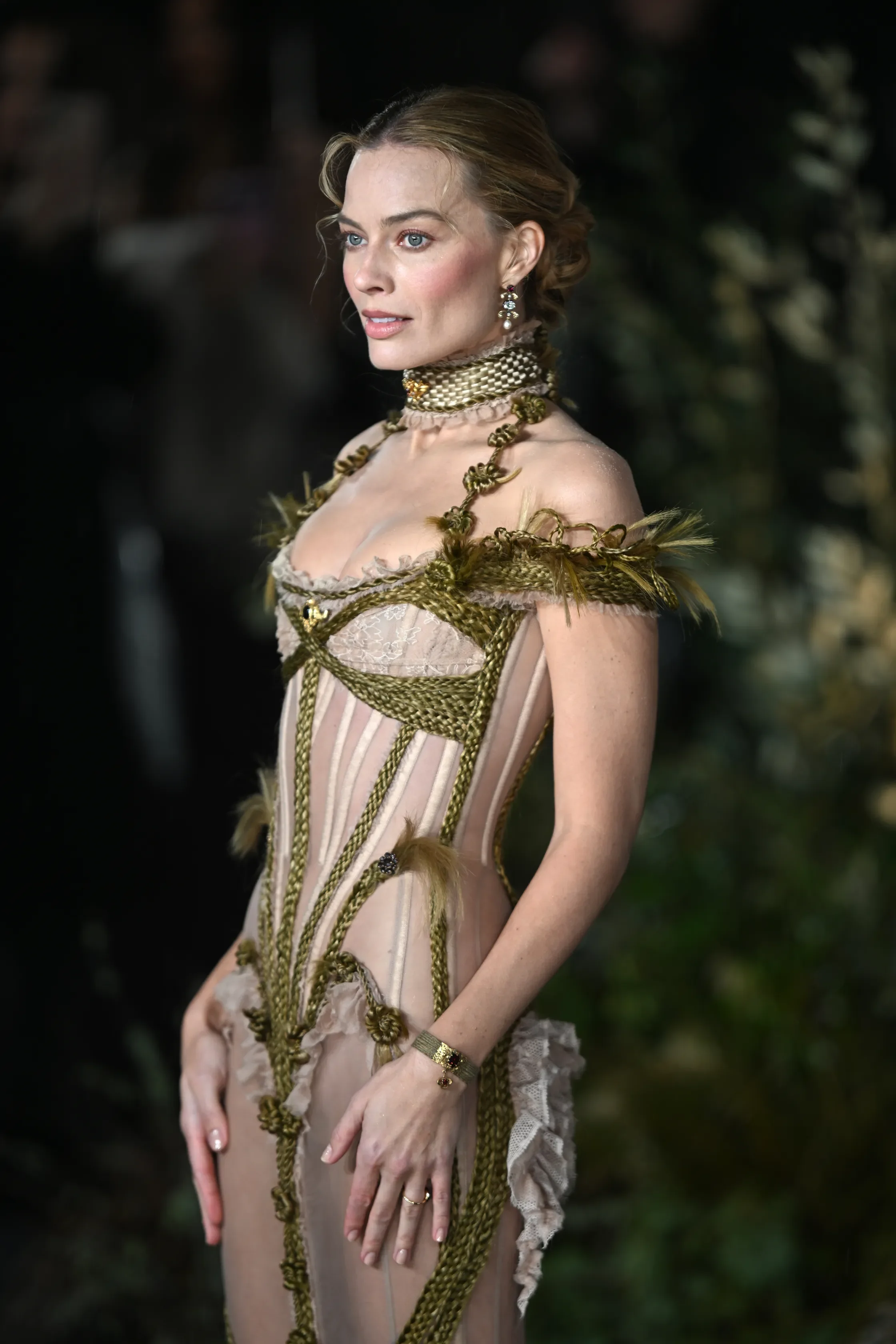
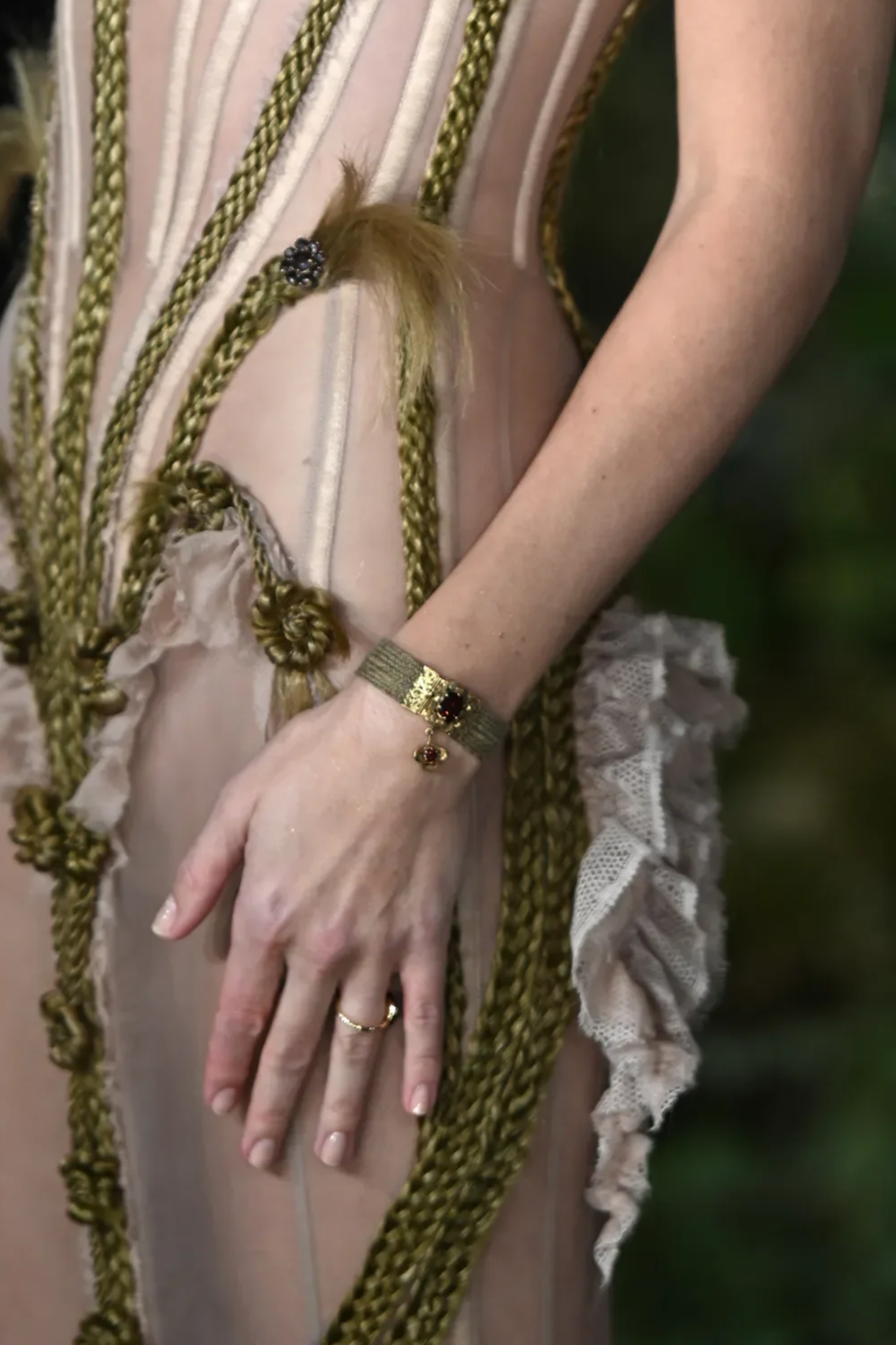
Margot Robbie Wears a Replica of Charlotte Brontë’s Mourning Bracelet to the Wuthering Heights London Premiere | Vogue
These charms are too featured in classic Gothic/Romantic literature; Take Emily Brontë’s own Wuthering Heights. In the classic, Heathcliff removes the lock of Edgar Linton, Cathy Earnshaw’s husband, from Cathy’s corpse’s locket– he then replaces the lock of hair with his own. In this way, he sends a piece of himself, a piece of their love, off with Cathy’s spirit. This plan, however, soils when Nelly, the housemaid (and narrator of the novel) entwined Linton’s hair with Heathcliff’s own– scholar Deborah Lutz likens this act as an opening to “the possibility of a postmortem storm of jealousy,” between them. So, though this is the only Brontë novel to mention mourning jewelry/hair jewelry, it is evident that it was an important aspect of Victorian life.
Victorian hair work is revered for its unique intricacies and lovely symbolism. Different works of this art are kept in distinguished art museums like The Metropolitan Museum of Art, the UK’s Royal Collection, and the Cincinnati Museum of Art. The MET carries hair jewelry sourced from England, America, China, and even Japan. It’s riveting how different cultures at different times sought to decorate one another with their loved one’s hair. Hair is something so personal– not only does it come from us, but it so often defines the kind of people that we are or want to be. To carry the hair of a loved one upon your body is hauntingly intimate, and it seems the Victorians thought so as well. Grand and simultaneously discreet shows of love were very popular at that time, and these macabreities are looking to make a comeback– at least in film and art (or maybe just for me)…
References:
Lang Antiques. “Hair Jewelry.” Antique Jewelry University, Lang Antiques.
Stevenson-Kaplan, Allegra. The Brontë Family’s Broken Hair Bracelet. Victorian Things, University of Victoria Libraries.
COVE Collective. “Mourning Jewelry — Giving Hair a Second Life.” COVE Editions, 2022 (published online).
Strike Out,
Anett Martin Sosa
Miami
Anett "Ani" Martin Sosa is a Senior student at Florida International University, pursuing a Bachelor’s degree in Writing & Rhetoric with minors in Communications and Marketing. Ani highlights fashion, art, Miami, and more in her short stories, poems, and personal essays. Her writing has been featured on the Strike Miami Blog, as well as Strike Miami's i08 and i09- she is most influenced by David Lynch, Joan Didion, literary horror, and surrealist art, which she explores on her Substack blog ‘Booksmart.’