Greg Heffley’s Got the Cheese Touch.
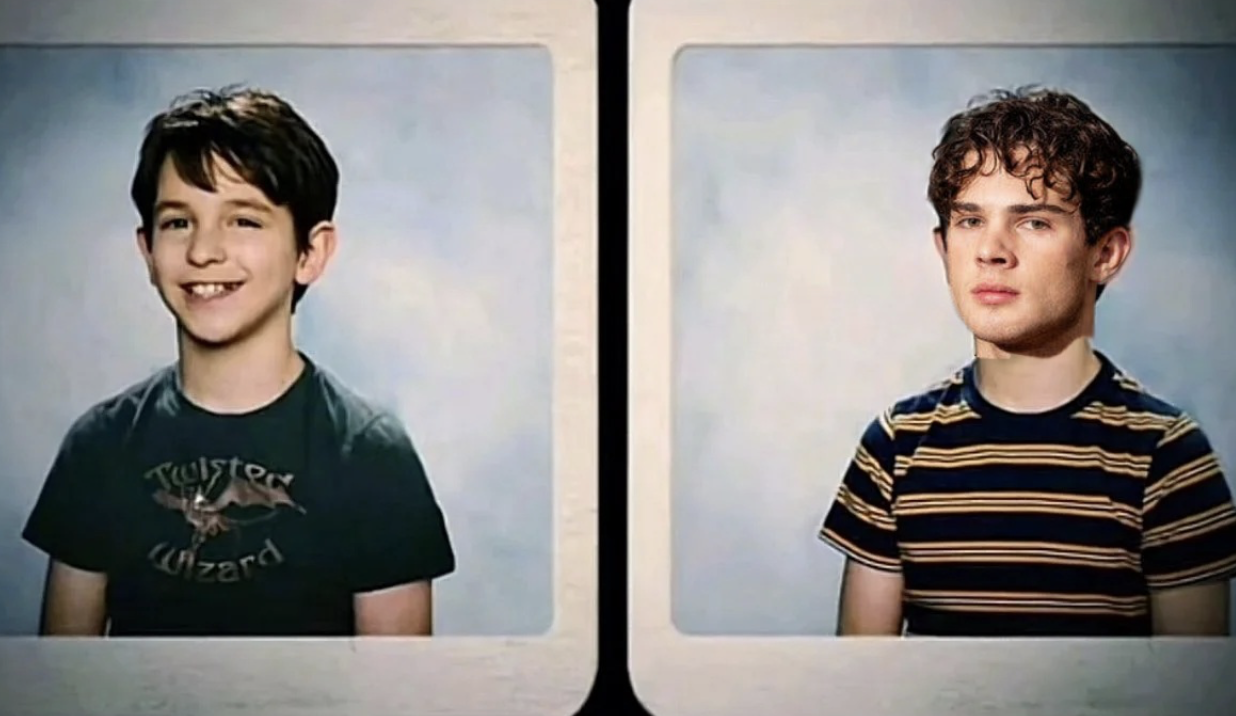
Diary of a Wimpy Kid (2010) | Screenshot edited by Mica
So, I have a confession to make.
Out of all the movies I've seen - and I’ve seen a lot - Diary of a Wimpy Kid firmly plants as one of my all time favorites.
That being said - Greg Heffley is totally an incel.
Jane Gilmour notes that, “the brain state of a post pubertal teenager is searching for identity, prone to take risks, and highly sensitive to perceived status,” which makes them “perfectly placed to consume, learn and potentially internalise toxic masculinity”
Pretty much everything that happens to Greg in this movie recreates these exact psychological and environmental conditions.
The movie opens and the first scene we see is Greg getting woken up in the middle of the night by Roderick, pranking him that school started and he’s late. In his frenzy to get ready, he wakes up the whole family. His parents get angry at him and when he explains the situation they don't believe him.
Immediately, he is blamed for both his older brother’s prank, and for his younger sibling’s sleep issues. I mean, it's classic middle child syndrome - his needs aren't attended to at home, he isn't listened to or taken seriously by the adults in his life, and so he feels out of control and alone.
In an attempt to rectify this loneliness, Greg fixates on social status: nobody seems to care about him, but if he was popular, cool, and talented, maybe they would. He is especially obsessed with the idea of social rankings, placing himself, Rowley, and others on a school-wide scale of popularity several times throughout the movie.
I think this is the perfect sort of person and environment for the “redpill industrial complex” to prey upon - like, Greg is basically two google searches away from turning his #1 - #202 popularity ranking system into an alpha to omega scale.

Diary of a Wimpy Kid, Jeff Kinney | Scholastic
Lack of attention does not make a misogynist, but it can provide a catalyst of psychological problems for pipelines like the manosphere to sell a solution to.
For many kids, teens, and even adults, the allure of perceived positive social performance calls like a siren in this sense. And for young boys, this is compounded with a social environment which teaches that violence against those they have control over, whether smaller, younger, or more vulnerable minorities, is something that gets them rewarded with a higher place on the social ladder.
It serves both as a means of masking their insecurities through a sense of power, and as a means of avoiding their own fate as a “weaker” boy to be controlled by someone else. We can see Greg's quick adoption of this world view and its effect on his empathy for others. When he first gets to middle school and sees older boys bullying Chirag, he thinks “Thank god for Chirag Gupta…he's the only buffer between me and these morons.”
Greg not only benefits from, but actively participates in this system, trying to displace his own feelings of otherness and weakness onto others perceived as lesser, like Manny - something directly taught to him by the older men in his life.
On Greg's first day, Roderick holds him under his armpit, and when Greg shows discomfort Roderick says “C’mon, we’re just having some fun right?” Immediately after this, it's revealed that Manny can't use the toilet because Greg made him afraid of it, and when confronted by his mother, Greg laughs and says “I was just joking with him.”
When Greg's mother blames him for what he chose to do, Greg genuinely believes that his toddler brother “manipulated” the situation to get him in trouble/make him look bad. Not only does he learn from his older brother to repeat the pattern of aggression towards the weak for his own entertainment, but learns to dismiss his own shortcomings and blame others for their responses to his behavior and the consequences of his own actions.
And this negative role modeling isn't specific to Roderick - essentially all of Greg's primary male role models in one way or another reinforce this twisted idea of masculinity.
Greg's school coach introduces the first gym class by calling the male students “ladies” and telling them to “put down their knitting” and get to work.
Greg's dad Frank is emotionally distant for the majority of the film, only making an attempt to connect with Greg when he joins boxing, telling Greg if he works out he’ll soon be just as buff as his boss’s son. Projecting his own insecurities in his sense of masculinity, placing this social hierarchy onto Greg, comparing Greg to his boss’s son— he seems to be really comparing himself to his boss, who he feels inadequate when matched against.
This not only creates a warped view on what masculinity is for Greg (being buff, being “above” others) but through doing so also places the utmost value, his father’s affection, on achieving this version of masculinity.
All these things together result in a maelstrom that creates ripe pickings for the manosphere to take over. You have a young boy who is essentially emotionally neglected, extremely lonely, and feels a deep sense of inadequacy, combined with male authority figures who model toxic masculinity, enforcing ideas of dominance over others and the (supposed) importance of holding a high rank on the social hierarchy.
Greg responds to these things outwardly by enacting control over others, but also internally, sinking deep into escapist fantasy.
When Greg is bullied by an older boy, he assuages his own sense of shame in that moment by fantasizing about being a rich man, and having that bully work for low wages to clean up his dog’s poop, ordering him and other workers around to do his bidding. Again, we can see really clearly here how exactly Greg interprets the development of an internal locus of control through the control of others - a key point of his fantasy is not just to be above his bully in social and financial position, but to actively humiliate and demean him like he himself was.

A Page from the Book | Diary of a Wimpy Kid, Jeff Kinney
He refuses to cultivate a talent, singing, since his voice is too high for any male roles in a play. Greg’s sense of self and sense of worth are entirely wrapped up in a warped concept of masculinity, which leads him to hate himself for failing to achieve.
This failure to achieve “masculinity” becomes synonymous with weakness, and “femininity” (whatever these terms even mean) as the absence of masculinity also becomes seen as weak. Greg is ultimately led to seeing women as less than for displaying that same femininity that made him feel less than.
Unfortunately for Greg, he does very often fail to achieve this standard of masculinity and worth.
The point of the books and movies is to show Greg as an exaggerated figure of a horrible person acting out towards others due to his own insecurities. And I think that figure just so happens to look eerily similar to the boys and men who climbed down the rabbit hole of the manosphere.
Like, the book and movie literally open with him insisting that the book is not a diary, yuck, but a journal.
Strike Out,
Mica Zeitlin
Miami
Mica is a Psychology student at Florida International University. They have interests in film analysis, music, fashion, history, social and developmental psychology, and often the intersection between them. In their offtime, Mica enjoys watching movies (duh), cooking, and finding nice bugs to take pictures of.
References:
https://pmc.ncbi.nlm.nih.gov/articles/PMC12351222/
https://www.mdpi.com/2673-5172/7/3/158
Edited by Samantha Vital