Hey! Ho! Is there a fire in your soul?
I used to think there was one in mine. When Barack Obama was president, gay marriage had just been legalized, a latte cost three dollars, and the general mood of the country felt cautiously optimistic, there seemed to be an ambient hopefulness fueling my juvenile passion for life. Everything felt possible in the vague, naïve way things often do when you’re ten years old and the future still looks like an open field of roses.
I’m twenty now, and the contrast feels almost cynical. I have a six-hundred-dollar medical bill from a strep test sitting on my kitchen counter, and I’m living in a world that somehow normalizes mass public displays of censorship, hatred, and humiliation. While I was too young to meaningfully contribute to or even understand the rise of the Millennial generation, adulthood has arrived all the same, and I keep trying to see the present through that same soft, bokeh light. The problem is that the years I thought I was growing into don’t seem to exist anymore.
Sometimes I wonder if it’s dramatic to say that I miss Millennials. Still, you don’t need to own a fedora or have been a loyal reader of BuzzFeed to recognize that something cultural shifted. There was a slow but noticeable transition from a society fueled, however awkwardly, by hope to one dominated by doom-scrolling, irony, and a kind of low-grade collective defeat.
Image Courtesy: Pinterest
At this point, I guess I’m writing a small defense of corniness. Part of me genuinely believes we should embrace every cringe, earnest, overly sincere act as if it were still 2013, when trying too hard was embarrassing but at least it meant you were trying.
Of course, there’s also a voice in the back of my head insisting that this so-called “doom era” is simply what growing up feels like. Maybe every generation looks back and romanticizes the years when responsibilities were lighter and the stakes felt smaller. Maybe this is just nostalgia doing what nostalgia does. The difference, though, is that Millennials aren’t some distant historical memory. They’re still here. I work with them, talk to them, and pass them on the street every day, which makes the disappearance of that earlier optimism feel less simple as just time passing but more so like something that was slowly drained away.
That curiosity led me down a small cultural rabbit hole and eventually to the term “Hopecore.” If you’re not familiar with it, you’re probably not Gen Z—or, God forbid, Gen Alpha. To understand Hopecore, you first have to understand “core” culture in general, a naming habit that really took off during the 2020 lockdowns. My generation began attaching “core” to every niche aesthetic, micro-movement, or lifestyle: cottagecore, normcore, weirdcore. The suffix became shorthand for “vibe.”
Hopecore, then, is exactly what it sounds like. It’s an internet aesthetic built around optimism, nostalgia, and emotional sincerity. It shows up as photos, short videos, or songs that try to trigger a feeling of home, humanity, and togetherness. It packages hope into something you can consume in thirty seconds between two more cynical posts.
Which is nice, but also revealing, because hope has apparently been reduced to a genre instead of a practice with any sustenance.
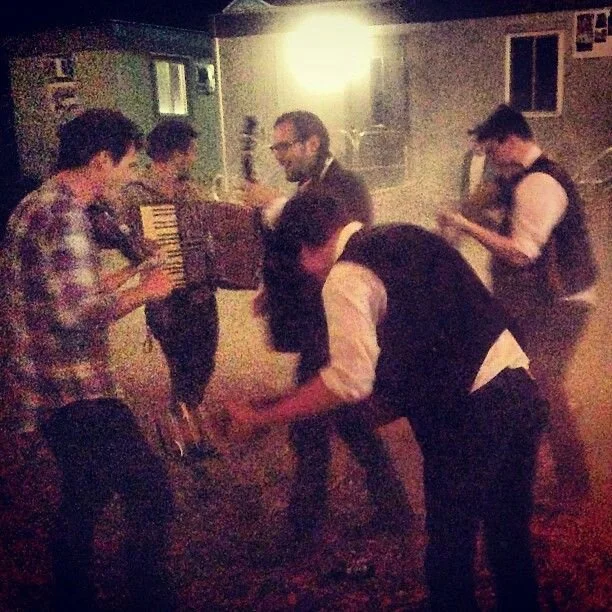
Image Courtesy: Pinterest
This is where my main frustration lives. There’s a strange contrast between my generation’s meme culture and the Millennial tendency toward genuine, if sometimes cheesy, belief in progress. I once joked on Twitter that “the moment everyone started hating on the millennial peak that was Mumford & Sons was the exact moment the country began to regress.” It was meant to be lighthearted, but it points to something real: we often hate things purely for the joke. Irony has become our default language. It is weird to live in a time where sincerity feels almost socially dangerous.
As a result, hope becomes a “core,” not a way of life. You scroll past it, feel something briefly, and then immediately return to a feed full of negativity. Meanwhile, Millennials—who we love to caricature—gave us earnest Tumblr posts, clumsy activism, acoustic anthems, and painfully sincere attempts at believing the world could improve. It wasn’t always cool, but it was undeniably alive and real.
By contrast, our generation communicates through layers of abstraction and irony. We can insult an entire demographic with one distorted image and we understand it, universally. I will show you by painting a picture in your head– We reduced you to a Roblox avatar. You were never funny, you were never special, you were one of a thousand three crazy guys with one crazy dream. You are the “lazy generation.” Your burger shack is as unoriginal as it is overpriced. So the stereotype of a young and hungry Brooklyn entrepreneur, dressed in a flannel variant, man bun, and scarf, is infantilized.
Dear Millenials, your entire generation is a joke.

Image Courtesy: Pinterest
Notice how impressive this form of expression is, notice how we’ve gotten very good at deconstructing everything for the sake of a laugh. Though I have to admit, this one is pretty funny.
Making fun of the generation before you isn’t new; that’s just how time works. What feels new is how thoroughly we dismantle memories, movements, and identities without offering a replacement or an alternative. We critique endlessly and create very little that isn’t immediately wrapped in a joke.
So this is my probably corny, probably very Millennial-coded idea: what if we redirected even a fraction of that creativity toward something constructive? There is ample opportunity to put that effort somewhere that matters.
Optimism should be a tradition worth protecting, not just something we meme into oblivion. Because at the end of the day, it was never really about the Portland burger shack prices, it was about the underlying belief that the future could actually get better, and that belief might be the one thing we can’t afford to keep treating like a joke.
Strike Out,
Selah Hassel
Saint Augustine
Editor: Kaya O’Rourke
Selah Hassel is an English Literature major at Flagler College and a Creative Writing minor. She is fascinated by language, perception, and the tension between the analytical and the imaginative. Her writing expression explores identity, cultural memory, and the textures of lived experience. She loves to travel, learn new things, and connect with people along the way. You can find and follow her on Instagram @selah.eve, and occasionally on Substack @selaheve.substack.