I Believe In Unicorns.
Sweet East, home of magic, where hidden amongst the green brush lie the most elusive creatures. Commonly rendered as prodigious white horses with a stately, sparkling, spiraling horn rising from the frons, the illustrious unicorn has been pictured since the beginning of time. We may never truly understand the origins of the unicorn; where they come from, where they live, if they even exist. All we know is what we see, and what we read. In literature, the presence of the unicorn dates back to as early as 416 B.C. in the Mediterranean East.
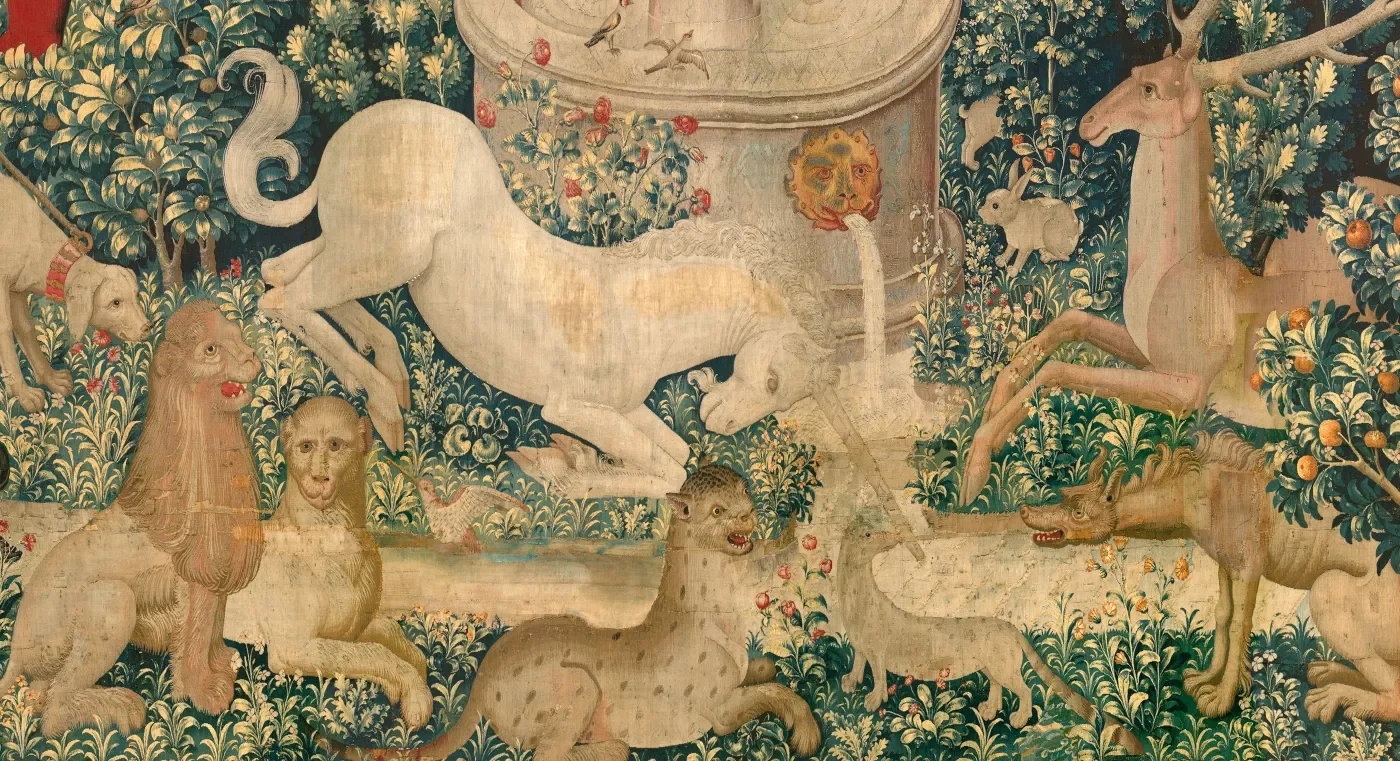
The Unicorn Tapestries (1495–1505) | The Public Domain Review
The history of the unicorn spans millennia. Accounts of single-horned creatures have long lived between the pages of ancient exploratory accounts. Ctesias of Cnidus, Greek physician and historian, writes of the unicorn in his book Indica, his account of India. Ctesias describes the creature as a wild, horse-like entity with a red head, blue eyes, and a multi-colored horn. He continues, saying the unicorn is not hunted for flesh, but for horn, as the unicorn’s horn was believed to make one immune to even the strongest of poisons. In modern translations, the word “Unicorn” is often said to mean ox or rhino. Similarly to Ctesias, Aristotle and Pliny the Elder have too written about unicorn-like entities in the wilderness. The mythology of the unicorn passed through generations of literature, so much so that there are even traces of the unicorn in King James’ translations of the Bible: “Will the unicorn be willing to serve thee, or abide by thy crib? Canst thou bind the unicorn with his band in the furrow? Or will he harrow the valleys after thee? Wilt thou trust him, because his strength is great?” (Job 39:9-11).
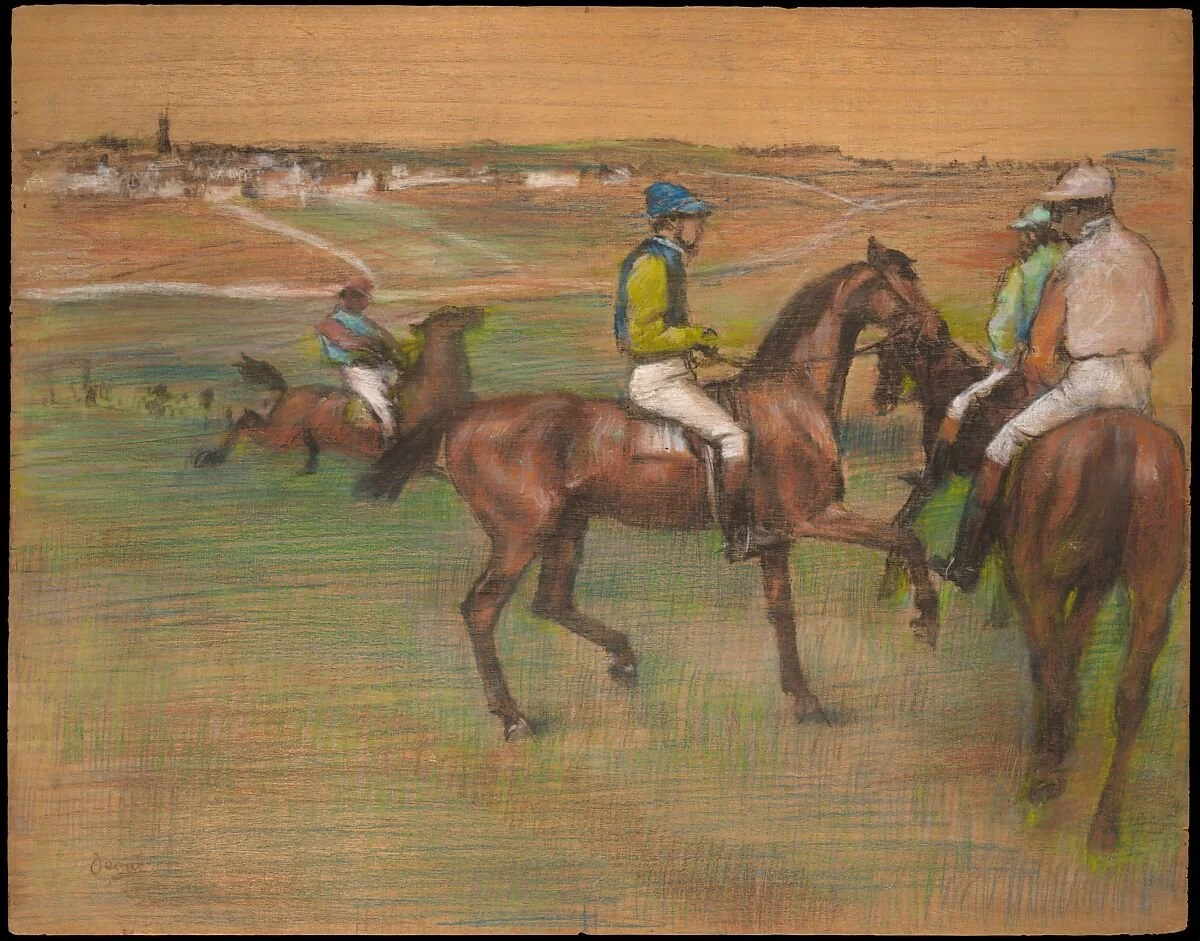
Race Horses by Edgar Degas | The Met Museum
The unicorn has been long revered as a symbol for purity, untamable strength, divinity, and the virginal woman. But, to understand the unicorn, we must first look to the horse. Horses have long been central figures of the media. From wild West cowboys to animated horses unfettered, this paragon of the animal kingdom has run film and literature like the wind (, Bullseye). A wild mustang running through dust winds as an emblem of freedom, power, and uncontained spirit. Like the unicorn, the horse is featured in spiritual and religious contexts. Horses are often pictured as shamanic guides for humans in several cultures: Celtic myths, Chinese culture, and in biblical characters like the Four Horsemen.
In the Chinese zodiac, February 17th marks the beginning of The Year of the Fire Horse. This cycle is relatively rare, and symbolizes an intense energy influx. The horse represents a transformative energy in the Chinese zodiac– confidence, lack of restriction, loyalty. All of these characteristics fall perfectly in line with the historical symbolism of the horse. The white horse harbors all of these same traits, plus some more. Purity, divinity, triumph– these are all synonymous to the white mare. In the Christian Revelation, the white horse was representative of the ultimate conquest and immense victory, with Jesus returning upon an all-white steed. Hinduism’s Kalki rides a white horse to restore the dharma; Native Americans regard horses as ushers of the Great Spirit. Celtic myth’s goddess Epona of fertility is the protector of horses. Epona, The Divine Mare, is known to show herself in the form of a white horse. She and her horses are the protectors of women and aides to the underworld. Featured in Legend of Zelda: Ocarina of Time and successive games, Epona is widely revered as a representative of prosperity, abundance, and fertility in women.
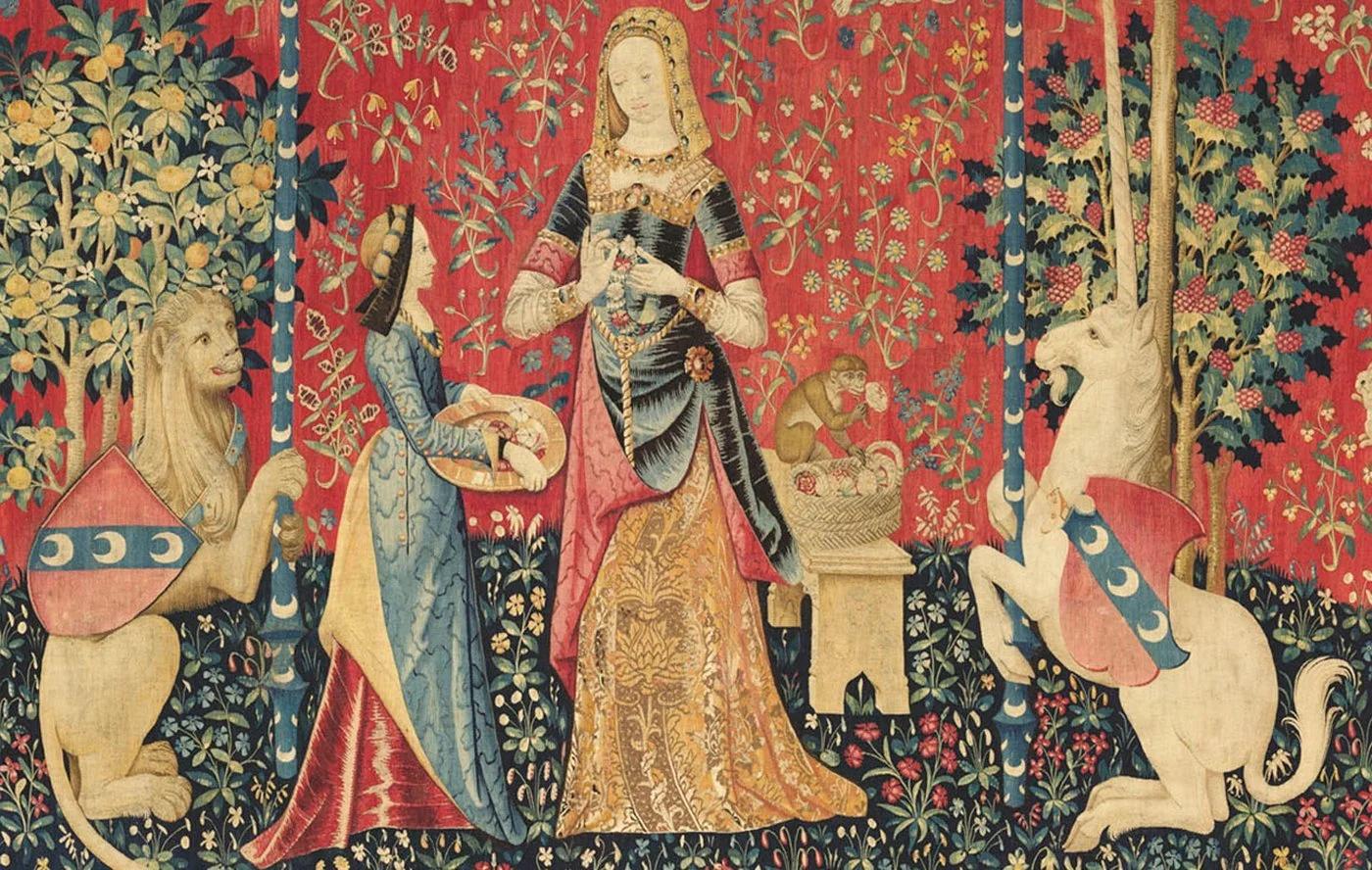
The Lady and The Unicorn | Musée de Cluny
The unicorn’s classic portrayal is reminiscent of the white mare, who is very closely linked to the woman. Ancient texts describe methods of capture: the hunt of the unicorn. Unicorn hunters lured the creature into the depths of the forests using a “naked virgin tied to a tree” (Parrish Morgan). Attracted to the virgin’s “matching purity,” the unicorn would become subdued in her lap, then, hunters would strip the unicorn of its “healing horn” (Parrish Morgan). This wild creature has been named historically akin to Christ and the moon, but to the woman too. Saint Ambrose asks, “Who is the Unicorn but the only begotten son of God,” however, the hunt and the pilfering of the horn seems a bit too close for comfort. Medieval women were praised for piety, chastity, and obedience– the unicorn too, and still it was hunted…
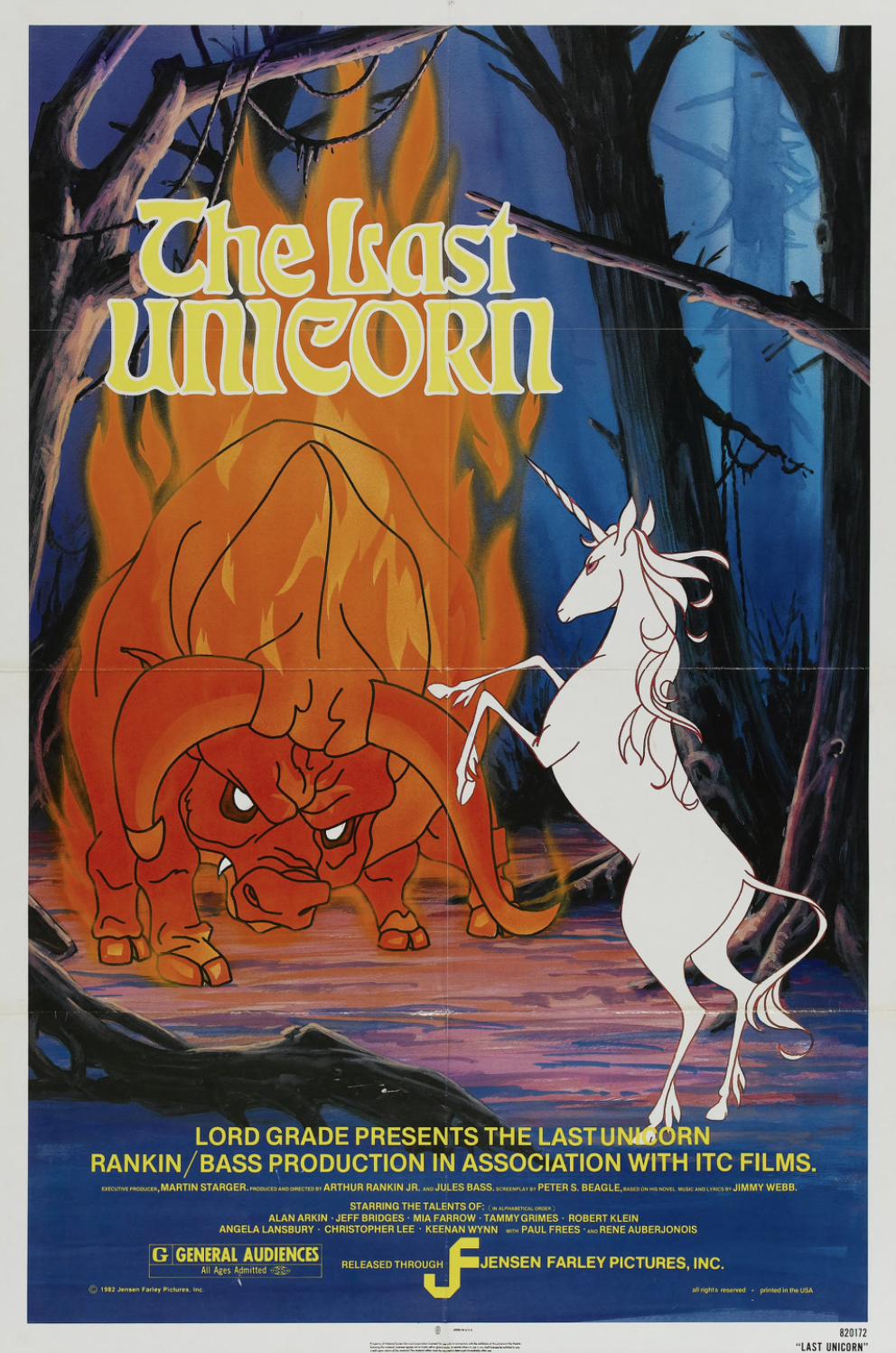
The Last Unicorn (1982) Poster |IMDb Online
1982’s animated success The Last Unicorn follows a bewitched unicorn, Amalthea, as she sets out to discover whether or not she truly is the last unicorn. Interestingly enough, when young spellcaster Schmendrick attempts to protect a white unicorn in the forest from hunters, it turns into a woman– leading lady, Amalthea. This film is highly revered for its commentary, not only on unicorn lore, but the woman’s experience. Most famous lines include that of, “Now that I am a woman, everything is strange,” and Molly Grue’s “Where have you been? Damn you, where have you been? [...] How dare you, how dare you come to me now, when I am this!” Molly’s line is heartbreaking– the animated older woman is distraught by the arrival of the unicorn,Amalthea, as she feels she is too old, too wretched to be in her presence. However, is this instead a note that the unicorn is not intrigued by the woman’s chastity? Instead, its affinity lies in the purity of the heart? In love. This animated masterpiece sits in the number two spot of my Letterbox’d Top 4 Movies. It is, to me, a beautiful intermingling of the magical unicornhood and womanhood. Amalthea experiences what it is like to become a woman, as so many do, and she experiences love for the first time in her life when she builds an attachment to Prince Lir, inevitably having to leave him for the good of unicorn-kind. What a telling tale.
Unicorns will outlive us all. Walking through the children’s section at your nearest Target will show you so– there are unicorns on every little girl’s dress, and every pink backpack. The Met Museum Cloisters house the most intricate tapestries ever made, embroidered with the stories of medieval unicorns and their attachments to virgin maidens. Recent films like Death of a Unicorn (2025) starring Jenna Ortega retell the stories of the hunters’ exploitation of unicorns. Danny Reinke has taken Berlin’s Spring 2026 ready-to-wear runway by storm with his beheaded unicorn coat. In a shocking collaboration with propmaker Karoline Hinz, the two artists created an oversized fur trench coat with the cascading head of a faux unicorn over the shoulder of the model– again, commentary on exploitation of nature and wildlife. Daniel Rosenberry of Schiaparelli’s lion-headed dress rings similar– ironically the unicorn and the lion have been two sides of the same coin for millennia. The sun and the moon, the magic and the natural, both taken for all they’ve got.
The unicorn, ever-emblematic of the magic and cruelty of humanity will forever live among us– beyond us. Unicorns simultaneously represent all that is good and all that is bad. As humans, we crave breadth and depth, and it is only natural for the longest standing mythical creature to symbolize it. Unicorns are real, and they’re living in the Everglades.
References:
The Hunt of the Unicorn Tapestries Depict a “Virgin-Capture Legend” by Amanda Parrish Morgan
Strike Out,
Anett Martin Sosa
Miami
Anett “Ani” Martin Sosa is a Senior student at Florida International University, pursuing a Bachelor’s degree in Writing & Rhetoric with minors in Communications and Marketing. Ani highlights fashion, art, Miami, and more in her short stories, poems, and personal essays. Her writing has been featured on the Strike Miami Blog, as well as Strike Miami's i08 and i09- she is most influenced by David Lynch, Joan Didion, literary horror, and surrealist art, which she explores on her Substack blog ‘Booksmart.’