Love without proof, Lust without promise
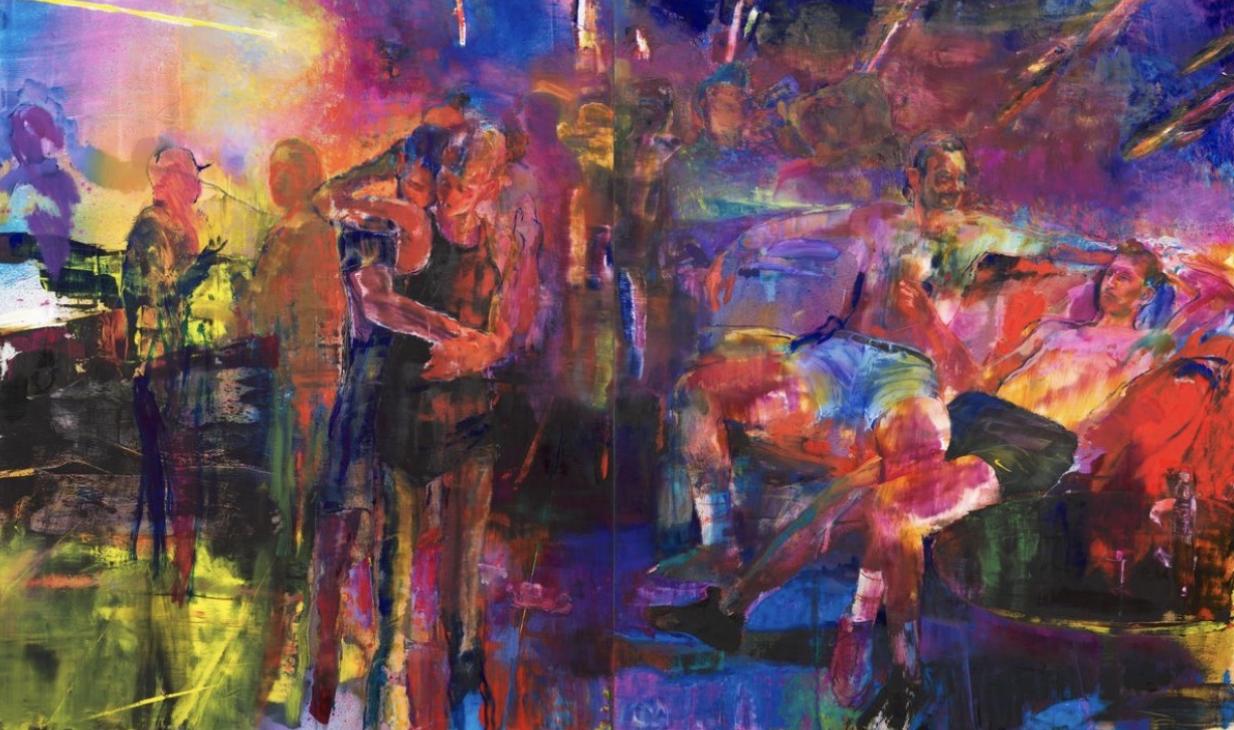
Merge, Doron Langberg, 2023 | Victoria Miro
In the bright seasons of everyone's life, we love extravagantly. Generosity could wash away our immorality.
I like to believe we've all shared similar experiences when it comes to an appetite for the universe. Personally, I’ve spent nights awake, in my own private festivals of thought. My fingers were sparks of the universe, and my ideas could revolutionize my being into something greater, whether greater truly existed or not. I have lived between train stations, have had amazing sex with men and women alike, and I believed completely that if I could love widely enough, generously enough, I would dissolve into the city itself and become unrecognizable to the systems that counted.
I could feel the prose of the great poets and artists flowing through me, and every symbol tore deeply into my conscience. For I understood everything. And could use this power for my own.
I felt the grandiosity of everyone's great love and inevitable heartbreak. Longing moved through me like currents in a vast ocean. A heartstruck melancholy threaded itself through my days, pulling the weight of my emotions towards tears.
But oftentimes, I found myself feeling washed away from everyone. With all this hunger, one can still feel alone in an ideal situation.
Throughout all phases of life, we crave someone: romantically, platonically, sexually. We crave to sit in our poetic landscapes and bask in the beauty. We crave someone who might have the desire to investigate the strange architecture of our minds and decide, for whatever reason, to stay.
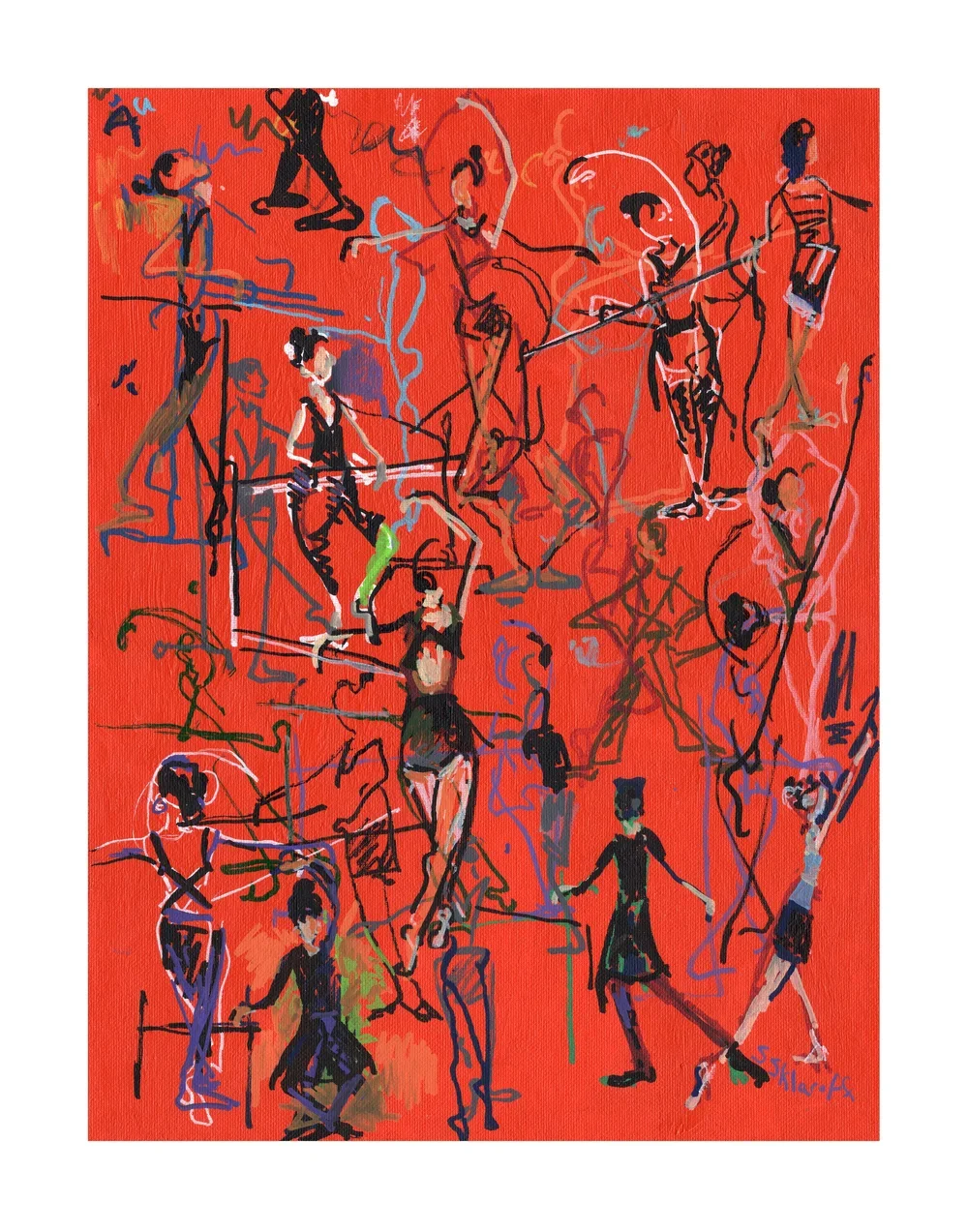
At the Ballet, Sonya Sklaroff | Sonya Sklaroff
In today's world, with a generation engulfed in the performance and curation of identity for digital consumption, we have created a larger world in which to negotiate our closeness and privacy. We have more people to reach and fewer people to touch. We understand the grammar of intimacy, but not its accent.
We sit among friends and family like polite variables, nodding at the right moments, voicing our opinions when necessary. We love each other; I do not doubt this for one second. But love has become architecture: supportive, enclosing, and permanent. It is something you were born with and expected to inhabit correctly. It was a shelter that assumed one’s shape before they had learned what their shape was.
Carefully, we return to those we love and continue looking for those we can adore. People study the choreography, memorize the smiles, and learn where the silence is needed.
But for those we love, how do we measure such a connection? Is it our time together, our service to one another? Is it the number of memories accumulated together? Or is it a more secret language than we anticipated? That uncertainty bothers me.
How could I prove I truly knew anyone? What was the test of a connection? What theorem could certify that two lives had ever touched? I searched for necessary assumptions, for a definition that wouldn’t collapse in on itself when examined thoroughly, but I was at a loss. I began to suspect that love, like many natural, elegant structures, relied on axioms no one had ever bothered to prove. It functioned both beautifully and blindly. And I was forced to live inside it without knowing the rules.
Sometimes love felt like surveillance. Sometimes it felt like debt. Sometimes it felt like a promise that required a version of me I could not locate within the monuments of my mind. I wondered if I was missing a register of sensation that had been given to us as we exited the womb; a native frequency lost in transit.
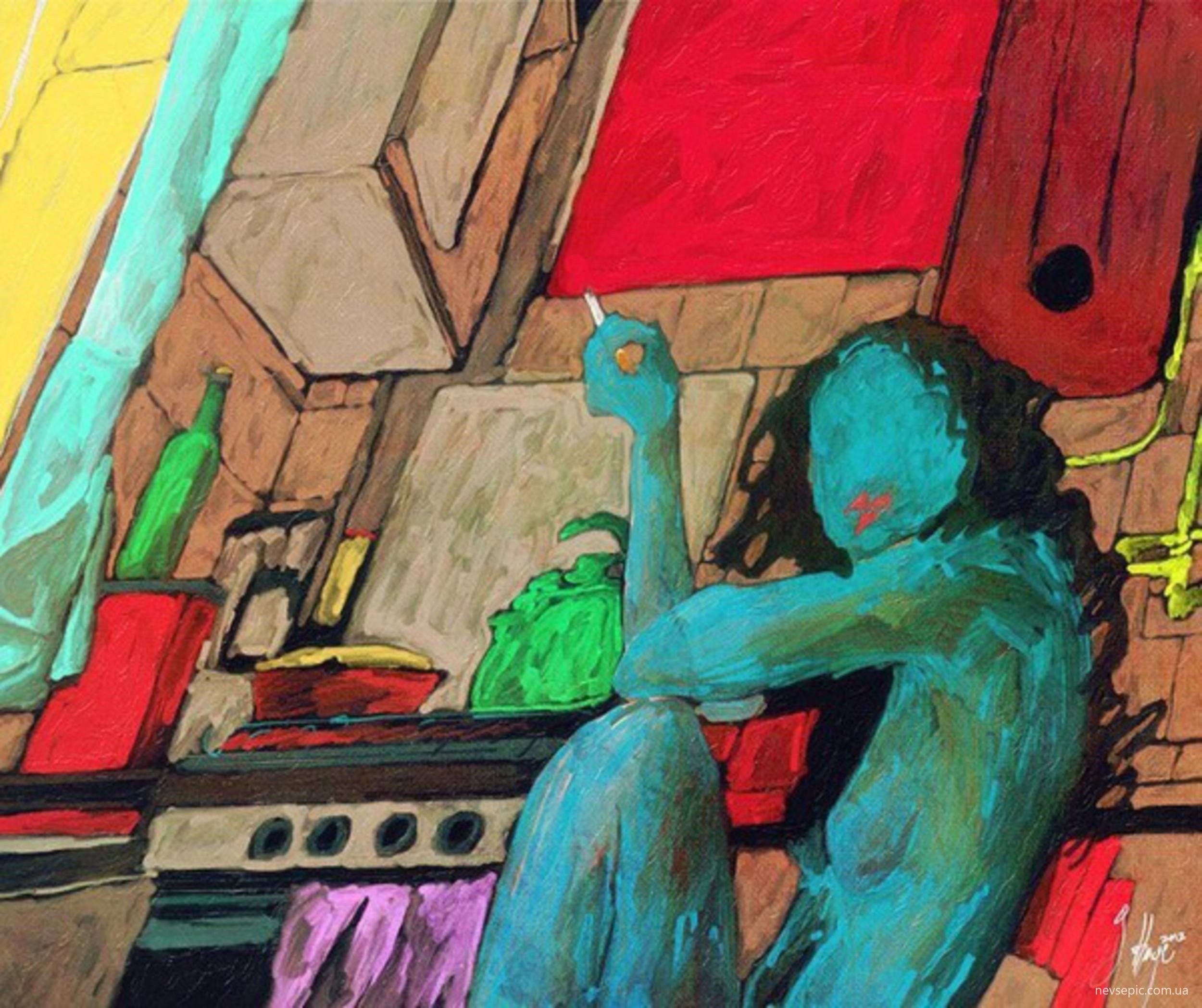
Via Pinterest, Benoit Sabbaj | Benoit Sabbaj
I knew of lust, though. Lust had whispered its way through my entire being all my life. I have always been far more attracted to the expansiveness of people's thoughts. Lust did not ask me who I wanted to become, nor stability in the same sense. It arrived like a temporary certainty which should not be mistaken for truth. Lust occupied the rooms I was in and rearranged its priorities. Lust made me feel generous and reckless, radiant and unrecognizable among the people that I wanted to study so vigorously. Through lust, fantasies could be lived, and I could study the construction of the human being who wishes to indulge in the fantasy with me. I could love people before I learned their shapes. I don't dare mistake momentum for meaning, but I love the acceleration with no arrival. Lust made me ambitious, not only allowing me to navigate money and status, but also to seek closeness. For the intoxicating fantasy that two lives could cancel each other’s loneliness.
However, my relationship with lustful people was not built on companionship or long discussions of self, but on the recognition that arrived too quickly to be questioned. I moved toward people as much as I claimed them. I absorbed their attention and engaged their imaginations before I entered their names. They occupied my curiosity with their uniqueness. Desire was an assertion for me. I yearned to leave impressions that lingered after my absence. Closeness, although pissed, I am still unable to define it, I like to believe, is less of a place to inhabit and more of a door to cross.
In defiance, I loved the illusion of it all. But lust is unstable and will collapse under its own weight, not quietly, but in heat; lust has a pattern. Lust invents futures with breathtaking confidence and dissolves them just as quickly, leaving behind only an echo of promises that would never make it to morning. The arrivals were radiant, and the departures were inevitable. Lust doesn’t necessarily lie; it simply doesn’t stay for long. You will still go to bed alone. I began to have the nauseating fear that my life would become a sequence of beautiful false proofs and collapsing fantasies. And still, when lust knocks on my door, I rush to open it and listen to what it has to say. For love was silent, and I wondered if it was even there at all.
Strike Out,
Miguel Blas
Miami
Miguel Blas is a writer and photographer whose work lingers somewhere between fashion, desire, nightlife, and the romantic remnants of city life. As a Mathematics and Computer Science student at the University of Miami with a minor in Art History, he brings an analytical mind to work that is often driven by intimacy and visual memory. His writing and photography, including his ongoing project Silhouettes After Sex, explore fleeting encounters, queer intimacy, and the spaces people leave behind after they disappear. After living and working in Paris, Miguel became interested in fashion as both a language of self-invention and a record of the lives lived within it. For Strike Magazine, he hopes to write about Miami through its people, clothes, parties, and quiet moments of romance.
Edited by Samantha Jimenez and Anett Martin Sosa