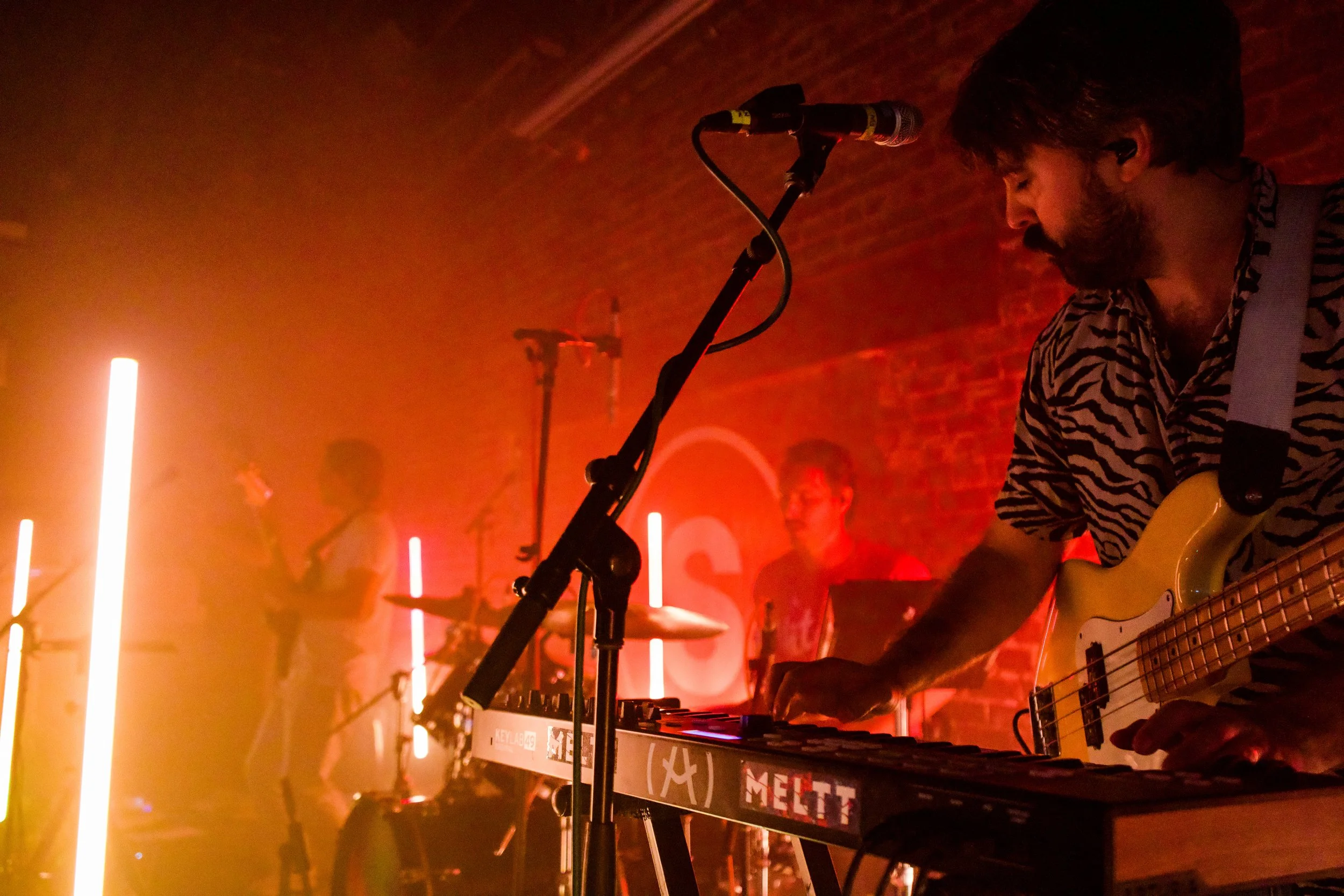
Image Courtesy: Strike Magazine Orlando
Dreamy synth, smooth instrumental and a light show that transports you to a technicolor-esque wonderland. That’s what I got a sneak peek of before psych-rock band Meltt's first-ever show in our city beautiful!
The band consists of four members: Chris Smith as Lead Vocals, Guitar, Bass and Keys; James Porter on Guitar, Keys, Bass, and Vocals; Ian Winkler on Bass, Keys and Guitar; and Jamie Turner on Drums. They were here in Orlando as part of their North America tour following the release of their wonderful new album, Pathways.
The Canadian ensemble performed at the Social, and I had the opportunity to pick their brains on their process, their thoughts on touring and their advice for young musicians before the show. I also got to stick around and see the show, which, spoiler, was nothing short of amazing.
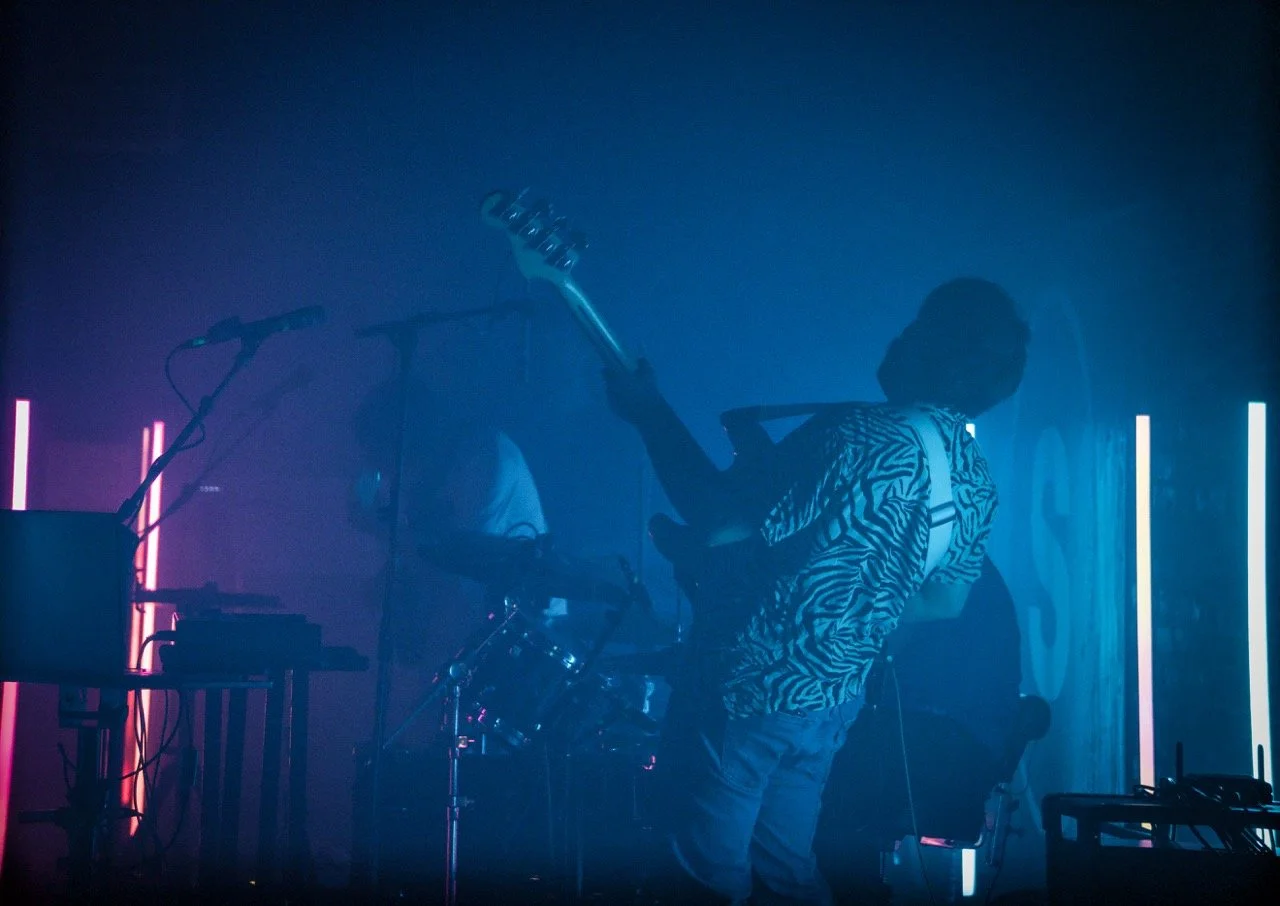
Image Courtesy: Strike Magazine Orlando
Q: A lot of our readers are starting a new era of their lives: They’re moving to a new city, starting at a new college, starting a new career. Your new album “Pathways” is about standing on the precipice of a new era in all of your lives, about going down a new path. Now that you’re all also entering a new era of your lives, what’s some sage advice you might give our readers who are starting that new chapter?
A Winkler: Just be open to new experiences for sure, like not limiting yourself or what you’re doing and what you want to explore I think is a big thing, especially at that age.
A Porter: Yeah, I think college I would say, explore as many things that you’re maybe just a little bit interested in. I feel like you could surprise yourself with what you find interesting. And I think it's good to follow your interests.
A Winkler: I mean, none of us have music majors, you know!
A Porter: It doesn’t have to be a job in any capacity.
Q: So what’d you guys major in?
A Winkler: I was in electrical engineering.
A Porter: I got a major in History and a minor in creative writing.
A Turner: I got a BA and then a law degree.
A Smith: Film. And the film stuff has been actually very helpful.
A Winkler: Our stuff, not helpful, haha.
Q: Any advice to someone who’s starting a career in music, or maybe they started doing something with their friends, how do they turn that into this?
A Winkler: I was part of a different band in university, and for me, it was just so fun. It was kind of like part of my social life, to be in a band and go out to the bars, play shows and hang out with friends and stuff.
A Smith: For me, I think, like, it’s important to write your own. Doing covers is great for your friends and stuff, but write your own songs as well; try it out. And, I would say, like, tangible, direct piece of advice: Buy a laptop and audio interface specifically for music and just play around with that stuff. Start experimenting with that kind of thing, then songs may start to appear, and you could just make them in your bedroom. You don't need that much equipment to make music, so if you’re creatively inclined, if you’re interested in that, just get the basic gear, like really cheap stuff. Then you could put that music out, and if people like it, then maybe you could put a show on, and people come to that show.
A Porter: I feel like, to really try to spread the net, having music on the internet is the easiest way to, like, hear it and find you, even more than just a local show.
A Turner: In the college era, I think, just play as many shows as you can. Whether it’s a house party, or it’s in a club or whatever you can get. Just start out playing those shows. Our college experience was playing shows in any kind of venue we could get our hands on. Lots of house parties.
(ALL): Lots of random house parties.
A Winkler: These days we have to actively limit the amount of times we play one certain city in a certain amount of time, but yeah, back then it was like every single gig you could possibly get!
A Porter: I think also, make a lot of stuff, and don’t be too critical about what you’re making. I feel like when you’re first starting out, it’s very easy to be like, “Oh, I’m not very good at this,” or something, but I think, just make a lot. Even if you’re not releasing it, just make lots of ideas and finish doing stuff.
A Smith: Yeah, the amount of songs and ideas that we leave on the table versus what actually gets released is a massive ratio in the other direction.
Q: What's a professional milestone you’ve reached that you're able to look back on now and be like, “We did that!” maybe individually, or as a band, and what is something that you're still maybe aspiring to achieve?
A Porter: I think a big one recently was we did our first tour of Europe which was, that was always like a, “Oh wouldn’t that be cool to do one day.”
A Turner: It was mind-blowing.
A Smith: And to have people actually come to the show out there.
A Winkler: Booking the show is one thing. Having people go is another.
A Porter: That was a big, “Oh, wow, this is pretty powerful,” moment. It's cool that music has taken us this far, allowing us to explore these places.
A Winkler: I think for me, it's upcoming, but it's our upcoming hometown show on this tour; it's like one of my favorite venues in the city.
A Turner: Booking a show at the Commodore Ballroom is just. Amazing.
Q: Do you see yourself evolving into any other genres? Are there any more current artists that you might be taking inspiration from, or are you at a point where you have a sound you like, and you’re going to keep mastering that?
A Porter: I think to make it something we want to all keep doing and keep it interesting we would definitely have to evolve and change. That's the whole fun of it, changing and developing and stuff.
A Winkler: We never limit ourselves to just one sound, or something. There's never a conversation about, “It should sound like this.”
A Smith: It’s just natural.
A Turner: As we listen to other bands, and as other bands release other music, we definitely pull that in and get inspired all over again.
A Porter: Yeah, the influences are ongoing for sure, all the time.
Q: Your music does feel visual, like you can almost see these colors and patterns with that psych element, so are there any physical forms of media, or like non-musical media, visual art that you draw inspiration from?
A Porter: Yeah I think a lot of films like a lot of different movies and stuff can be a visual thing that will be in your head while you're making something, or like even paintings. I think recently, in the past couple years, I’ve really been into going to art galleries and then feeling like, “Oh, how would you do this? If this idea was an audio thing, what would the equivalent of that be?”
A Winkler: For me, I love what I read. I find it ends up in the lyrics. Musically though? I think also nature comes in.
A Porter: Yeah, sometimes it ends up at the same time.
A Winkler: But pretty much always music first.
A Smith: Or at least we don’t know it's done until we say, “That actually is a lyric”. We don’t decide that it's necessarily done until way later.
Q: I guess it kind of leads into the question of production: do you ever get to a point where you’re like, you want a body of work to be cohesive, you want the album to be cohesive obviously, but do you get to a point where you’re like whoa, these songs might sound too similar, and how do you progress past that?
A Smith: We have to cut one usually, I guess, that’s the quick answer.
A Turner: Yeah, choose one, cut the other one.
A Winkler: It's usually not that bad, but yeah, sometimes we find these are like a little too similar; maybe we should spread it out a little bit more. When we’re writing, we’re not really thinking about cohesion, but then when it comes down to choosing-
A Smith: Like choosing the songs-
A Winkler: Yeah, like choosing what the album is gonna be, it's a big thought.
A Porter: I think for us it's more common to have things that sound too different to be like how do we make these sit on an album together. It's not the be all end all, but you want the album to feel like a cohesive kind of journey at least, and not be like, too jarring. It kind of would take you out of it a little bit, I think, if the styles were jumping around too much.
A Smith: Track listening is a big part of that.
A Winkler: It’ll still tie together even with just the musical style.
A Turner: Even just like the fact that the drums are just all recorded in one session, I feel like that helps something about the glue of it.
Q: I wanna talk about touring, because you guys are actively on a tour, obviously, so how is that for you guys? Is touring something you like? I’m reminded of the Michael Jackson clip where they ask him if he likes to tour, and he says he hates it, but they tell him he can’t say that, so he just goes, “I love to tour.” So do you guys enjoy it? Is it something that puts you in a creative headspace, like are ideas birthed while on tour, or is it more a time for you to look back on what you’ve done, like a contemplative time?
A Winkler: We have never been a writing band on tour.
A Turner: There’s no time.
A Winkler: We’re still doing a lot of the stuff ourselves. Like we're still sharing the driving, still doing all the loading. There's not enough downtime with instruments.
A Turner: And just the workflow of how we do it wouldn’t really work. Touring is kind of just touring, and you get into that mode of things, and you get into, like, writing mode afterwards. But it's always exciting to be able to play, like in front of people. Like the experience of playing songs in front of an audience is a totally different feeling, I think, than you get from releasing music, which is also fulfilling in another sense. But having people listen to it, like coming in and playing live, getting into that mode is…
A Smith: The magic still hasn’t worn off of being thousands and thousands of miles away from our hometown and people are actually still showing up through it.
A Porter: I think it's also like, the songs take on a new life when we’re playing them live, and they evolve a little bit, which is also really fun. So it doesn’t feel like we're just playing the record, kind of. It’s a little more expansive than that. It kind of becomes its own thing. You tweak an album over time to make it better, but like the live thing is like “Oh, we can tweak the set and just get to perform and stuff and from night to night be like, oh, at this moment try a little different thing.” Like, just in our personal choices were making and playing stuff I think.
A Smith: And it contextualizes releasing music. I guess, because when you just put on the internet and you see comments, it's awesome, obviously, but it's nice to actually meet the people that are receiving the music and they're telling you how much it helped them, and like I feel like I do that to artists I go see. The reversal is cool to experience too.
Q: Well, yeah, how does that feel being on the other side? Do you ever have moments where you're like, whoa, this is crazy, you're up on stage, and you see people? How would that even feel?
A Smith: It's crazy, yeah. Like, some people start getting teary-eyed or crying at the merch table sometimes. It’s like really crazy, like the emotions that they have.
A Winkler: It's cool; it makes you feel very valuable to do that, like when you get that kind of human connection.
A Porter: It's just really meaningful.
Q: Did you guys ever imagine you would be doing that?
A Smith: No!
A Winkler: Yeah, not really.
A Smith: Not really, like it seems like a cool thing to do, but I never think it could really happen. It seems kind of insane.
A Winkler: Girl last night right in front of me, just like every time we started a song, she went, “Oh my god!”
[LAUGHTER]
A Winkler: And that's the best thing about tour too, it's like a good, unexpected thing.
Q: I guess that leads into my next question: what has been your favorite tour memory so far? Any favorite cities? Was there any culture shock with crowds between countries?
A Smith: We had one moment in Europe, I think Manchester, maybe since Mexico City, which was another big highlight, but I have never heard one of our songs sung so loud.
A Porter: Yeah, people were even singing the instrument parts.
A Smith: Yeah, like the instrument parts.
A Turner: It was really cool.
A Turner: We played a show in Mexico City, which I think for all of us is probably still the most exciting, amazing show we’ve ever played.
A Winkler: We’ll be going back soon in about a week- actually less than a week.
Q: Do you guys have any pre-show rituals? Any team-bonding activities?
A Winkler: No, you know, we get in a little huddle, do a team huddle-
A Porter: Try to shake it off before.
A Turner: Yeah, a little weird huddle thing right before we go on stage, but sometimes we're like we're gonna go on a walk right before. Like it's nothing really, but just a little warm-up.
A Smith: Yeah, it's a little warm-up.
A Winkler: We put pants on.
[LAUGHTER]
A Smith: Haha yeah, that's important.
A Turner: Yeah, that’s a consistent ritual for sure. No shorts, no shorts on stage.
Q: A lot of our audience, again, are creatives like you guys; they’re in fashion, writing, music, and anything in between. So, as creatives, how do you go about getting yourself out of writer’s block or a creative rut, individually or as a group?
A Porter: I feel like you have to accept that writer’s block will happen, and it will be a phase, and you just have to keep making stuff and, like, keep showing up. I think if you get into the consistent practice of making things, you will just have a phase of making stuff where you don’t feel inspired, but if you just keep making stuff or seek inspiration from outside, that can be helpful to bring in. I feel like it's really about consistency, and then that can help you find your way out of those periods.
A Porter: I like also feel that all that time making uninspiring stuff is still useful because it's like you're either figuring out a technique or you're figuring out what you don't want to do, or you're figuring out something to respond to, like, that you're not excited about. So I think it's all useful.
A Turner: And I think if it's like an acute period of writer’s block, then I think just getting outside, doing something wrong, but never just to completely get your mind off, whatever, and coming back fresh. Like if it's just an afternoon where you just can't, you know, then just do something else with less pressure and then return a couple hours later or the next morning and get back to it again.
A Porter: Come back with some more cultural inspiration, or something, some art or movie or a book.
A Turner: Or nature or something.
A Porter: I think it could also be helpful to set aside a certain amount of time. And just day-to-day practice. Be like, “I’m gonna for these hours, or this set period of time, I’m only gonna work on music,” and then if you don't get anything done in that time you gotta go. It's whatever you know you put your time [into it]. Like, I don’t think you have to break yourself necessarily to get there.
Q: A lot of our readers are young and being young in Florida right now is a little daunting because it always seems like there's some great social unrest or political worry. You can’t turn on the news without freaking out. What do you want your music to be for young people? Like an outlet for self-expression? Something after a long day that makes you feel calm?
A Porter: I feel like ideally, people listen to our music and have some kind of cathartic release, of some kind. It could be that it makes you feel really happy, but it could also be like maybe it makes you cry, but then you feel better afterwards.
A Turner: Any value that any listener can take from it is what we’re aiming for, whether it’s cathartic release or just you know, whatever they can find in the music to make them feel a certain way, or deal with a problem. We try to put our own emotions into the music and so if people can relate to that and kind of find some kind of meaning or value in it, then we, I think, have done our job.
A Winkler: Getting lost in music is one of our greatest pleasures, so trying to make music that you can get lost into I guess, it's just a good feeling.
A Porter: Definitely, bringing positivity.
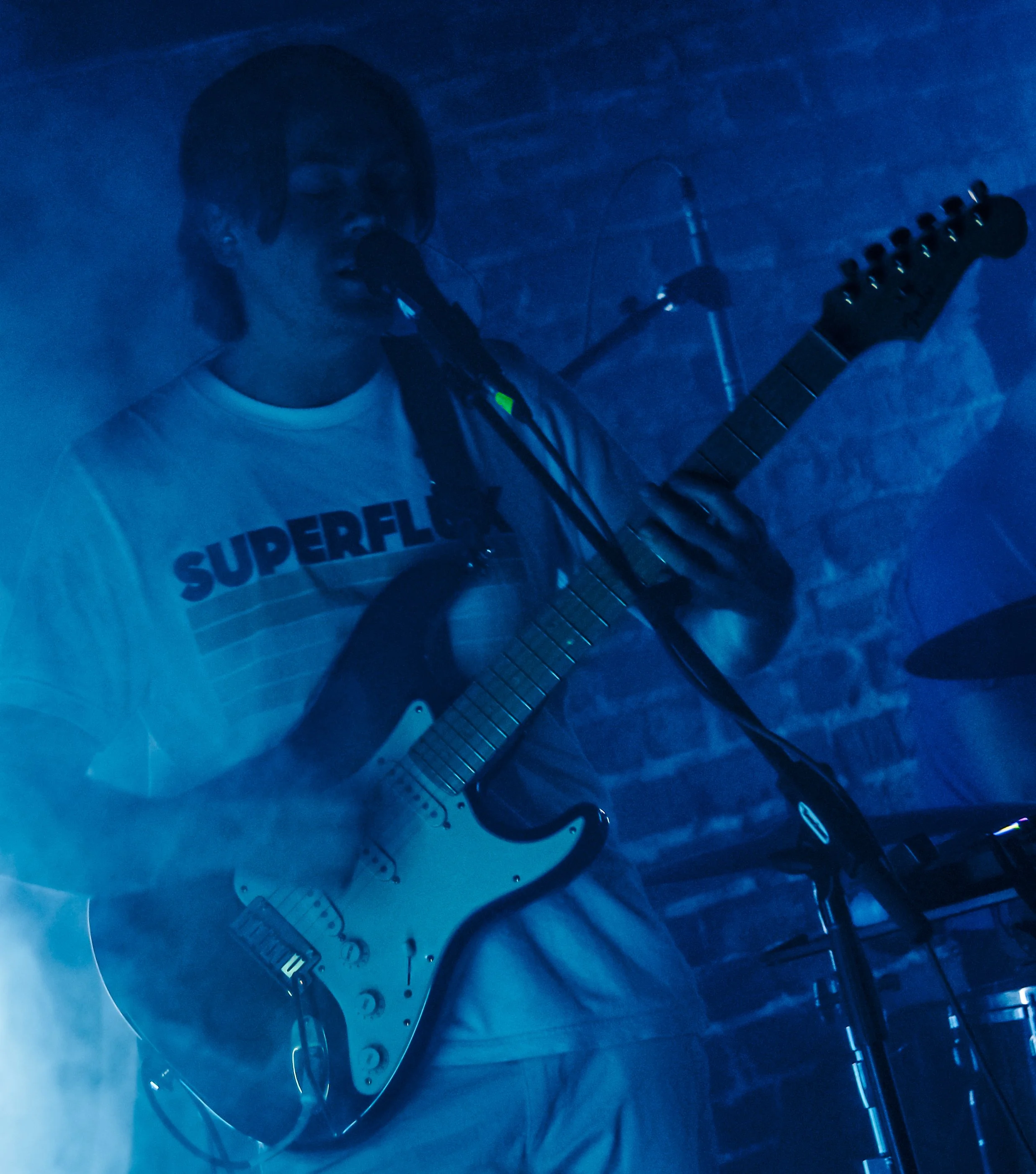
Image Courtesy: Strike Magazine Orlando
Pathways, Meltt’s newest album, is out now, and if you haven’t already, definitely give it a listen. The next time you find yourself ripping your hair out on I4 or trying to calm down in the library before a test, or maybe in need of some grounding at the gym, hit shuffle and let your worries melt(t) away.
Strike Out,
Rosita Mecherie
Edited by Arsheeya Garg and Kaitlyn Clarke
Rosita Mechérie is a Staff Writer for Strike Magazine Orlando and a sophomore at the University of Central Florida, where she is majoring in Journalism and Film. Rosita is a self-proclaimed fangirl, an aspiring cinephile, and she could talk you to death about anything pop culture. She hopes to have a career in entertainment journalism and eventually write a novel or two. Reach her at rositamecherie@gmail.com or @writtenbyrosita on Instagram.