
There’s a difference between inheriting something and practicing it.
I inherited the language fragments, the cultural traditions, the long dinners where no one leaves hungry. I inherited the stories about Bitola and the way my mom still pronounces certain words differently, even after decades in the U.S. I inherited the food, but mostly as someone who showed up when it was finished.
Raised in South Florida with a Chilean dad, I learned early on which parts of myself were easier to explain. Chilean required no map (usually). Macedonian did. So, my pride lived mostly in memory and family gatherings, in aluminum trays of food at church halls and summer visits to Ohio where my Macedonian side resided. I knew what everything tasted like. What I didn’t know was how any of it was made.
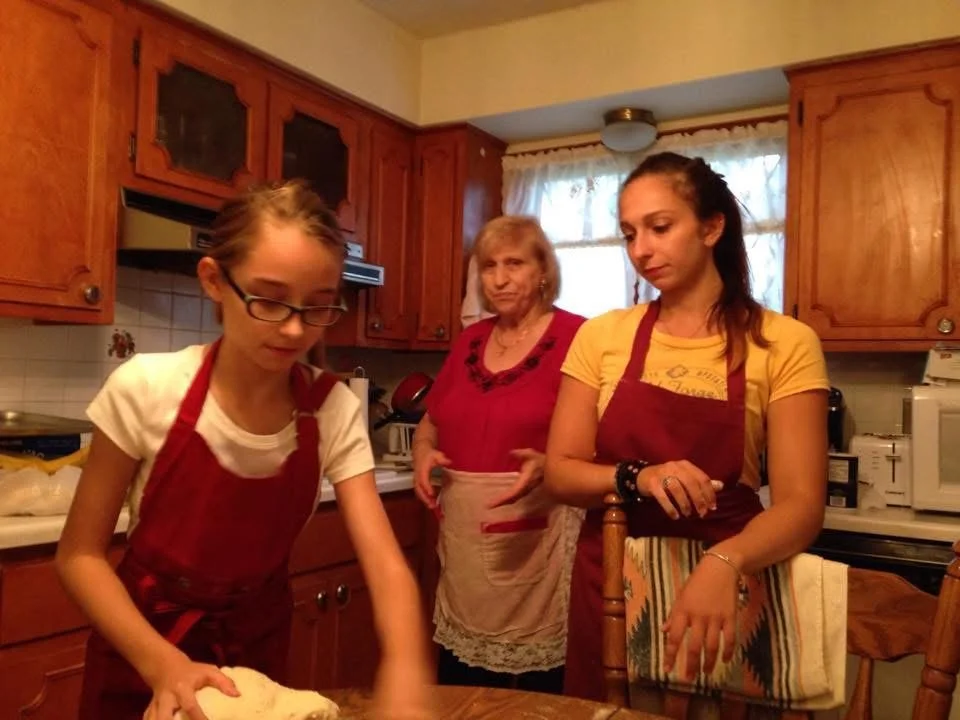
My cousin and I making bread with our grandmother. Please ignore the side part and Nordstrom Rack glasses.
Image Courtesy of Sofia Bravo
Naturally, when pitching ideas for our blogs this semester, I thought it would be fun to challenge myself to cook Macedonian dishes as I had just gotten a cookbook for Christmas. Once I was actually assigned my pitch, the fun turned into fear. Flipping through the book, I saw the recipes looked beautiful, precise and completely out of my league. I knew I couldn't just admire the food from afar anymore.
So, for my challenge, I made a plan: three Macedonian recipes in three weeks. One per week. No shortcuts, no calling my mom for step-by-step rescue. The goal was simple: learn the food, learn the techniques and maybe, just maybe, convince myself I could survive in a kitchen.
The thing is, I’m not exactly a natural cook. Better yet, I’m not a motivated one. And my roommates can attest to this. I can follow a recipe somewhat accurately, but I usually stick to my signature dish: Annie’s Mac and Cheese. So attempting three complex Macedonian recipes felt like double the challenge. This was both about heritage and about proving to myself I could cook without setting off a smoke alarm (which I have, unfortunately, almost done twice this semester).
Week 1: Kifli
Kifli are soft, crescent-shaped rolls that can be filled with feta cheese, jam or left plain. They’re buttery, slightly sweet and deceptively simple until you realize dough is not your friend.
I quickly learned my four-girl college apartment had virtually no ingredients to bake with. Active dry yeast? No shot. Whole milk? Flour? Sugar? Absolutely not. So, this was a pretty pricey Publix run to start out with.
The first problem at hand: The yeast didn’t bloom.
I’m still not quite sure what blooming is, but searching up what “bloomed” yeast actually looked like showed me I was on the complete wrong track. My warm milk, yeast and sugar was suspiciously inactive. I waited another five minutes. Then ten. Then, it started clumping together and freaking me out, so I decided to continue forward and pretend that wasn’t happening.
I kneaded my dough on the kitchen counter with my roommates watching Dance Moms Season 4 in the living room, which definitely did not help my stress levels. I actually felt like I was in a crisis. The dough was stiff. Not smooth, and definitely not elastic (I checked). Just purely resistant. Like over-activated slime.
When I rolled the dough into a circle and cut it into triangles, the shapes were uneven. And after filling and rolling into crescents, a lot of them resembled little crabs, and one even looked like the state of Florida. Trying my best to ignore this asymmetry, I slid the tray into the oven at 350°.
After 20 minutes, they came out pale and slightly dense. Not inedible, just heavy. The inside wasn’t airy; it was compact, tight. I knew it was the stupid yeast.
Still, the feta melted and it tasted similar to what I remembered, so I call that a win. I ate two before dedicating the rest of my sanity to cleaning the mess I left behind in the kitchen.
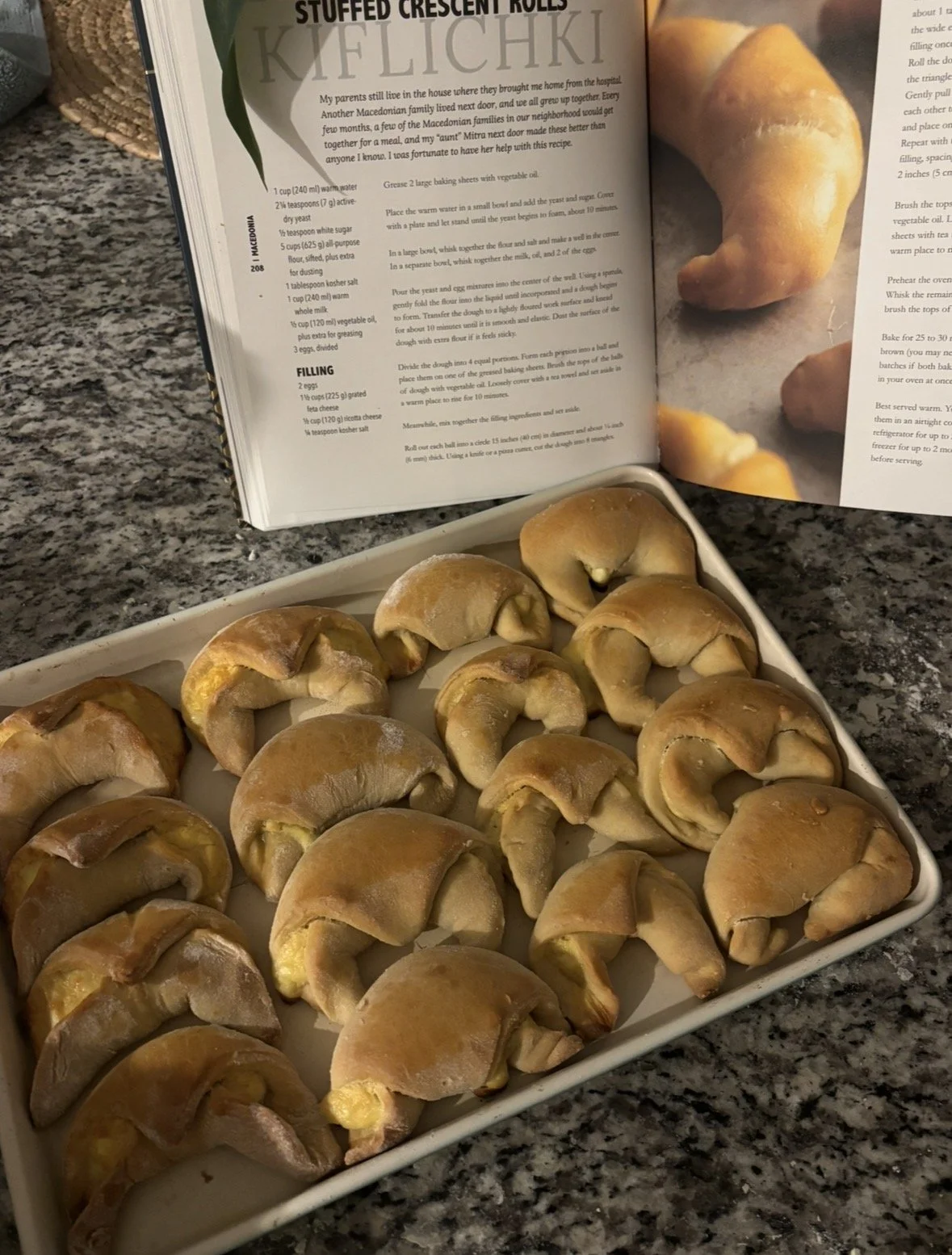
My little cheese-filled crabs, set up next to the ideal form. Can you spot Florida?
Image Courtesy of Sofia Bravo
Week 2: Polneki Piperki
Piperki are roasted, stuffed peppers usually filled with rice, vegetables and ground meat. Also commonly known as stuffed peppers.
Stuffed peppers felt adult. Like something you serve at a table with cloth napkins. But it was my favorite growing up, so I wanted to at least make an attempt.
My first mistake was in calculations, of course. I decided to split the recipe in half because my fridge space definitely couldn’t take four large red bell peppers. Everything was going smoothly and my confidence was surmounting until I combined the ground beef and rice mixture.
While I halved everything in the recipe, I conveniently forgot to half the ground beef, causing a protein-loaded stuffing that protein-maxxers would be jealous of. I tried to take some out, but it was no use. It was too late.
The act of stuffing peppers also sounds simple until you’re trying not to overfill them and simultaneously avoid spilling rice everywhere. My peppers leaned and slumped in the cake pan, which was the only pan I had.
The rice? Severely undercooked. I tried my best to ignore the crunch, but my concern for my teeth grew with every bite and I had to set the dish aside. But the flavor? Definitely gave myself a pat on the back with this one. I was more amazed that I sauteed and simmered something (look at me go!).
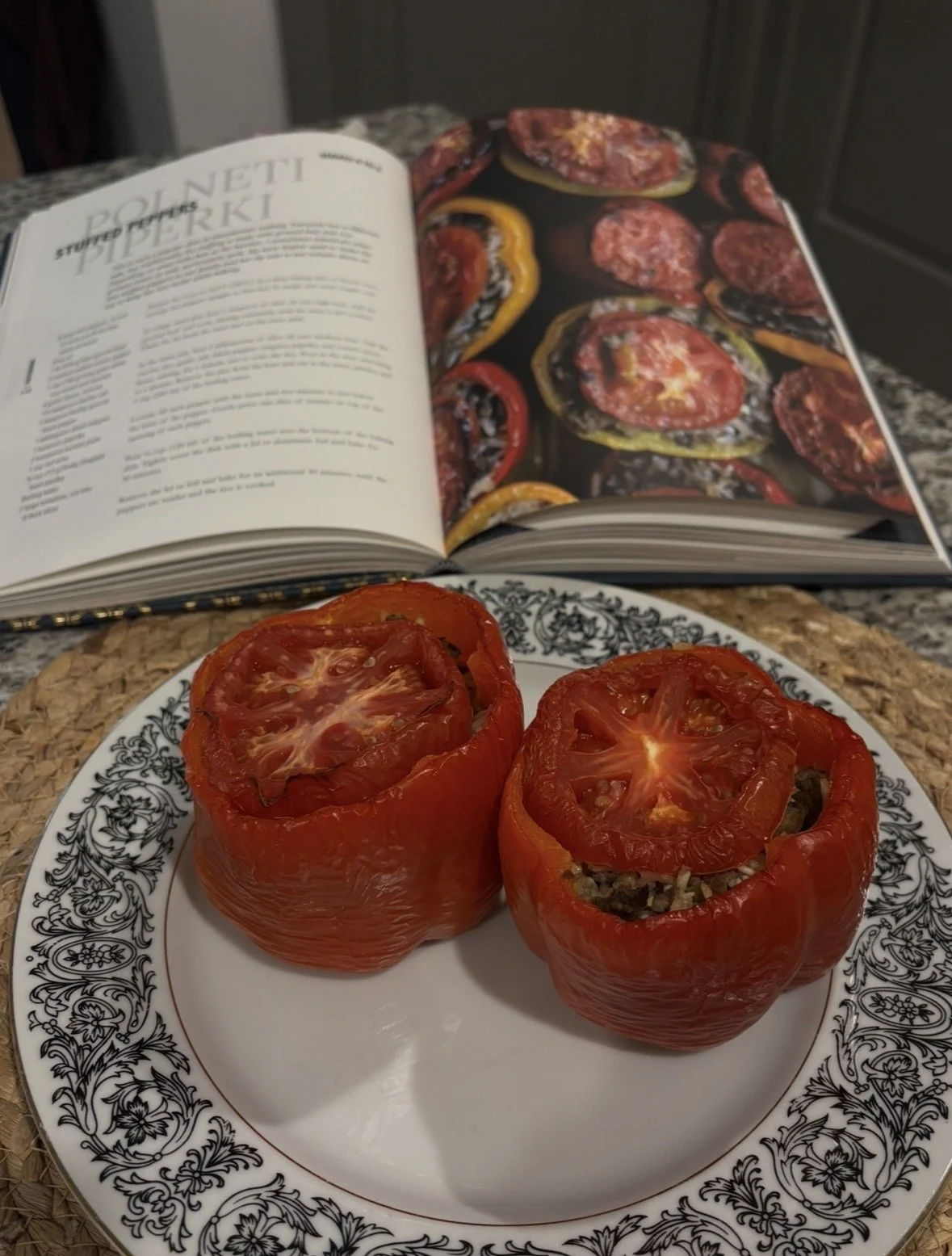
My two measly, TMJ-inducing peppers. A loss, but at least my roommates said the kitchen smelled incredible.
Image Courtesy of Sofia Bravo
Week 3: Baklava
Baklava is Macedonia's ultimate sweet treat: layers of phyllo dough, crusted nuts, butter and a sweet syrup.
The final boss. My favorite Macedonian treat, but one I wasn’t excited to make.
Phyllo dough is fragile. It dries in minutes if you don’t cover it with a damp towel — something I learned after the top sheets started cracking like old paper. I frantically removed the towel, dabbed butter between layers (because we don’t own a pastry brush), and carefully sprinkled the mixture of crushed walnuts, almonds, sugar and cinnamon. The mixture was hand-chopped by me because we don’t own a food processor, and I may or may not have injured myself during the process.
The layering felt meticulous. One sheet. Butter. One sheet. Butter. One more. Nuts. Roll up. I cut the pan into diamonds before baking, but I cut too early and some layers slid apart. Sticky fingers, sticky counter, sticky phone from trying to ask for help.
But, the kitchen smelled like every family gathering I remembered from childhood. When it came out, I poured the warm honey syrup over the top, flinching when it sizzled. For a moment, it looked like too much liquid and I panicked. I tilted the pan slightly to check for pooling, whatever that was.
An hour later, the syrup settled and the layers held. When I lifted a piece out, it didn’t collapse. My roommates and parents were impressed. I brought some to my friends over the weekend and left with an empty container and inflated pride. It wasn’t my grandmother’s, but it was crisp on top, sticky underneath and sweet in a way that felt earned.
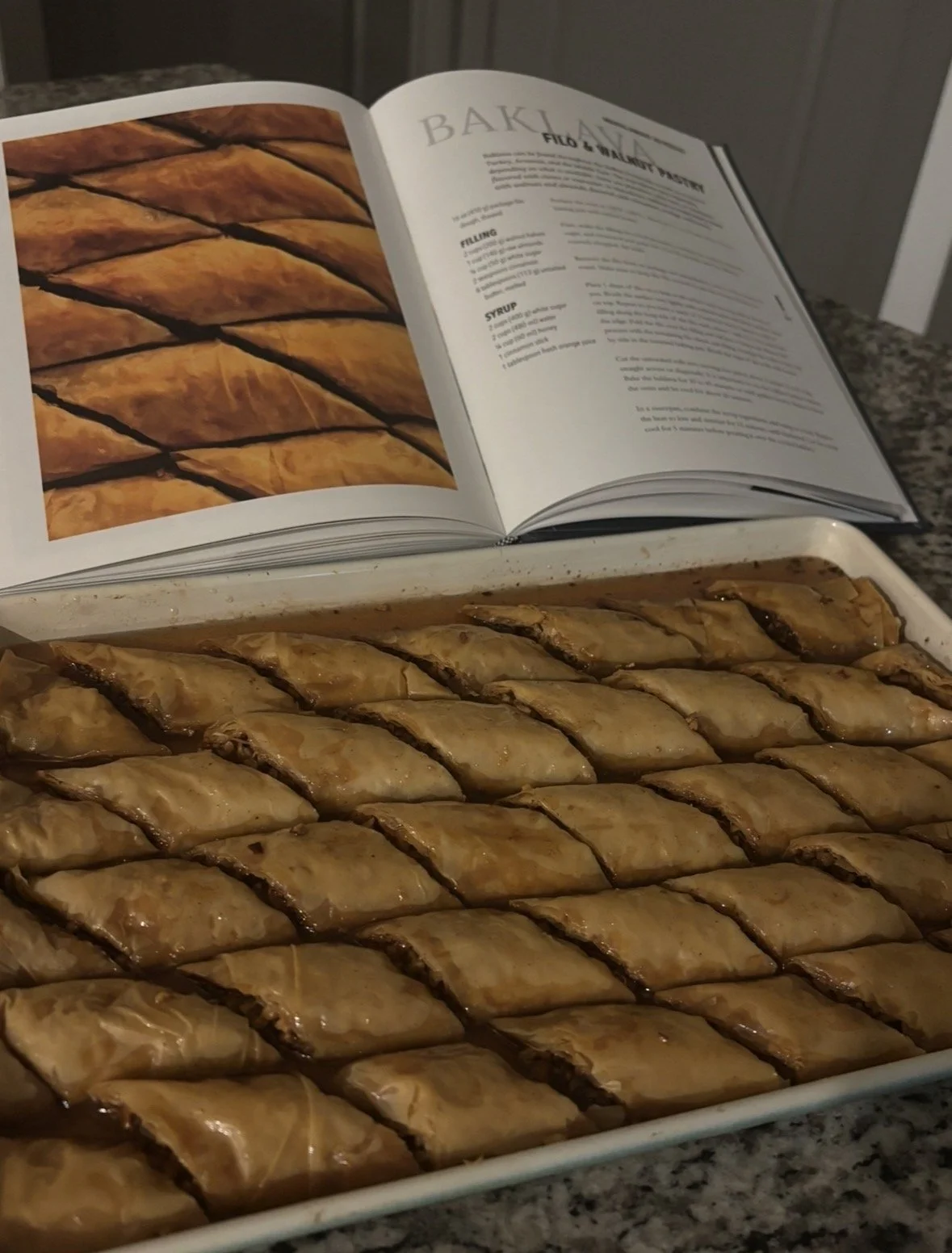
The pictures seem to be getting worse the longer this goes on.
Image Courtesy of Sofia Bravo
Final thoughts
My counters have semi-permanent flour streaks and I now own half of the Publix baking and spice sections. This is my formal apology to my roommates for the chaos they endured that was me cooking. My hands smelled faintly of yeast and honey more than my usual vanilla perfume.
I want to say the recipes stopped feeling like tests and started feeling like routines, but that wasn’t true. Though I pleasantly surprised myself and my cooking skills actually seemed to improve, my roommates (and me) would probably still cheer for a box of Annie’s.
I don’t suddenly speak flawless Macedonian. I still pause before answering “Where are you from?” sometimes. But I know how long dough needs to rise in my apartment’s humidity. I know that honey syrup thickens as it cools and that paprika darkens the second it hits warm oil.
The kitchen no longer feels like borrowed space. It feels like somewhere I can practice, mess up and try again next week. Somewhere my heritage isn’t theoretical or simplified; it’s sticky, uneven, warm and slowly getting better each time I turn the oven on.
Strike out,
Writer: Sofia Bravo
Editor: Olivia Evans
Sofia Bravo is a writer for Strike Magazine Gainesville. When she’s not forcing her friends to pose for her digital camera, you can find her remodeling her Spotify playlists for the hundredth time or starting another book she knows she won’t finish. You can reach her on Instagram, @sofiebravo, or by email at sofiebravo26@gmail.com.
