Now I Know How Joan of Arc Felt.
Joan of Arc was burned at the stake at 19 years old for heresy. Born to two tenant farmers in 1412, Joan was a simple peasant girl. In the midst of France’s unstable political climate, she began to hear voices– she thought them to have been that of St. Catherine, St. Michael, and St. Margaret. These voices implored her to save France.
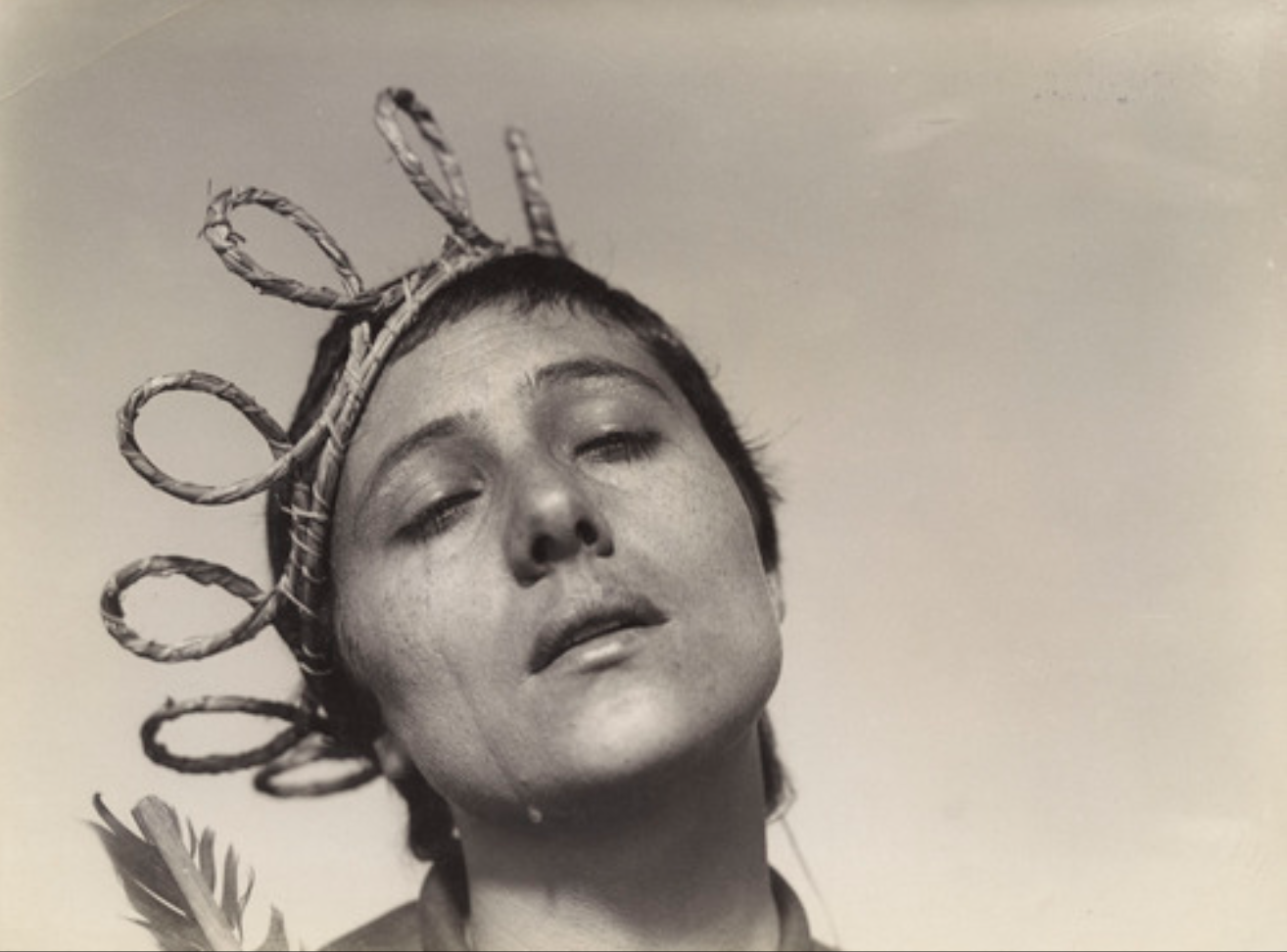
The Passion of Joan of Arc (1928) | The Academy of Motion Picture Arts and Sciences
When Joan was 16 years old, the Saints’ voices led her to aid the French Dauphin in capturing the Reims and thus the French throne that had been usurped by the English– having travelled far into the city, she told the captain of the French garrison of her visions. He sent Joan (who would have been Jehanne at the time) back home to Domremy, believing her a liar. In 1429, Joan tried again. This time, the captain commended Joan’s piety and allowed her passage to the Dauphin.
Dressed in men’s clothing, Joan seeked an audience with Charles VI. Charles, though, having heard of Joan’s auditory hallucinations, hid himself within his courtiers as a test for young Joan. She quickly picked him out in the crowd, and spoke to him of her divine hearings– after questioning 17 year old Joan for weeks, the French chose to give this strange girl a chance to save her country.
Joan of Arc led a small army into a besieged Orleans, and inspired the French Revolution. She later led multiple charges; on May 7th, whilst leading the French against the English, Joan suffered an arrow to the chest, a symbol of her boundless and passionate love for the French. Joan was a leader, a figure. She was a warrior with no blood on her hands. Joan had never raised a hand to another in battle. Instead she waved her flag, saying, “But I loved my banner forty times better than my sword. And when I went against the enemy, I carried my banner myself, lest I kill any. I have never killed a man–”

Juana de Arco (1865) by Sir John Everett Millais | World History Encyclopedia
Dressing her wound, and returning to the fray, Joan and the French won the battle in Orleans. For 5 weeks afterward, Joan led French armies to victory, using the intel and strategies of the Saints that whispered to her. On July 16th, due to Joan’s victory against the Reims, Charles VII was crowned the King of France. Young Joan held up an image of Christ in judgement for the King, declaring her piety and faith.
Joan was captured that May while leading a small army against the Burgundians. They then sold her to English forces. The English Catholic Church held a trial, accusing Joan of heresy. The English Catholics claimed Joan rejected the authority of the church in favor of Godly inspiration. Originally, she refused submission to English Catholics, and so she was turned over to be executed– in fear, Joan retracted, and agreed to imprisonment. However, being decided a relapsed heretic after she claimed the voices of St. Catherine and Margaret still spoke to her, she was sentenced to death by burning.
Before they lit her pyre, Joan asked the onlooking priest to raise his crucifix high enough for her to see, and speak his prayer loud enough for her to hear over the roaring flame. Joan was killed by the Catholic Church on May 30th, at only 19 years old. In 1920, Joan was named a Roman Catholic Patron Saint.
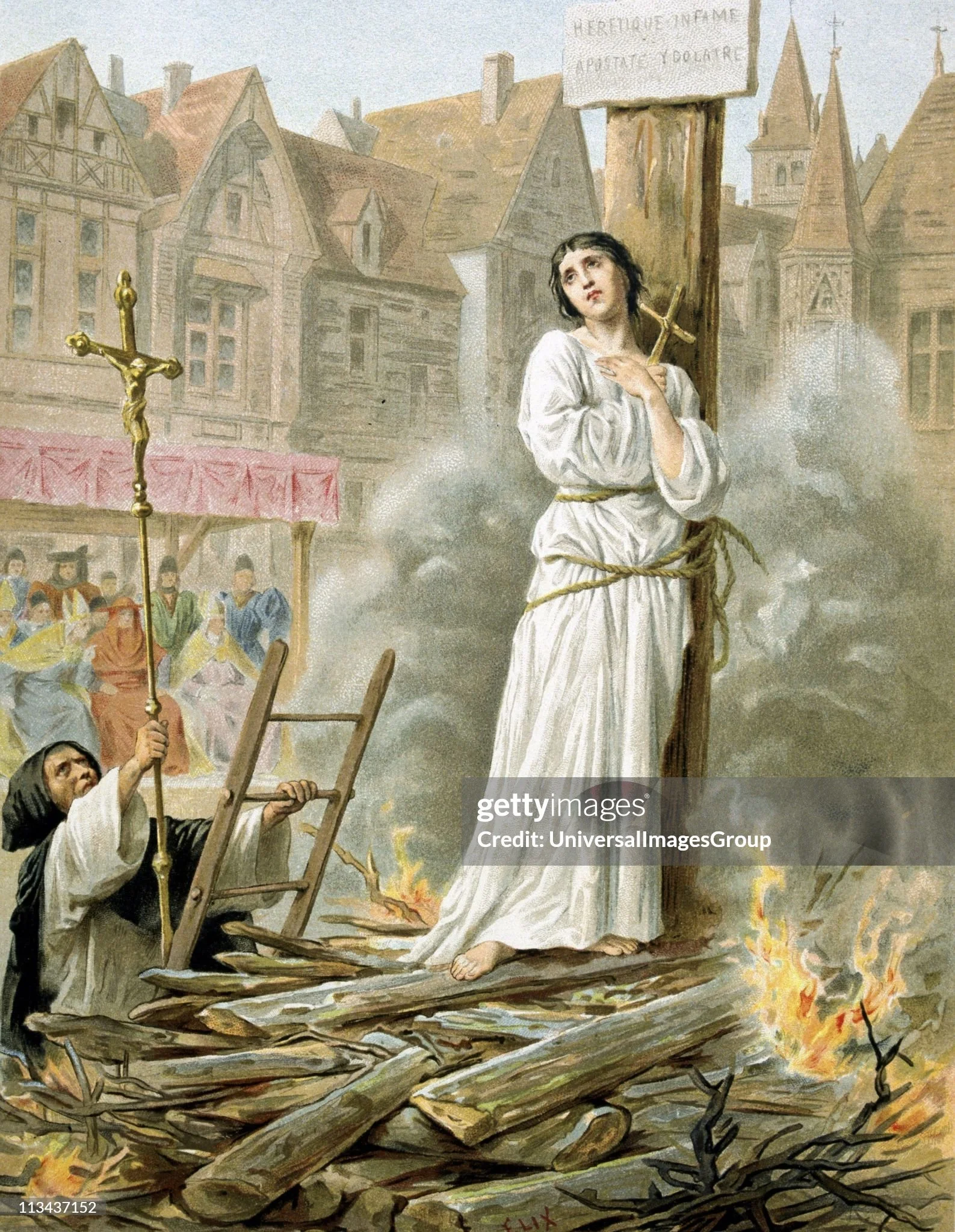
Joan of Arc at the Stake by Frederick Theodore Lix | Universal History Archive/Getty Images
Jeanne d’Arc; Then’s heretic, madwoman, liar, witch, now’s patron saint, leader, figure of hope, and power.
The story of Joan of Arc persists and uniquely interacts with modernity. Not only do we discuss Joan of Arc in our history classrooms, we see her impact in film, and culture. The 1929 black-and-white Dreyer film entitled The Passion of Joan of Arc depicts Joan’s lamentable trial and inevitable fate. This film has been named one of the greatest films of all time by The Criterion and other influential film organizations. We see Joan of Arc so closely we can almost feel the sweat on her brow, the stress in her forehead, and the fear in her eyes. The Passion of Joan of Arc is mentioned as number one in every FilmBro’s Letterboxd Top 4 (including mine), with reviews that read:
“powerful, relentless, tragic… is simply clear how important this film is, not only for the cinema but also for history itself.” – @menslaughter on LetterBoxd
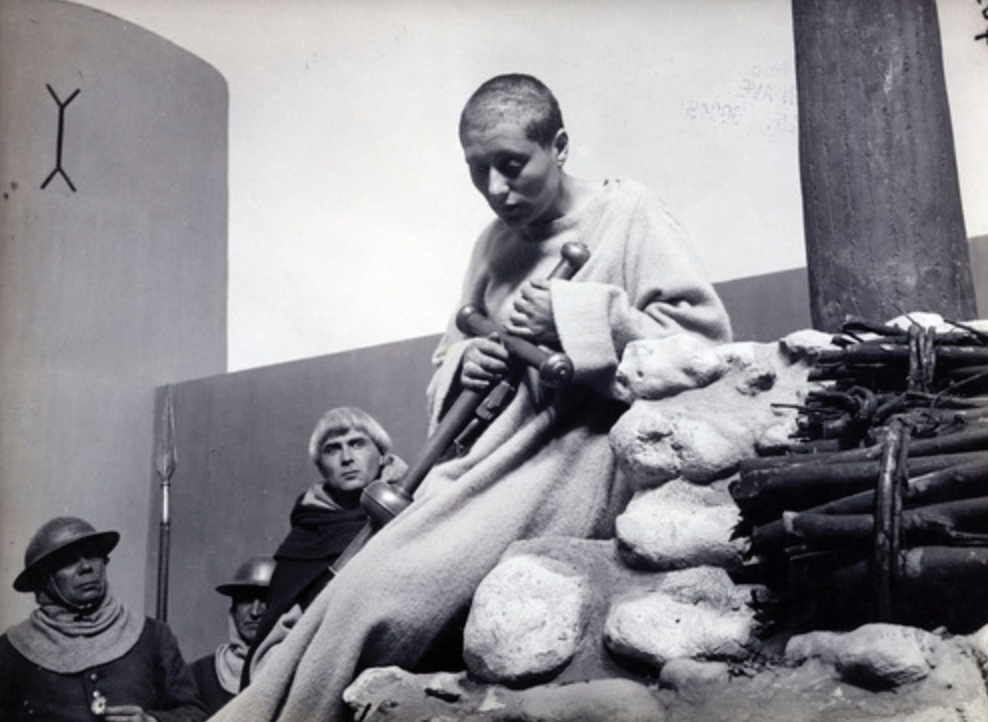
The Passion of Joan of Arc (1928) | The Academy of Motion Picture Arts and Sciences
Historically, Joan was known to dress in men’s fashions. This is speculated to have been for protection in battle and out. Some believe it to have been God’s will, just as Joan said in her trials’ transcriptions. Others simply think it a coincidence– I happen to fall into this category… What are the odds French armorsmiths would have made a unique set of female war armor for a 17 year old peasant girl?
Joan of Arc has touched the hearts of some of the most iconic fashion designers. The late Alexander McQueen hosted a Haute Couture runway collection entitled ‘Joan,’ wherein he showcased his fixation on Joan’s androgyny and martyrdom. ‘Joan’ is known to be one of McQueen’s most memorable shows– here he let his creativity shine, the runway teetering the line between Couture and performance art. The designer banned most publications from attending this show, keeping it intimate and raw. He kept his collection’s palette to reds, blacks, and silvers, evoking that of warfare, flame, and armor. All of the models donned androgynous looks, with the woman models in unique hairstyles, some of them bald with blonde braids crafted along their faces, and other man models draped in feminine dresses, also with their heads shaved bald. This teetering of the line between feminine and masculine is representative of Joan’s position in her time. She was a girl in a man’s world– leading, praying, and dying for men.
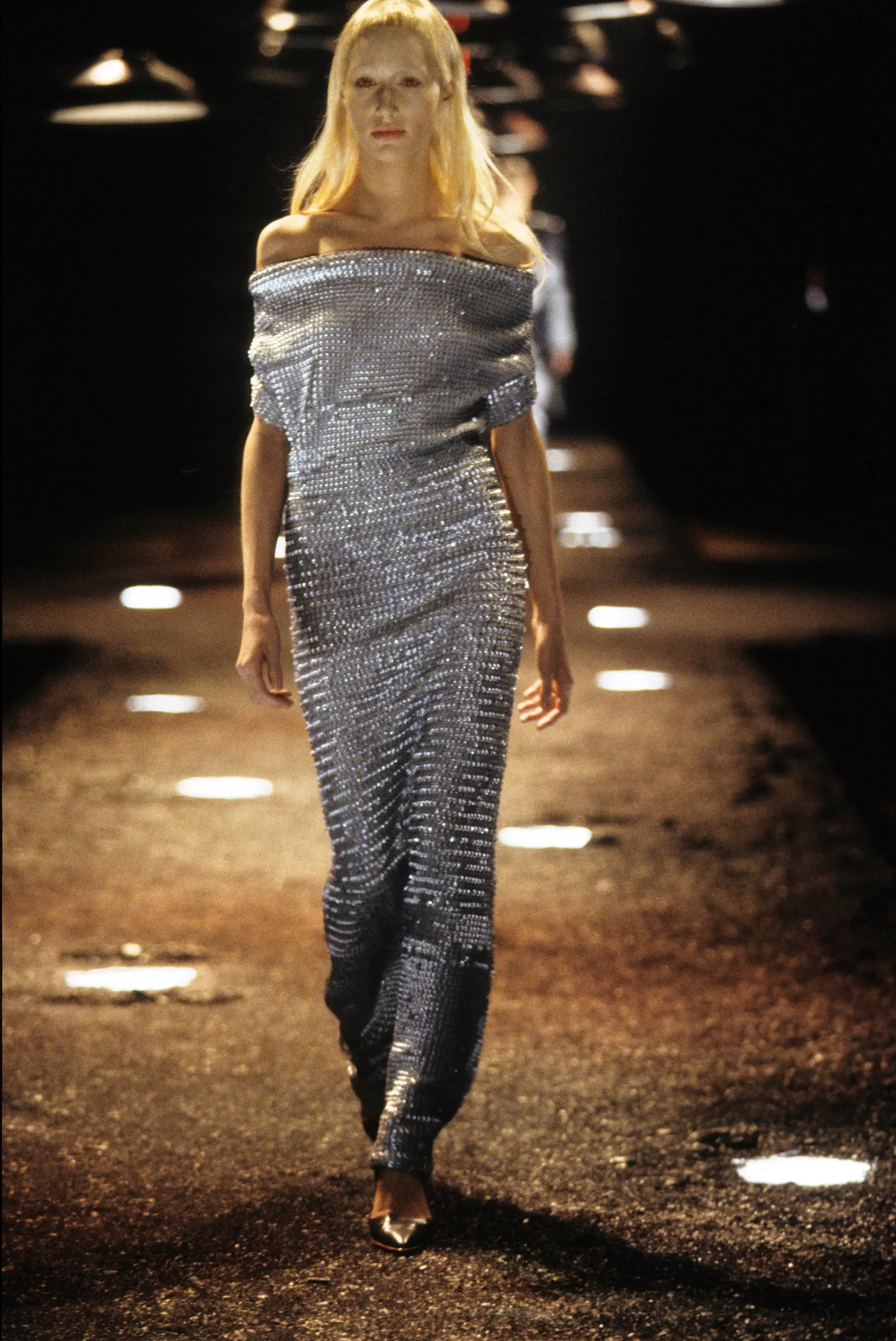
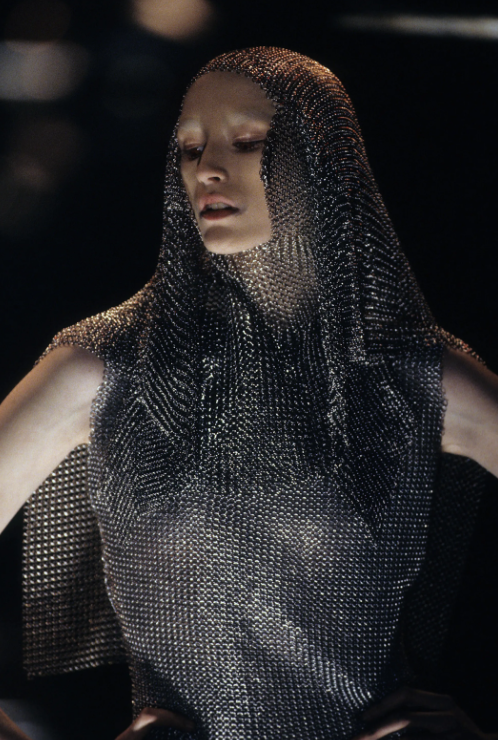
Alexander McQueen Fall 1998 Ready-to-Wear Collection ‘Joan’ | Vogue/Condé Nast Archive
McQueen is not the only fashion designer to have taken inspiration from Joan of Arc. Fashion giant Jean Paul Gaultier’s Spring 1994 show had looks reminiscent of Joan’s iconic figure. Though, JPG took a more rebellious approach, as usual. His Joan was punk, mystic, and loud, much like the thumbprint she’s left on modern society. Gaultier featured models known for their loud androgyny, like Jenny Shimizu, on his runway, solidifying the punk essence of his show. JPG’s renowned ‘Joan Dress’ is a beautiful white garment, romantic and flowing from the body of a red headed model donning golden face makeup. On the honorary Joan’s shoulder, a heavy plate of metal armor fastened all the way down to the wrist. Keeping the metal only to one side of Joan, we can see JPG playing with the figure of her femininity. He keeps Joan a girl, romantic and pure, but almost forces her into the armor, strapping it onto her gown with buckles and gadgets.
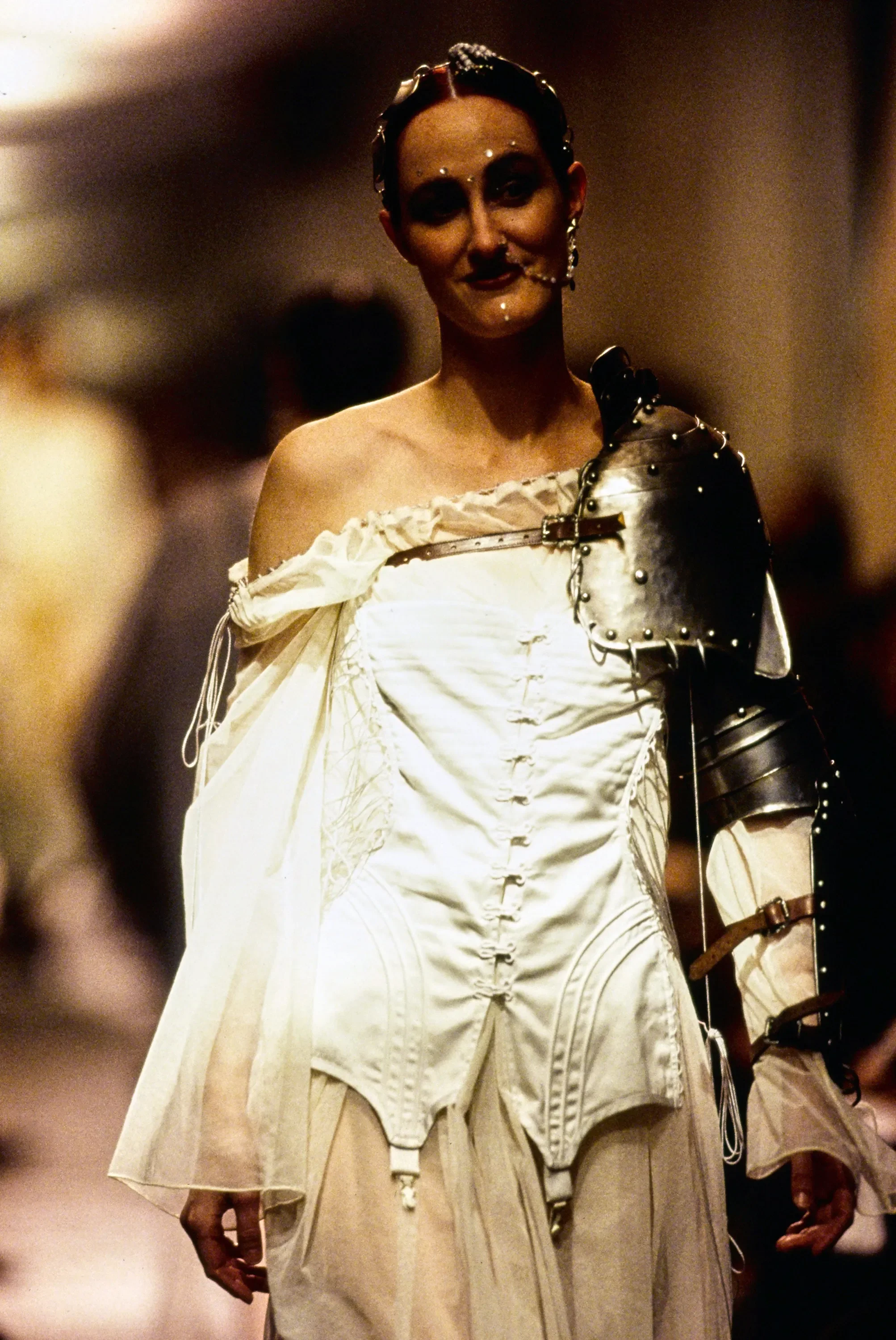
Jean Paul Gaultier Spring 1994 Ready-to-Wear Collection | Vogue Runway
Joan of Arc’s flame has kept our iron hot for centuries. Iron-clad and praying at the pyre, Joan has been an image of strength for many. She has inspired our runways, celebrities, and musicians have Joan to thank for her effervescent inspiration– take Fiona Apple as an example. Parading through the streets of New York City, knighting strangers in the subway station, all the while dressed as an iteration of Joan of Arc, was Fiona Apple in 1997. Shot by Joe McNally for Life Magazine, Fiona Apple wanted to be a “warrior woman,” and as she rode the wave of her standout album Tidal, it was only right her “warrior woman” garb resembled that of Joan’s. Another iconic iteration of Joan of Arc would have to be that of Chloe Sevigny’s 2007 Halloween costume. Sevigny dressed as a reference to Joan of Arc in The Smith’s song, Bigmouth Strikes Again, where we hear the lyrics:
/ Now I know how Joan of Arc felt,
Now I know how Joan of Arc felt,
As the flames rose to her roman nose,
And her Walkman started to melt… /
In Sevigny’s Joan, we see her dressed similarly to that of the Romantic Era depictions of Joan– with the pyre rope around her waist, and a loose white dress. Still, she does assume a more modern twist, carrying the Walkman on the rope and donning a short blonde cut– similar to that of Mila Jovovich in the 1999 film The Messenger: The Story of Joan of Arc. Of course, there is Zendaya’s Versace Joan for the Met Gala’s Heavenly Bodies theme. That beautiful structured garment, draped in chainmail and jewels harnessed the strength and disposition of Joan of Arc. Zendaya recalled wearing that look to be like “carrying a weight,” not only because of the genuine weight of the metal gown, but also the weight of Joan’s legacy.
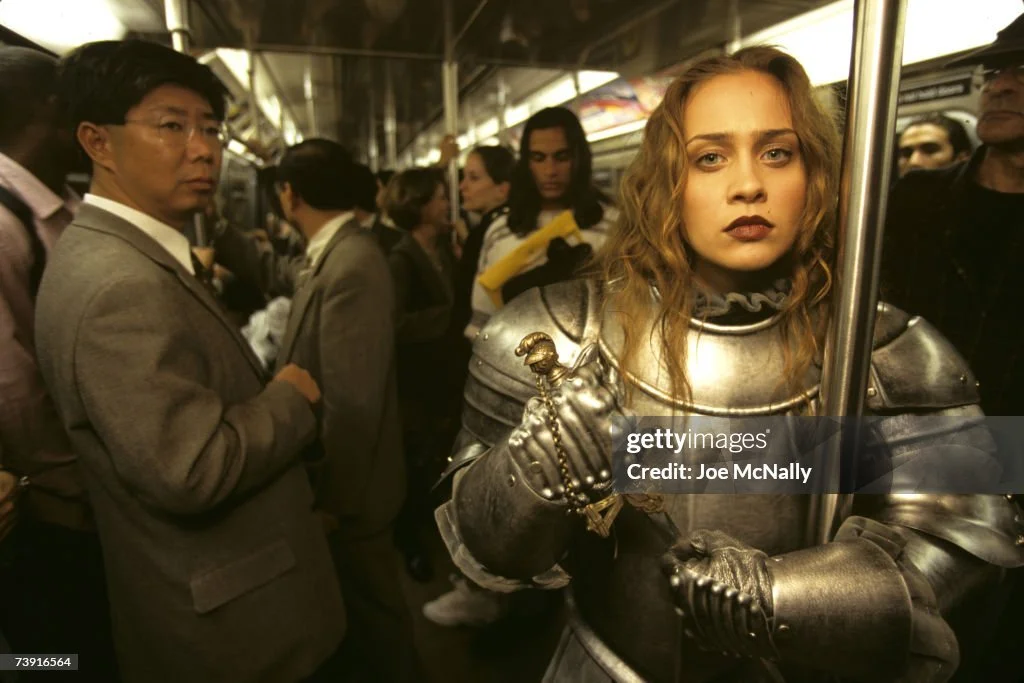
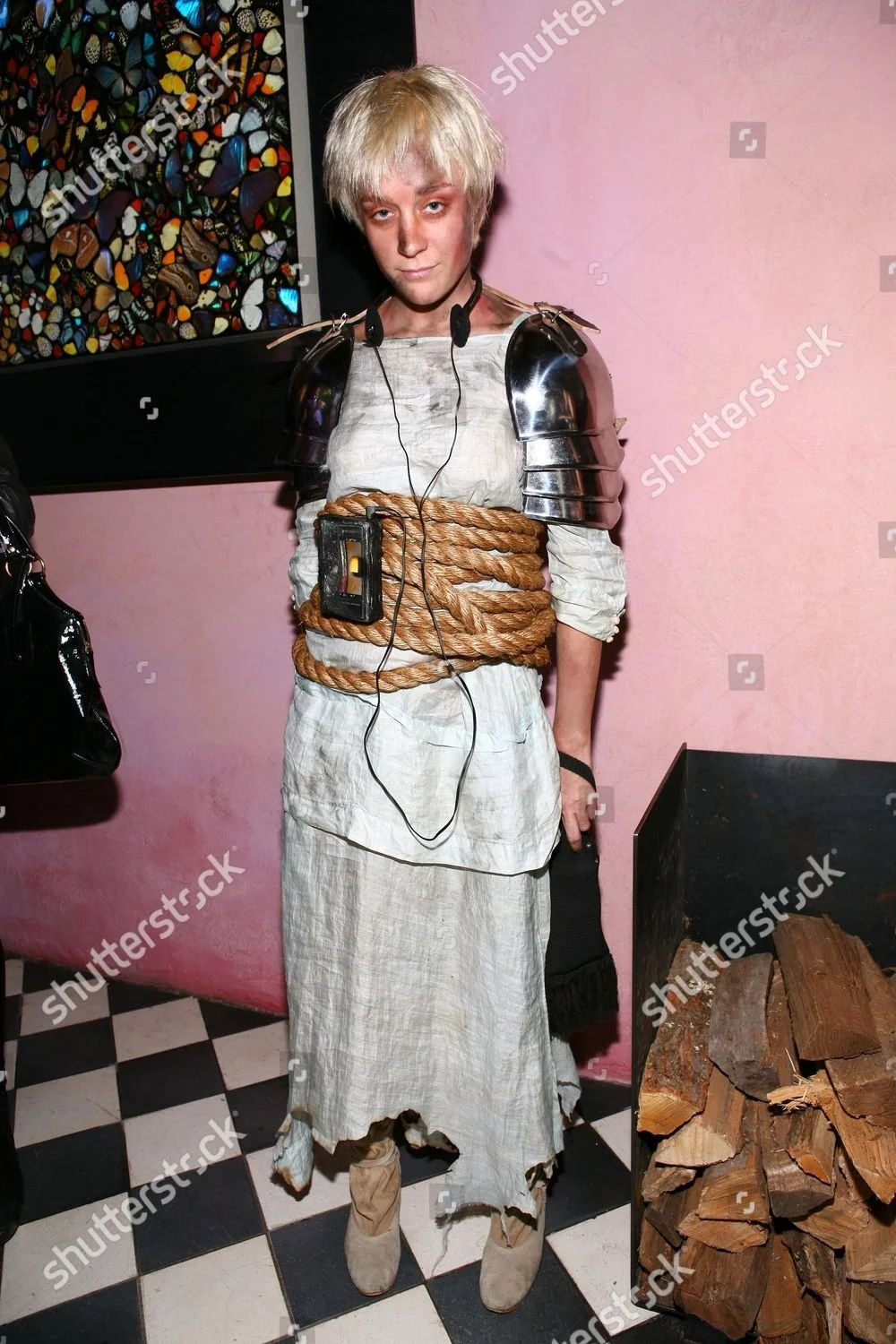
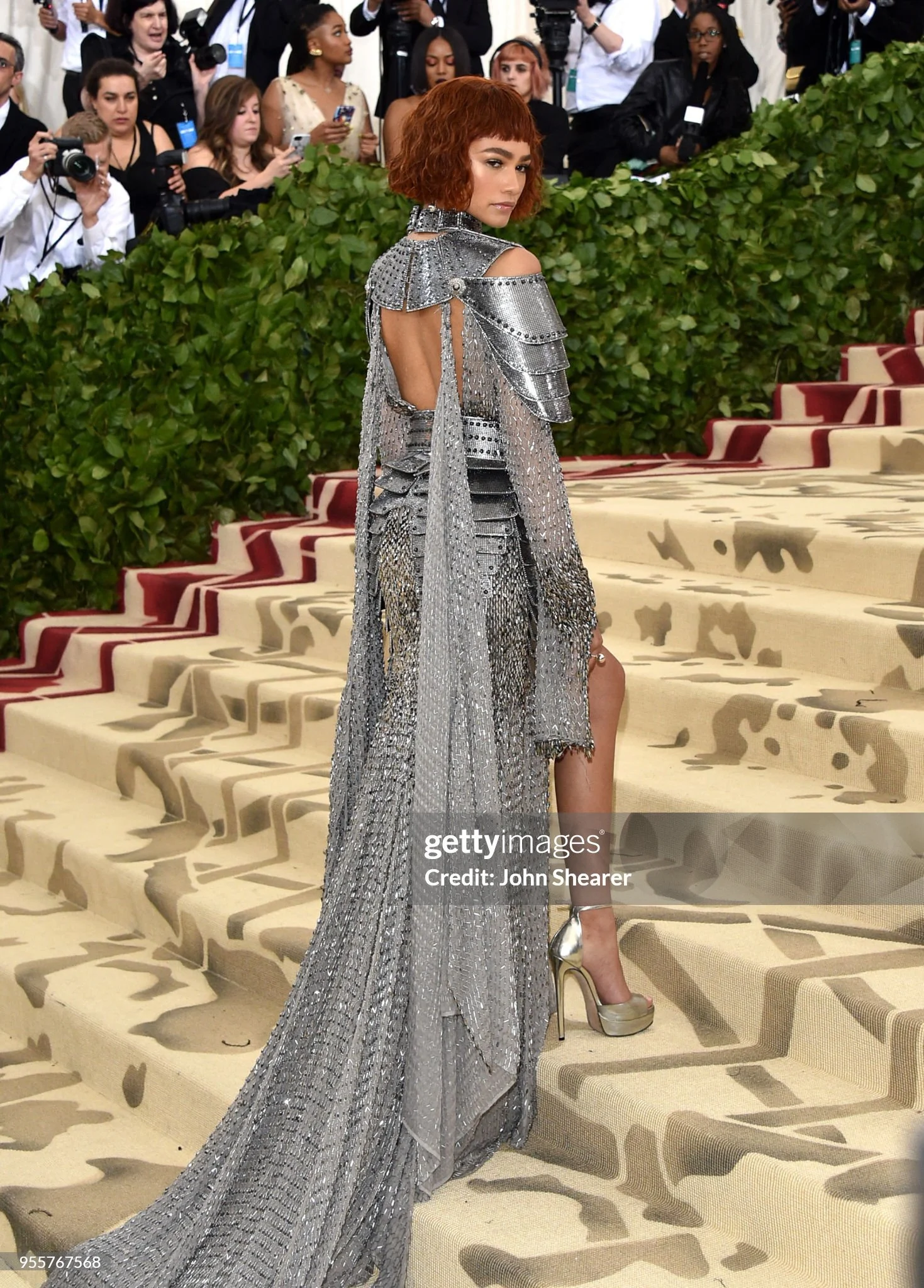
Left to Right: Fiona Apple in November 1997, Chloe Sevigny, October 31st, 2007, and Zendaya for 2018 MET Gala Heavenly Bodies
Women have long used the figure of Joan of Arc to espouse their own power, confidence, and soundness. Joan of Arc is back in. Girls online are bringing back emblematic celebrity depictions of Joan of Arc, dressing as her for Halloween, parties, and Get Ready With Me’s. They’re praising the martyr, waving her banner high and wide. Joan has been used as an emblem of ancient and modern feminism for as long as we can remember. It’s interesting why women might be called in these times to bring back a figure like Joan of Arc– to re-place her on the Saintly pedestal, and remember her strife. Though Joan of Arc was never in pursuit of power, she had it. War generals trusted her, so did kings, pastors, and the French civilians. This 19 year old girl was the voice through which Saints spoke their piece and freed France. Joan of Arc, “God’s favorite daughter,” showed England, and France, and later the world, that women could hold their own on the battlefield and do it their way. Today’s women have been called to the frontlines. Powering through aggressive political climates are 21st century women, much like the 15th century Patron Saint.
Jeanne d’Arc persists. Burning bright, still singing the song of her faith. May the women of today find strength within the modern reprise of Joan of Arc.
Strike Out,
Anett Martin Sosa
Miami
Cuban-American writer Anett Martin Sosa is a Senior student at Florida International University, pursuing a Bachelor’s degree in Writing & Rhetoric, with plans to pursue a Master’s degree in Copywriting. She writes short stories, poems, personal essays, and columns about fashion, art, Miami, and the human experience. She is most influenced by David Lynch, Joan Didion, Eve Babitz, and surrealist art, and she explores all on her Substack blog, under the handle @neoprncss.