Soulless for profit
After school as a kid, I used to beg my parents for a Happy Meal. Polishing off the food just to earn my turn in the plastic cathedral of McDonald's PlayPlace. Once-a-week, this treat felt sacred. Now as a college student, I eat fast food for convenience.
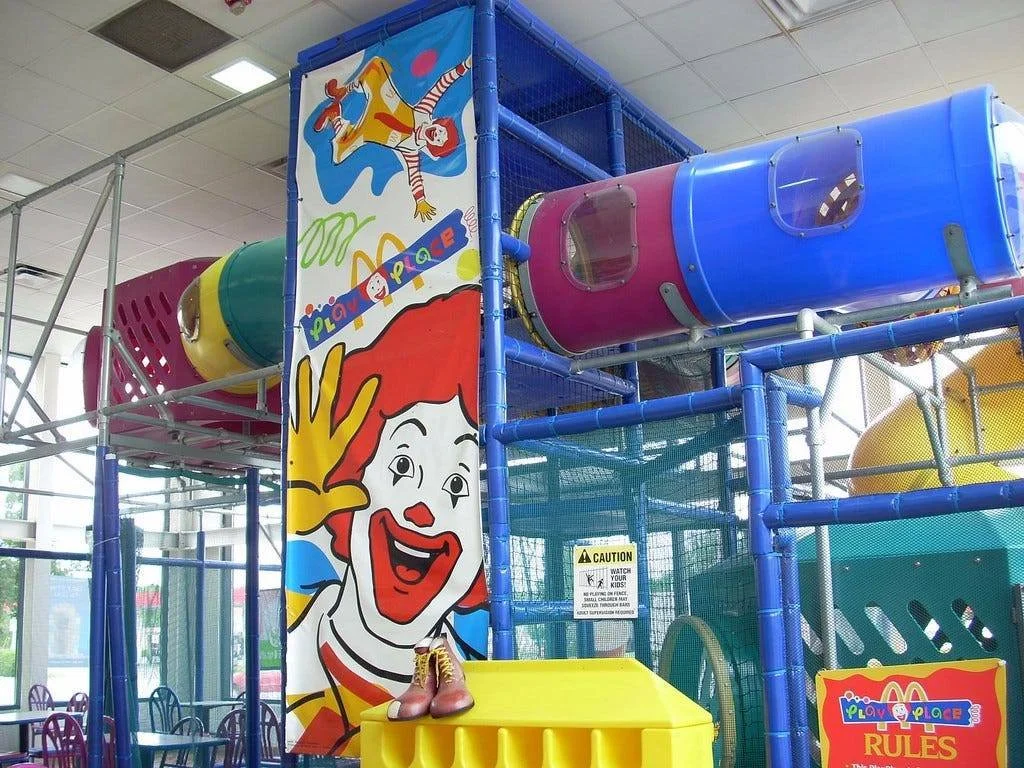
Image Credit: Tumblr
Fast food restaurants were once third spaces where families could eat, play, and lounge together. Every restaurant had their own unique, colorful exteriors and interiors. McDonald’s had the red roof, Pizza Hut had stained glass lamps, and Taco Bell had a vaporwave color scheme.
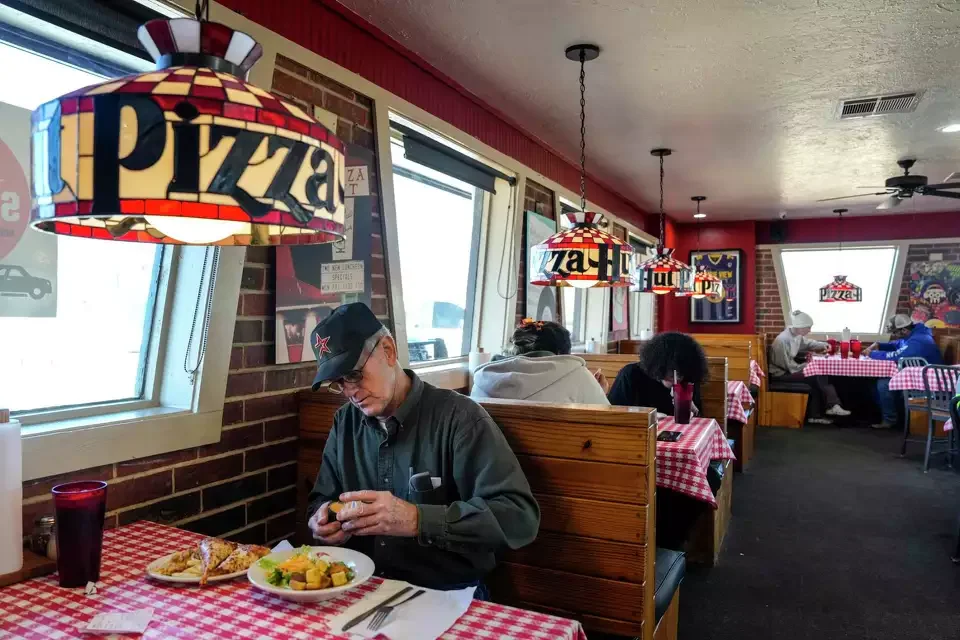
Image Credit: Beaumont Enterprise
Today, the colorful and unique architecture is replaced with gray, minimalistic boxes, meant to prioritize convenience and transaction. People have been replaced with screens and AI in the drive-thru. Indoor playgrounds were deemed a liability and decreased in popularity.
I blame Chipotle.
When Chipotle became popular in the early 2000s, traditional fast food restaurants noticed. Chipotle was different.: Its industrial design of concrete floors and natural colors. Chipotle’s minimalistic, modern design is marketed towards adults and represents honesty, transparency, and health.
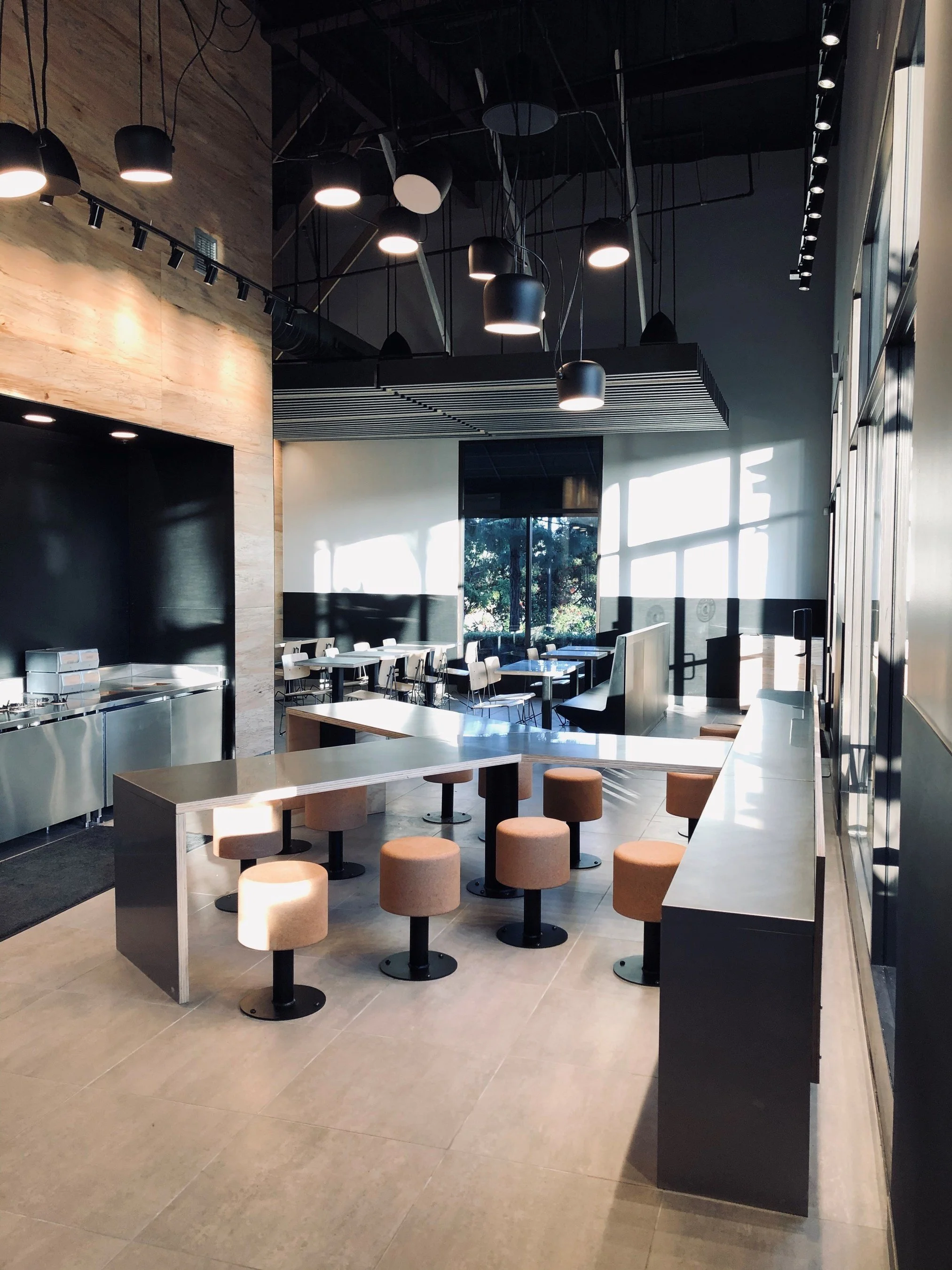
Image Credit: Chipotle
Other fast food restaurants were still being marketed towards children with cartoon mascots on the walls. People were becoming more conscious of what they were eating due to the Super Size Me (2004) documentary about the health risks of eating fast food. McDonald's invested in Chipotle, and the company grew to over 500 locations in 2005. Chipotle’s success made fast food restaurants follow suit, with the growing number of health-conscious consumers.
Fast food architecture also changed because of salability. It is easier to sell a gray box than a quirky, red-roofed building with 30-foot yellow arches. Minimalist designs are cheaper and easily replicatable, which allows chains to expand quickly while keeping costs low. Digital ordering systems streamlines service, allowing restaurants to serve more customers in less time. By removing playful or themed elements like indoor playgrounds, chains focus on maximizing revenue per square foot, targeting a demographic that values time and convenience over experience. The architecture became soulless for profit.
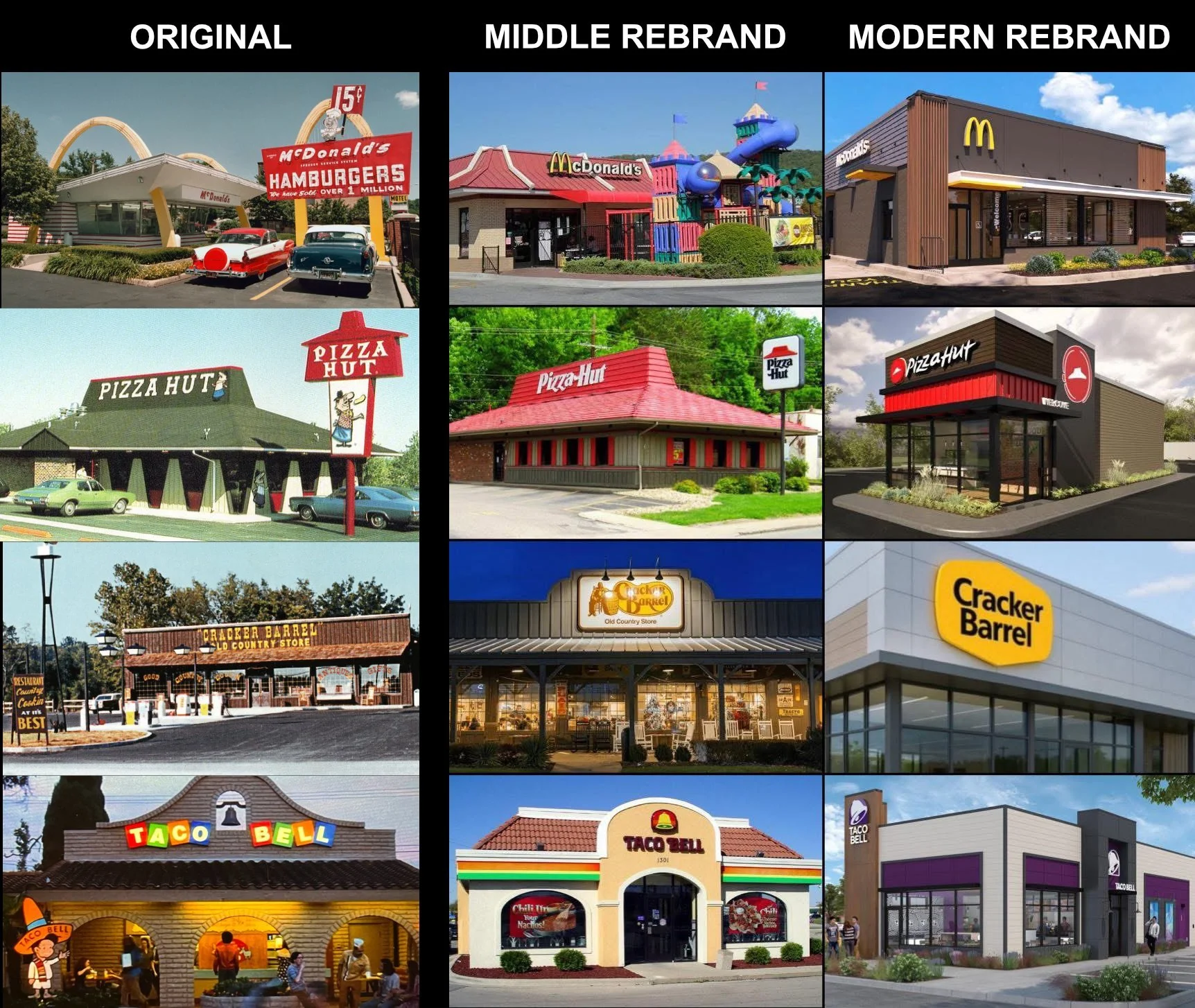
Image Credit: X
As fast food restaurants were changing, technology was exponentially growing. Modern fast food architecture is designed around technology. Open layouts accommodate self-ordering screens and designated pickup areas for delivery and mobile orders. I have only encountered AI drive-thrus at Wendy's and Checkers so far, but I am sure there are more restaurants that will use it. Architecture and technology maximize profitability at the expense of uniqueness.
As a college student, fast food has become a necessity rather than an experience. Fast food architecture today reflects a broader cultural shift of timeliness and profit, which are prioritized over creativity, play and personality. While technology and minimalism may improve service, the character that once made fast food chains more than just places to eat is erased.
References:
Strike Out,
Angelica Wells
Miami
Angelica Wells is a senior at Florida International University studying digital journalism. She has been a photographer for over 8 years, capturing cars, landscapes, and nature. She has also dabbled in email marketing, which combines her love for copywriting and design. She is published by the Biscayne Times and the Miami Herald.