
The Sumptuous Night Cult
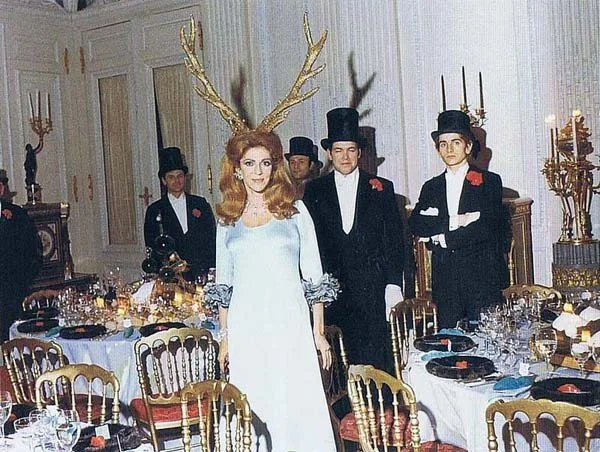
Image Courtesy: JOSI by Joy
An invitation, addressed just for you, stamped shut with a traditional crimson wax seal. Inside, you unfold a piece of paper with an address on it. “Tonight,” the letter reads. So you go. As you arrive, you double–check that you have the location right. Yes, it’s correct. Before you lies a gigantic mansion, with walls so high the back of your neck aches as you take it all in. As you walk up to the door, a man in a perfectly pressed tuxedo opens the door for you. You say thank you, and he doesn’t respond. Inside lies the most spectacular party you’ve ever seen. Endless drinks, jewels, gowns, puffs of smoke; the air smells of tobacco and whiskey. Everyone is beautiful and sports eccentric masks. You take a sip of a mystery drink, the band plays a genre you’ve never heard of before, and you’re overtaken with strange, immense feelings of desire and euphoria. So, you decide to stay a while.
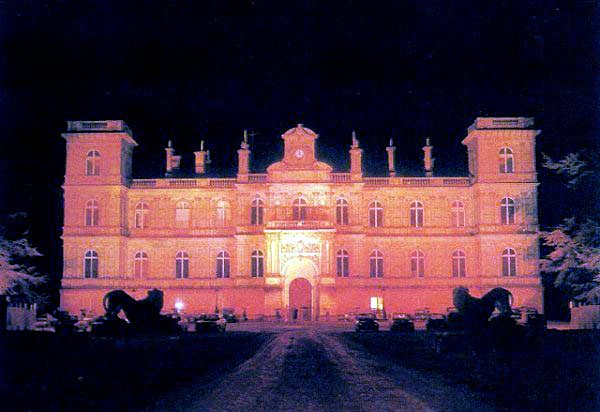
Image Courtesy: JOSI by Joy
The previous paragraph describes an unidentified bundle of feelings and plot that coalesces in a perfectly curated space that I’m going to refer to as the Night Cult. The Night Cult is depicted throughout many famous historical events and is especially favored in fictional media. As an entity, it encapsulates society's greatest fantasies, namely materialism, hedonism, and, of course, champagne.
Throughout history, we’ve seen elements of this Night Cult ideology surface in many high-society circles. For example, the Rothschild Surrealist Ball of 1972 has captivated many users online, especially due to its unsettling yet intriguing nature. The party was held at Château de Ferrières, the Rothschild family's 19th-century estate located just outside of Paris. Guests were instructed to wear Surrealist-themed costumes, ranging from antler headpieces to clock-and-cage motifs. Photos from the party encapsulate opulence, wealth, and exclusivity, drawing in a large number of present-day Surrealist Ball admirers and elite-weary conspiracy theorists.
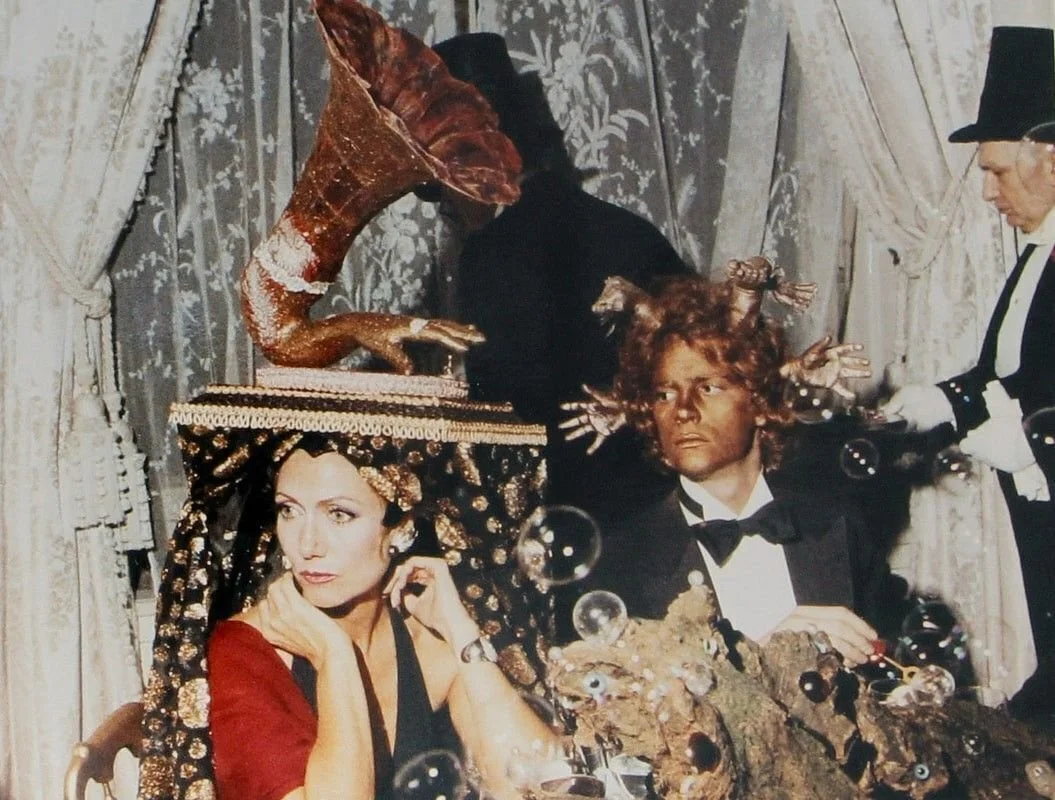
Image Courtesy: JOSI By Joy
Another perfectly modeled depiction of this niche genre is the famous nightclub Studio 54, which opened in the late 70s in New York City. Studio 54 emulated the achingly untouchable, glamorous celebrity lifestyle that occurred hours after the curtain closed. Drugs, disco, and dancing ruled the perfectly curated atmosphere, decked out with mirrored walls and flashy lights. Artist Andy Warhol once encapsulated its magic, which was later quoted on Kotour’s blog in April 2013, by remarking that “Studio 54 is a way of life. People live there. They dance there. They drink there. They make friends there. They make love there. They break up there. They become stars there.”
So otherworldly is this Night Cult concept that these real examples become a sort of fictitious story that can’t be understood as someone's reality in our day-to-day life. Thus, creatives have produced this tale into more digestible concepts: films, books, music, fashion, and art become The Night Cult’s entry point for ordinary people. F. Scott Fitzgerald’s books, such as The Great Gatsby and Tender is the Night, precisely illustrate the Night Cult concept through imaginative literature. Movies, especially, have a well-rounded depiction of these stories, as they combine music, writing, fashion, and art that evoke the lustrous and spectacular feelings that stem from such events.
Emerald Fennell's Saltburn (2023) acts as a catalyst for this cinematic metaphor, properly combining all of the physical and intangible elements that seem to go into The Night Cult experience. The film follows a young man at Oxford who befriends a wealthy peer and gets invited to spend the summer at his family's mansion. The two spend their days attending parties, excessively eating and drinking, and lounging around the pool. Towards the end of the film, the classic party scene takes place, and a combination of lights, music, dancing, and set design all contribute to this fever‑dream aesthetic. Importantly, Fennell took inspiration from iconic films like Cruel Intentions (1999) and The Bling Ring (2013). Films like Babylon (2022) and Baz Lerman's The Great Gatsby (2013) further exemplify society's fascination with the elite’s inventive party atmosphere. Putting the broader morality and essence of films aside, they all bring the Night Cult theory to life.
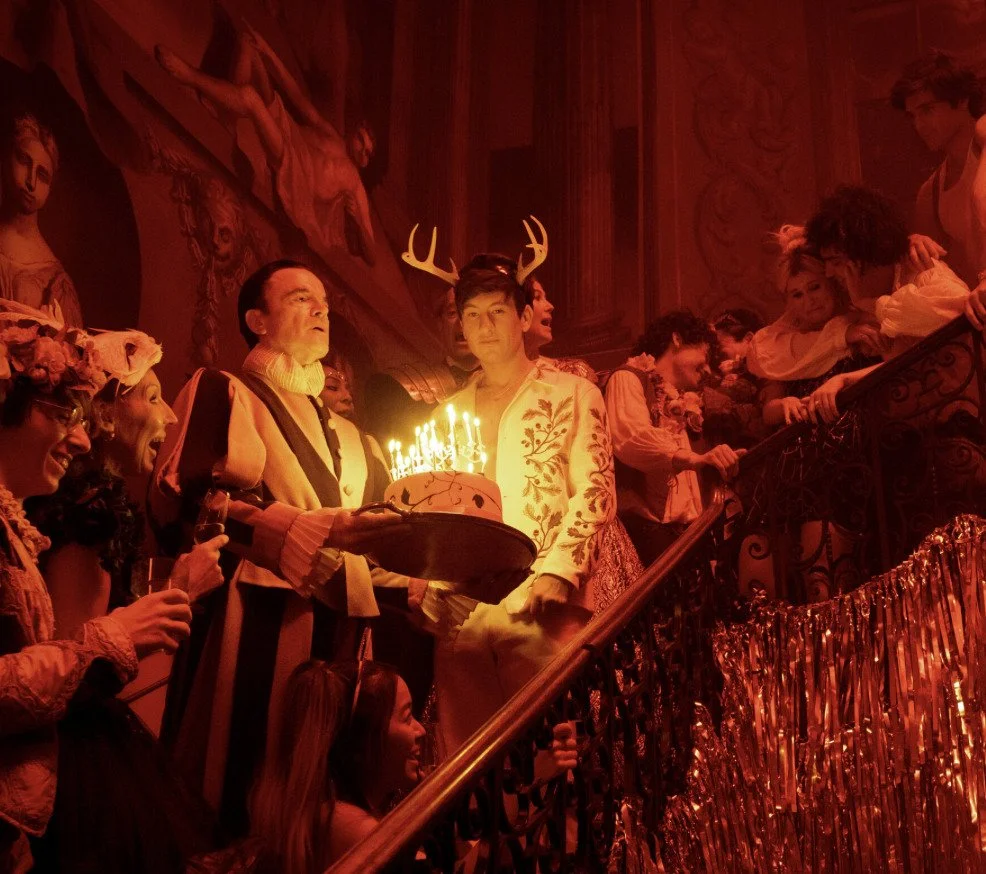
Image Courtesy: The New York Times
The Night Cult enables society's greatest desires and promotes a paradoxically idealized version of ourselves, one that is free of external judgment and filled with present gratification and unyielding pleasure. Quite often, however, in the media retellings and presumably in reality, these situations serve as an escape from comparatively mundane responsibilities, such as work, school, and finances, among others. Although the aesthetic is inherently unsustainable as a lifestyle, it makes for an unforgettable night.
Strike Out,
Writer: Samantha Goldberg
Editor: Salette Cambra
Graphic Designer:
Tallahassee