
What You Can See Through A Photograph
A photograph is a singular moment frozen in time. To reach fruition, an individual must intentionally curate it. Directing the subjects or observing them from afar, a trained eye must select the moment with precise attention to detail. In most instances, the moment must be captured at the right second with perfect timing. In others, though, a photograph is captured on a whim. Late tipsy nights when you can’t see straight but hope the camera is in focus, only to discover the next morning they’re all blurry. On occasion, enough sobriety may be mustered up to catch the moment with clarity. We cling to these memories, storing them in albums, thumb drives, folders, and archives. Part of us never wants to lose that moment. We savor it, reminisce, then bask in its dopaminergic hangover.
Memories can even be published to share with others. Still, the pictures do not tell the entire story because some moments are left out; and from the fraction of moments that were captured, an even narrower subset are displayed to a wider audience. The discretion in this decision reveals the intention to perfect the memory, decide how it is remembered, and how viewers of the photograph perceive a moment that was not theirs. In a photograph, it's possible that nothing is as it seems. So is the photograph truly a memory, or merely the illusion of it?
Sometimes a photograph is just that – an illusion. In my life, there is a person I love but have never met, for whom I’ve built a memory from only his presence in photographs and stories. There is another person I love and see more clearly after she is gone, in the photographs she chose to curate herself. They say a picture is worth a thousand words, but oftentimes I’m left reading in between the lines.
My mom never knew her grandma. I never knew her dad, my grandpa George. But for me, there’s a certain allure to discovering who he was. I stare at photos of my grandpa and imagine the sound of his voice. In my head, we are dancing together in his kitchen to the Bee Gees. We sit at the table while he reads the paper, quietly immersed in his crosswords and coffee. But sometimes, hurt can look quite happy in a picture with the perfect pose. The photograph deludes the viewer into a subtle contradiction.
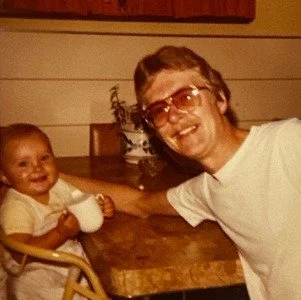
My mom and my Grandpa George
Photo Courtesy of Reagan Alapa
My brain holds all the glimmers of being little with my mom. These memories are picture-proofed, filling in the forgotten gaps of my own recollections. The photos are happy, and we are smiling, for all that mattered was each other. My mom was my world, but there was an entirely different one she had already experienced. She had long known the ache of absence, and yet I was oblivious to it. Thus, two realities may concurrently occur. The subjects of a photo experience the moment in different ways.
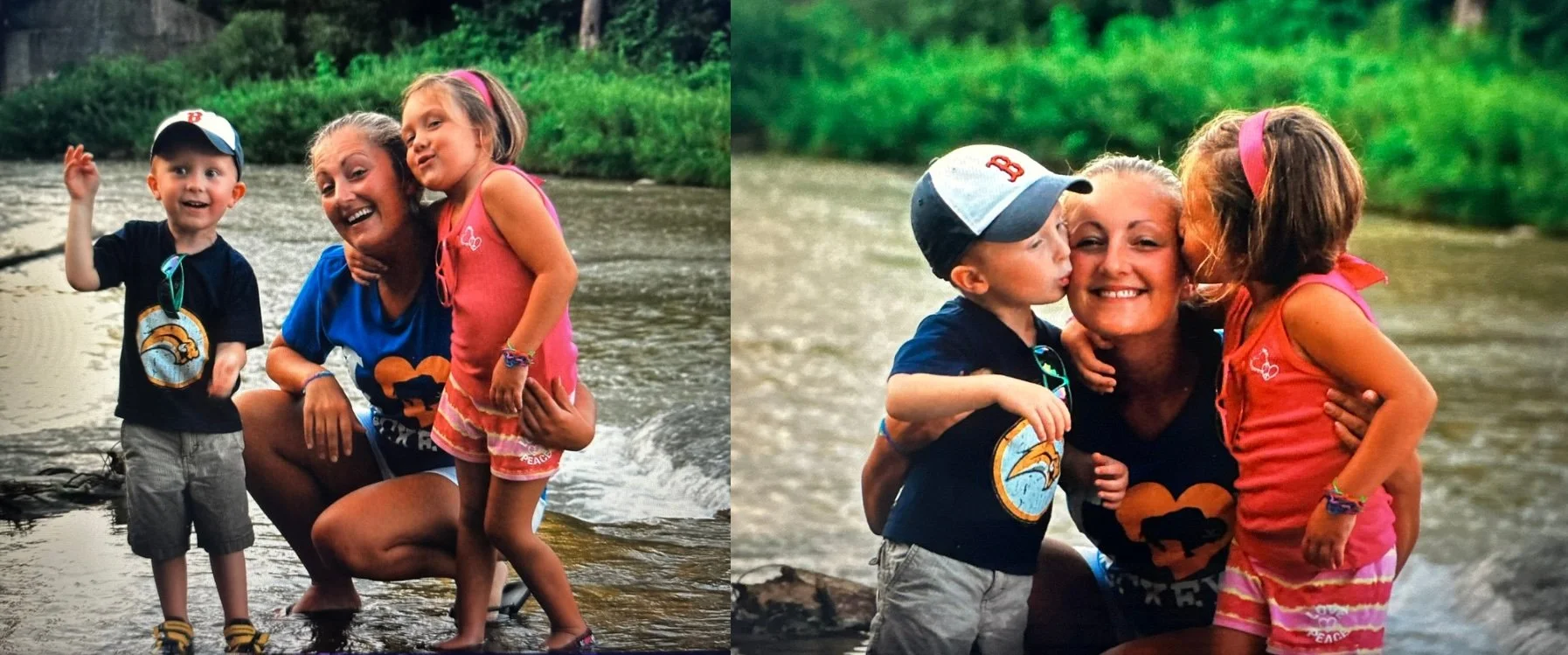
My brother, my mom and me
Photo Courtesy of Reagan Alapa
Even so, photographic evidence is substantial, presenting the happy moments. Still, these feelings are not mutually exclusive: we are happy together, and we are sad because we miss someone. A photo is versatile. It is a dynamic expression of a moment in time. This multifunctionality allows the viewer to hold onto a moment, understand its story, and create a portal into a single frame of life.
If you’re like my grandma, you hide behind the lens in favor of capturing the moment instead.
My grandma Debi owned a photography store in Vermont, and she recently passed. Looking at the photo albums she left behind, I see the momentary frames of life that she loved so much she wanted to hold onto forever. I’m staring at the other side of a camera lens she looked through many years ago. Returning to her creative works becomes a way of seeing life from her perspective. Access granted into her view of the world.

Maui
Photo Courtesy of Reagan Alapa
Pictured above are moments from Maui, Hawaii, that she captured. I wasn’t born yet, but these pictures tell me everything I need to know. My grandma loved my dad. She loved my mom. She loved my grandpa Pat. She loved me and my brother before our timelines even began. She loved her family, and it meant the most to her.
Photos bring back memories. Sometimes, I’m looking at a photo, creating memories I don’t have just to feel like I know the person in the picture better. Beneath the surface of these moments in time are words left unsaid. But when a person is capturing the moment, taking the photo themselves, you get to really, truly know them. Know what they want to hold onto forever.
So what can you see through a photograph?
Not much at all. Unless you see it from the other side.

My Grandma Debi
Photo Courtesy of Reagan Alapa
Strike Out,
Writer: Reagan Alapa
Editor: Ria Pai
Reagan Alapa is a writer for Strike Magazine GNV. She spends her time scrolling through the Pinterest archives and reading way too deeply into personality theory and life path numerology. If the stars align and she decides to go outside, she is likely at the beach, listening to the ocean speak. Hit her up @reagan.alapa on the gram or her inbox reagan.alapa@gmail.com
