Why This Bollywood Film Is a Significant Must-Watch: Raazi (2018)
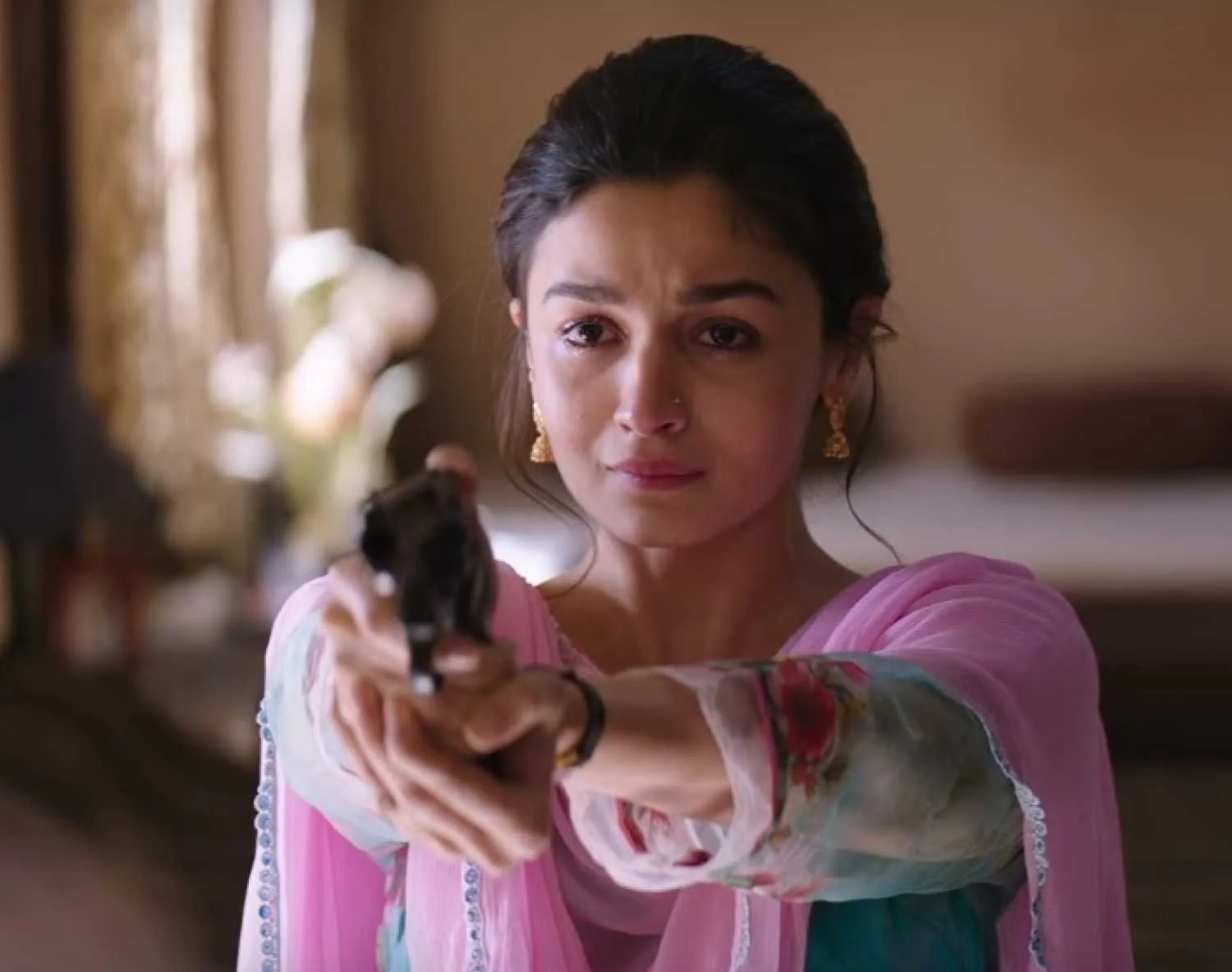
Image Credits: Raazi (2018)
Based on the novel Calling Sehmat by Harinder Sikka, this film is a true story in which the protagonist's name is never revealed, and she keeps her identity hidden from society. No one knows whether she lives on or has passed on to the next life.
Note: There are spoilers for specific scenes in this piece! These scenes are crucial to discuss in this article, as they explore the protagonists' autonomy.
When it comes to Bollywood in itself, it has always had a role in the depiction and construction of national identity. Oftentimes, the films portray gendered flesh in a symbolic environment in order to express both the desires and gaps of the nation-state. The Bollywood film Raazi (2018), directed by Meghna Gulzar, takes place in 1971 during the Indo-Pakistan War. Sehmat, the protagonist, is a Muslim woman from India tasked to be an undercover agent (spy) in Pakistan. Raazi reimagines the patriotic genre that Bollywood dominates and challenges nationalist ideologies through a female protagonist who carries out a duty that was always structured to be for men. However, beyond the surface level that the film wants to depict, there is another layer— a deeper gaze that reveals the true erasure of Sehmat’s agency, not just physically, but politically and psychologically. This viewpoint is revealed through the visual and ideological contexts that the film narrates. Raazi’s depiction of female autonomy covers the profound gendered nationalist view where Sehmat does not hone any means of her agency, and instead presently only conformity to submit to the state, and become India’s vessel. Throughout the film, Sehmat follows any orders that are given to her. It is clear that Sehmat’s role as an undercover agent has nothing to do with personal empowerment or breaking the gender barriers (although all of the spies shown in the film were male). Instead, it is about the way that she slowly becomes silenced by the nation she sacrificed herself for. Raazi creates a discourse of Kashmiri loyalty to the Indian state, and from such loyalty, it then illustrates a model minority Muslim identity. Sehmat is trained to be an individual who is molded into an instrument for the nationalist and patriarchal ideologies of the nation-state of India.
Sehmat’s lack of agency is demonstrated at the very beginning of the film with Hidayat (Sehmat’s father, an undercover agent) and an Indian intelligence officer, Kahlid. Khalid asks why Hidayat is choosing this fate for his daughter, further questioning the ethics of forcing a young woman to do such dangerous work. Hidayat goes on to tell Khalid, “She’s an Indian first.” This layering of Indian identity is very prominent throughout the film, and it becomes a moral justification for erasing Sehmat’s agency and autonomy. When Hidayat proposed this decision, Sehmat’s fate was not expressed as a favor, but illustrated as an unquestionable decision, part of the patriarchal duty as an Indian, the duty to the nation. Sehmat’s father isn't asking her if she could do this task; instead, it's almost part of the law that this should be done because of Sehmat’s family legacy, and also for the nation-state. From this legacy and duty, Sehmat is ‘chosen’ for this task and mission— not because she gave consent or even because of the skills and capabilities that she had— she was ‘chosen’ because she inherited this national duty. This gives Sehmat no agency (though she did verbally express that she wanted to do this mission). She never had her own voice to begin with because her fate was already chosen for her.
Looking at the cinematic viewpoint of the story, the lack of freedom is obvious when Sehmat marries into a Pakistani military family. The radiant lighting that was present in the scenes originally set in India starts to disappear into muted colors once Sehmat crosses the border into Pakistan. The use of color palettes depicts a visual representation of Sehmat’s identity and agency slowly vanishing into the distance. The contrast of the vibrant colors and the muted notes of fully burying herself in the instrument of espionage. Also, the camera focuses on close-up angles of Sehmat’s face, and the audience can see how emotionally suffocated Sehmat becomes. This adds to the lack of authority that Sehmat has for herself and how her identity is not her own anymore; it involves the mission and, more so, the nation that she serves so deeply.
The film utilizes cross-border politics to reassert nationalist binaries, highlighting that India is moral and Pakistan is not. Pakistan is posed as a threat and classified as the other. With this in mind, I would argue that Sehmat’s flesh and emotions are illustrated as the field for this binary of the nations. For example, Sehmat must kill a Pakistani servant who is within the military family she married into, because he discovered her secret of espionage. The detailed cinematography of the film purposefully emphasizes Sehmat’s trauma while screaming in the shower, with no dialogue during this lingering moment. The audience experiences the horrors Sehmat is subjected to, as well as the shameful acts she commits with her own hands to prove herself to the nation. This scene illustrates the direct emotional and psychological cost of nationalism while, in turn, depicting Sehmat’s glorifying sacrifice for her nation. This adds to the binary of how Sehmat is depicted, still with humanized values, while also celebrating the ways she is suffering as a patriotic act. Sehmat is seen as a patriotic and dutiful citizen for the nation, but such patriotism consumes her entire autonomy and silences her identity altogether to become fully consumed by the nation-state as its instrument.
The film presents Sehmat as a patriotic undercover agent who would sacrifice every piece of herself for her country, but with further scrutiny, the film illustrates patriarchal nationalism by emphasizing Sehmat as a vessel of symbolism for the nation-state's standards. Sehmat’s ‘agency’ is not by her own choice; there is no self-determination to represent here, only state-determination. Sehmat is illustrated as a sacrificial figure (quite literally, because at the end of the film, Khalid orders her to be killed) through whom the nation of India would then reassert its dominance in territory and morality. Now, by presenting Kashmir and a Muslim woman’s entire self as the symbol of loyalty, the film emphasizes the mechanisms of the nation-state of India that demand this type of devotion that costs not only one's life, but also their individuality, voice, flesh, and spirit.
Having these ideas in mind, add this movie to your next movie night and test traditional perspectives. Try to deconstruct this system that is based on culture, control, and identity. Go against the grain. Watch this film from a perspective that goes beyond its imaging as a patriarchal thriller or even feminine success and instead from the understanding of a woman who becomes silenced by the very nation she was loyal to.
Strike Out,
Orlando
Written by: Brenda Nunes
Edited by: Liv Wagner, Sarah Franquelo, & Delaney Gunnell
Brenda Nunes is a staff writer for Strike Magazine, Orlando. At the moment, she is pursuing her bachelor's degree in English literature with a minor in writing and rhetoric at the University of Central Florida. Beyond writing, shes finds a sense of peace in sharing her life experiences with others and in hearing the personal experiences that others have had in her community. She hopes her stories will help readers challenge conventional perspectives and embrace their own sense of belonging.