All About Emerald
An absolutely, positively, inspiring sequence of events transpired this past week that gave me hope for a brief moment in our ever-increasing perilous cultural climate. No, I’m not talking about the miracles of athleticism performed at the Winter Olympics, nor am I referencing marine biologists discovering ways to formulate lab grown corals, potentially restoring our damaged reefs, but rather I went to the cinema and somehow didn’t dislike an Emerald Fennell movie.
Or rather, I didn’t dislike it immediately.
Emerald Fennell, a director whose rise was at the prime of fourth wave feminism when Free The Nipple was the most prolific symbolism of someone’s devout activism. Emerald Fennell, an actress turned directress whose commitment to remaining a multi-hyphenate often baffles me considering she’s only three films in and already has a signature, be it lackluster, third act psychosexual twist embedded in the veins of her films. Emerald Fennell, a writer whose credits before her first feature film were made up of the faltering seasons of Killing Eve, set her sights on a major property for her third film. An adaptation of Emily Brontë’s seminal novel, Wuthering Heights.
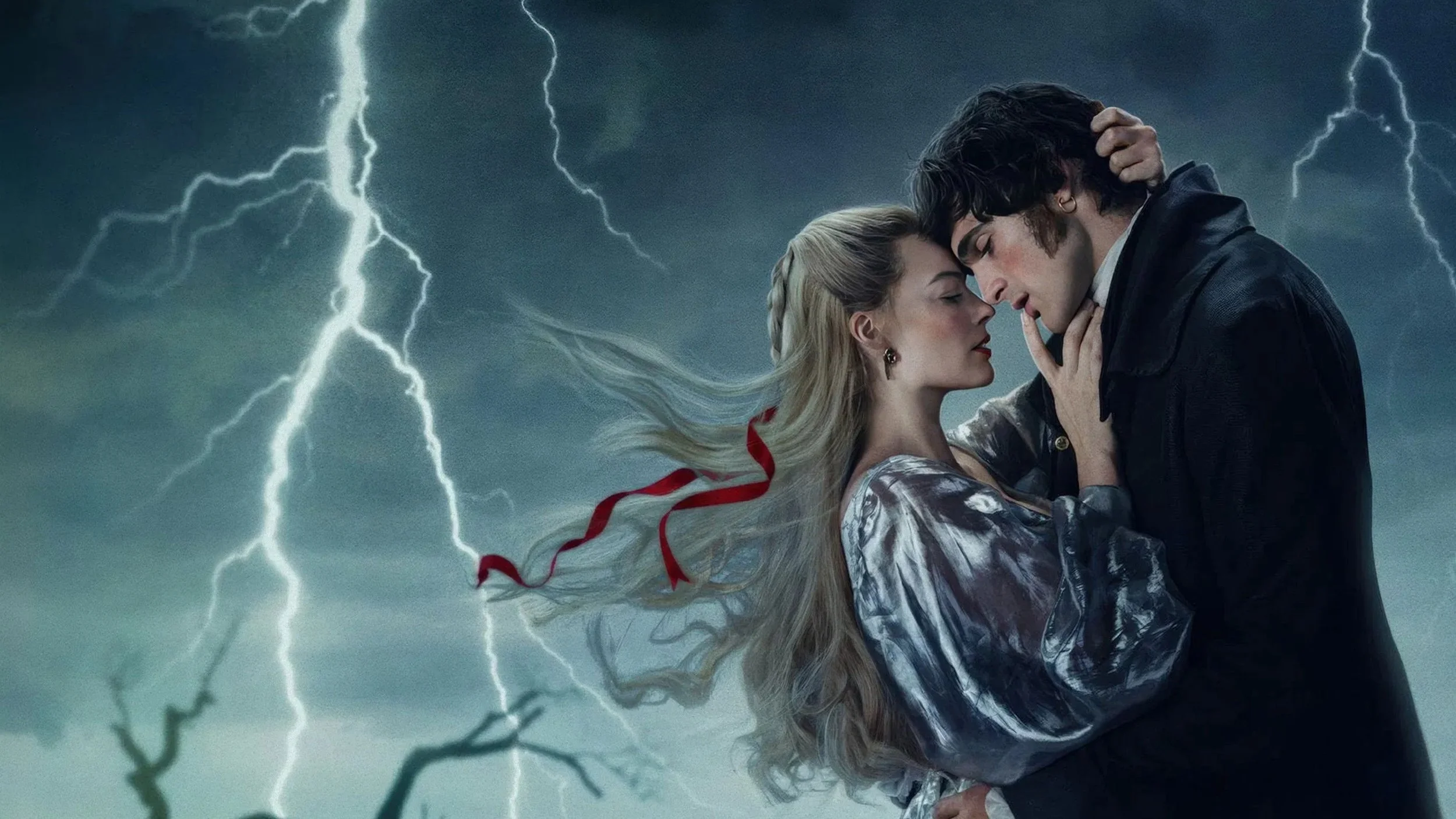
“Wuthering Heights” (2026) | TMDB
Immediately, alarm bells rang. History has shown that Wuthering Heights is not primed for adaptation. Aside from the 1988 Yoshida film, none of the adaptations have captured the intensity and ferocity of Brontë’s stormy world. Hell, most haven’t even attempted adapting the second half of the novel, choosing only to focus on the tumultuous love story between Heathcliff and Catherine. Most egregious of all, a substantial amount of these adaptations completely erase Heathcliff’s racial identity, a key detail in his characterization and reasoning as to why their relationship was doomed in the first place.
Out of all these qualms, I believed Fennell would at least get Heathcliff’s character right, I mean in both her past films she’s had complicated, morally dubious characters leading them, surely she won’t shy away from the complexity that is Heathcliff. There's no way she’d backtrack on the progress Andrea Arnold made in her 2011 adaptation with casting a POC Heathcliff. And then Jacob Elordi was cast. Uh oh.
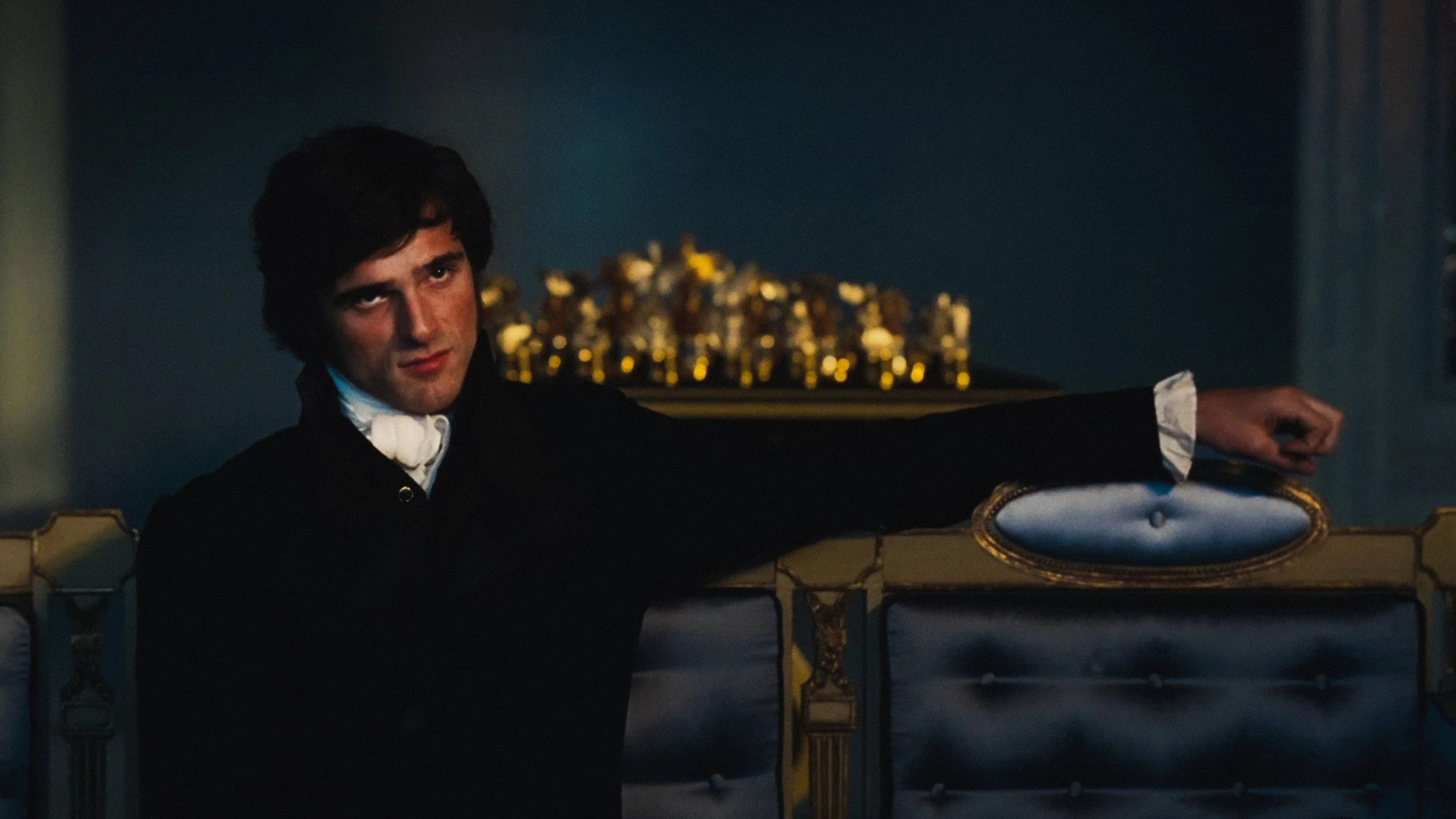
Jacob Elordi for “Wuthering Heights” (2026) | TMDB
Admittingly, I am not immune to the charms of Elordi, and that was apparent when I left the theater feeling somewhat okay with what I just watched. The film captures Heathcliff and Catherine’s desperate love and does treat the moors as their own character, fog and all. It has the limbs of a Wuthering Heights adaptation, but why isn’t it alive and moving?
This is now a pattern for Fennell, she refuses to interact critically with the themes and worlds she’s created. Erasing Heathcliff’s racial identity makes this a fundamentally bad film. At its core, it is not understanding the piece of literature it is attempting to adapt despite Fennell’s best attempts at trying to say it is her 14 year-old interpretation of the novel. Did the 14 year-old Fennell just ignore the references to Heathcliff’s race that are thrown at him in practically every chapter? I’m no adaptation purist, but this is a glaringly huge oversight. Ouch.
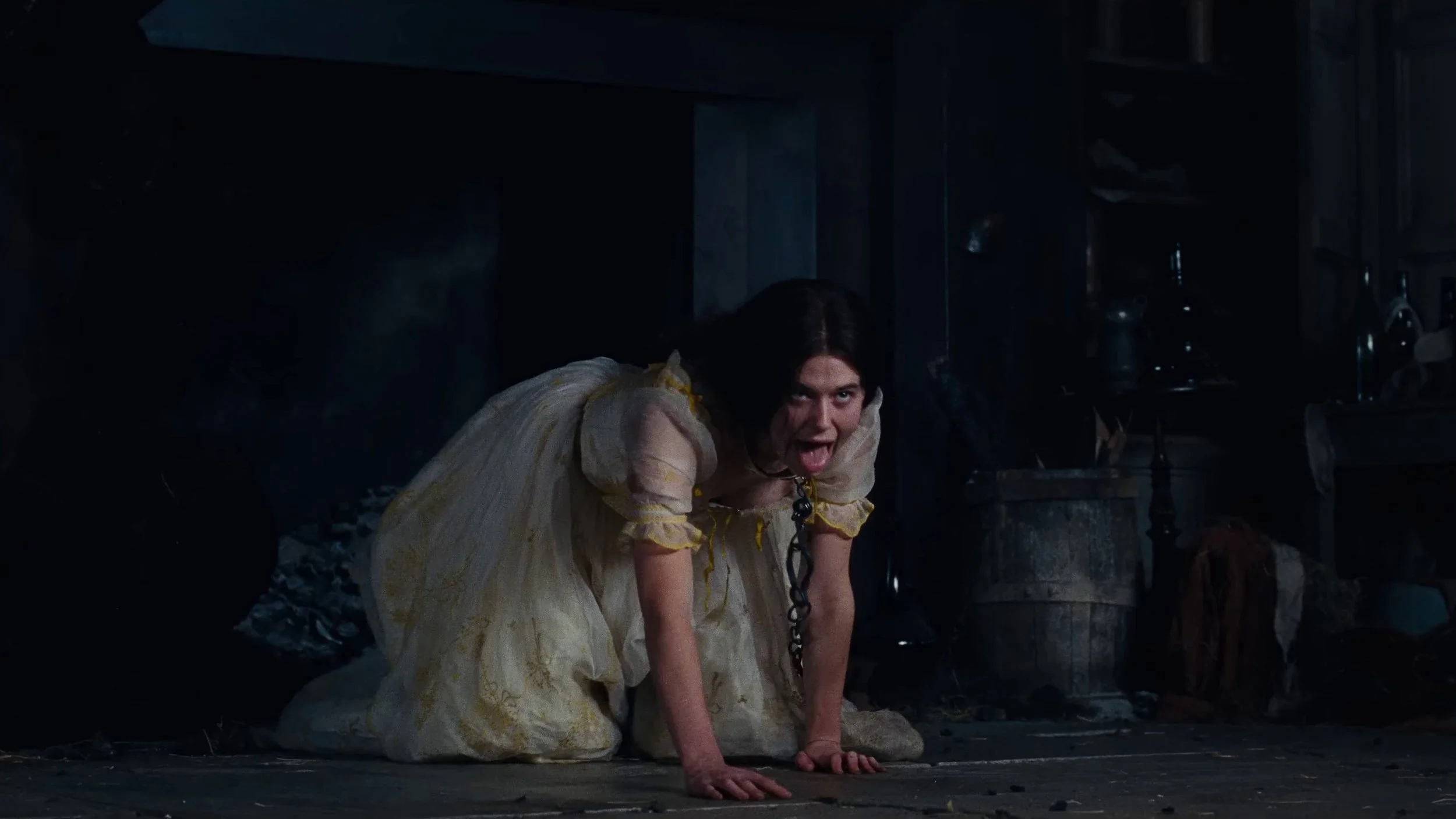
Alison Oliver for “Wuthering Heights” (2026) | TMDB
Somehow though, that is not the film’s biggest misstep. In typical Emerald Fennell fashion, there is indeed a third act psychosexual turn. Isabella Linton, who up till now has been characterized as aloof, naive, and innocent, grows a fascination and liking to Heathcliff. By this point in the film, Heathcliff is enacting his revenge towards Catherine and in an attempt to make her jealous, marries Isabella, who is also Catherine’s sister-in-law. This plot point happens a little differently in the book, here Heathcliff marries her as an act of revenge against Edgar Linton, Isabella’s brother and Catherine’s husband, after years of racial abuse and also for marrying Catherine. He abuses Isabella physically and psychologically post-marriage, yet in the film, Fennell decides to make Isabella’s abuse into a kink. Isabella willfully chains up and barks like a dog for Heathcliff.
This is Emerald Fennell’s cardinal sin. She wants to be The Provocateur, she wants to be seen as a subversive filmmaker so bad that she does not create space for nuance in her films. Wuthering Heights has been a beloved classic for damn near 200 years now, Heathcliff is one of literature’s most iconic characters despite the abuse. We do not root for Heathcliff, but one can understand the motives behind his actions. Violence births violence, hate begets hate, we can empathize with the characters because we’ve all visited these dark places before. Emerald, however, can not and does not trust her audiences enough to understand either of these themes.
We can see that in Promising Young Woman where despite all the rape-revenge marketing, Cassandra gives the men she lures a stern talking to instead of the violence they deserve. We can see it again in Saltburn where she attempts her best Pasolini impression and has Barry Keoughan systematically break down an upper class family, but in the final moments introduces a twist that crumbles her character’s motivations. She’d rather turn to pup play instead of ruining her love stories aesthetic - you can’t thirst tweet about a domestic abuser at the end of the day.
This lack of trust in audiences leads to movies like 2026’s Wuthering Heights. Movies that are a pastiche of prior greatness, movies that lead with shock instead of substance, movies that dare you to film the screen. Based on the reaction online from casual film audiences, she’s succeeded. The film opened to a sensational 35-million box office weekend and is just going to continue to soar with word of mouth reviews over the Cocomelon sex scenes. It makes me wonder: Do audiences crave nuance? Are we just going to the movies for entertainment, or do we want to be tested and exposed to our innermost desires, rages, and passions? Send in your goons, Emerald. Let them decide.
Strike Out,
Ariel Rivera
Miami
Ariel Rivera is a recent Florida International University graduate specializing in media communications and English. With a sharp, curious eye, Rivera writes about overlooked and underseen subjects, bringing them into focus and turning them into pillars of discussion. A self-described film nerd, Rivera spends his free time watching and reviewing movies, reading, and lounging with his dog, Neo.