This Is Your Sign to Post Your Content (According to Math)
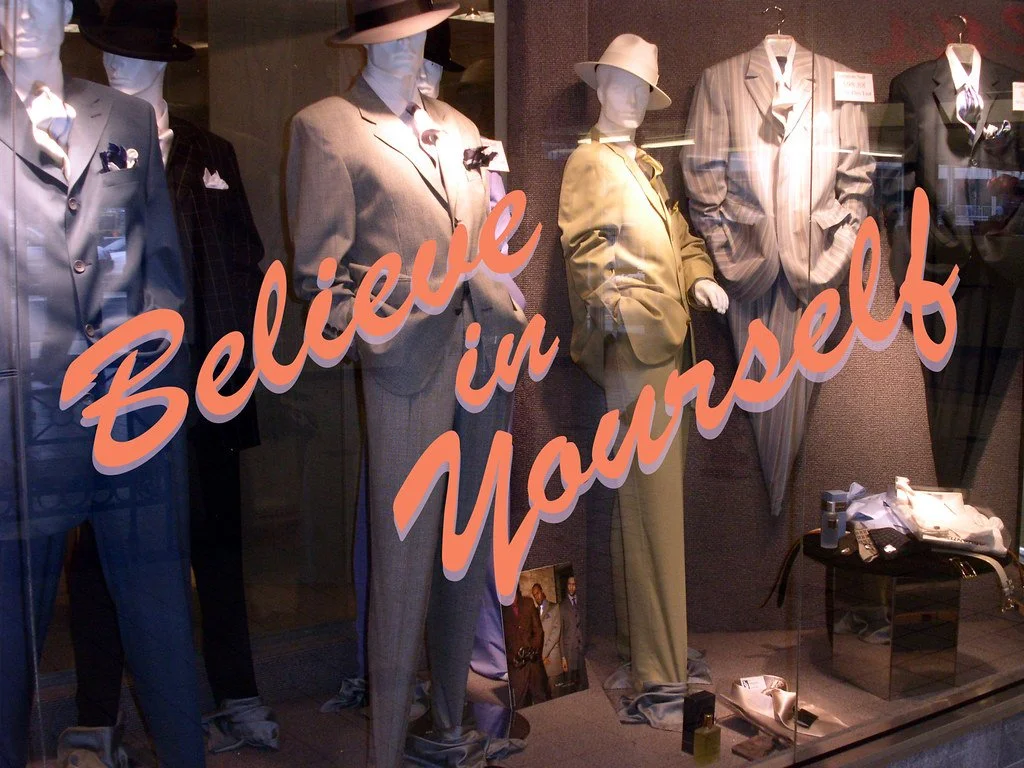
"Believe in Yourself" by tahewitt is licensed under CC BY-NC 2.0. To view a copy of this license, visit https://creativecommons.org/licenses/by-nc/2.0/?ref=openverse.
The world is falling apart.
So why not do it anyway?
Listen, I get it.
There’s so much uncertainty right now, and a lot of us are trying to build stability from scratch. Young adults ages 18–28 are increasingly skipping college and questioning the future of AI-driven careers in favor of carpentry, construction, and other skilled trades that promise something tangible: money now, not decades of debt and a whispered maybe at a job later.
As a result, the arts are slipping behind.
According to the National Endowment for the Arts, only 48% of U.S. adults attended an in-person arts event between mid-2021 and mid-2022, a six-point drop from 2017. Museum visits, theater, ballet, opera, jazz, classical music, all down.
The share of U.S. adults who read novels or short stories fell from 45.2% in 2012 to 37.6% in 2022, the lowest on record.
Bachelor’s degrees in arts-related fields (think art, music, dance, drama education, creative writing) are declining across the board.
There are a million reasons for this. Politics. The economy. Burnout.
Somewhere out there is a person grinding through years of auditions, unpaid internships, and rejection calls for the dream they’ve held since childhood. Maybe one day they get the call. They land the contract. They step onto a professional set or a real studio. They work with someone they idolize. Then the Billboard stats or the box office numbers come out, and they realize how fragile it all still is.
Many of us have watched that hopelessness from the sidelines. So it makes perfect sense why you ignore that quiet voice telling you to make that song, film your gameplay, record your makeup routine, or finally make that fan edit that’s been living rent-free in your head.
Let me make the case for listening to that voice. The numbers can do most of the talking.
"Believe in yourself and others will too" by Aaron Gustafson is licensed under CC BY-SA 2.0. To view a copy of this license, visit https://creativecommons.org/licenses/by-sa/2.0/?ref=openverse.
If you tell yourself, ‘who cares’, then the best and simplest answer is you, and that should be enough. But if you ask yourself how or why all the time, the better question is: why not?
Video made up roughly 82% of all internet traffic in 2025, making it the dominant form of content online. 78% of people watch videos weekly, and 55% watch them daily.
Which means statistically, you’re probably one of them.
Over 85% of U.S. internet users watch videos online. The average person spends about 17 hours a week watching online videos. Internet users now spend nearly 14 hours a week on social feeds and videos, more time than they spend watching traditional television. YouTube alone has over 2 billion monthly logged-in users, making it one of the largest media platforms ever created.
Globally, more than 75% of internet users consume digital content multiple times a day. Full-time digital creator jobs in the U.S. jumped from roughly 200,000 in 2020 to 1.5 million in 2024, a 7.5× increase in just four years. The global digital content creation market is projected to grow from $19.3 billion in 2024 to $21.1 billion in 2025, and it shows no signs of slowing down.
Sure, the days of the prestigious and untouchable Hollywood star are mostly gone, but in their place, something more accessible appeared: the content creator. Even the film industry is waking up to it.
In the early 2000s, film adaptations relied on traditional book series with built-in fan bases. The Lord of the Rings, Harry Potter. The Hunger Games. Today, some of the most successful adaptations in recent years come straight from online spaces like Wattpad.
Wattpad is an online storytelling platform where writers publish original fiction or fan fiction directly to a global audience. It has over 90 million users worldwide, with most readers accessing stories on mobile. This is an audience that traditional publishing rarely reaches, and authors are able to create their own fan bases with platforms like these through comments and real-time engagement.
Several Wattpad stories became New York Times best-sellers, including After by Anna Todd and The Novice by Taran Matharu. The Kissing Booth, originally a Wattpad teen romance, became one of Netflix’s most-watched original films in the U.S. and launched an entire franchise.
Lionsgate has even started hiring TikTok fan editors to promote their films; proof that cinema is no longer just watching audiences, but learning from them. All thanks to social media.
Creators like Markiplier built audiences of over 38 million people by playing video games at home and sharing genuine joy. That audience allowed him to fund Iron Lung, a deeply personal passion project that was never meant to be more than a small, local film. Last week, it premiered in over 500 theaters and has already made more than $21 million on a self-financed $3 million budget. To compare, cinema legend director Francis Ford Coppola (The Godfather, Apocalypse Now) released Megalopolis just 2 years ago, which made roughly $14 million on a $120+ million budget.
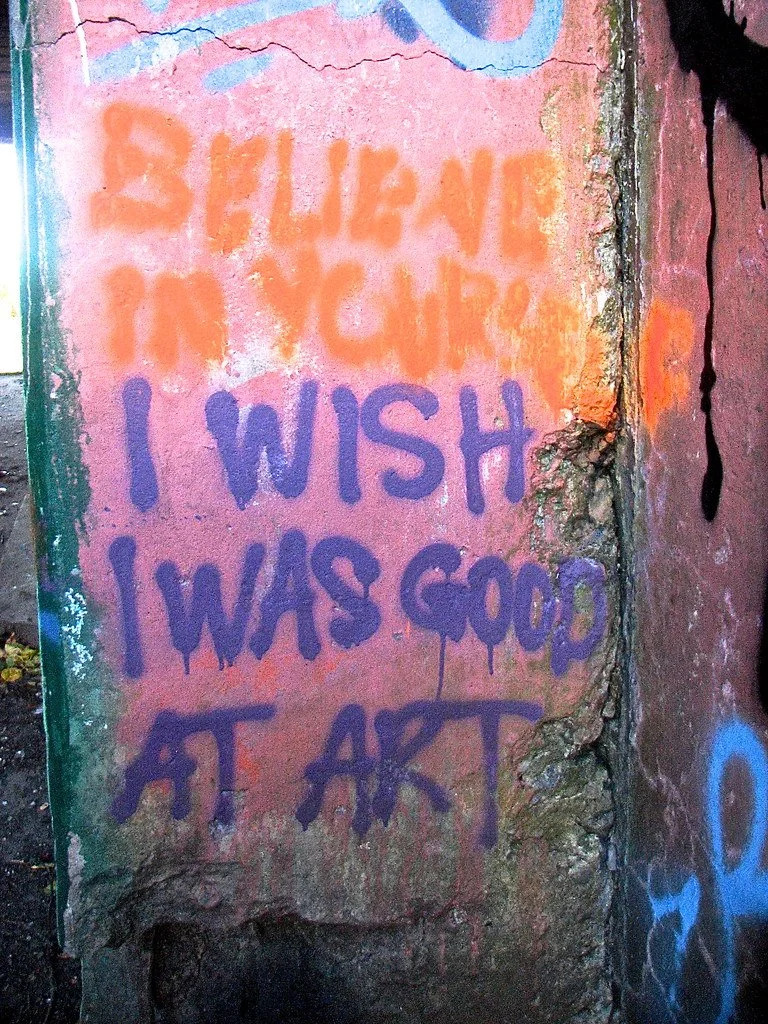
"Sacred & Profane Festival • 2013 – Believe in Yourself ~ I Wish I was Good at Art" by origamidon is licensed under CC BY-NC-SA 2.0. To view a copy of this license, visit https://creativecommons.org/licenses/by-nc-sa/2.0/?ref=openverse.
I’m not telling you to abandon film school or throw away your Juilliard dreams just because times are changing. Even in chaos, art in traditional media still finds a way to rise.
Ryan Coogler’s Sinners proved that audiences are desperate for something new in a world oversaturated with franchises and sequels. Studios may rely on recognizable IP these days, but it wasn’t Sonic or Minecraft setting Oscar records.
And art isn’t dead; it just found a new home on the internet.
Online art sales already make up nearly 18% of the global art market (about $10.5 billion), and that number is growing. 82% percent of U.S. adults engaged with art digitally, through streaming performances, online exhibitions, and shared content during the pandemic, demonstrating how massive this audience is and how hungry they are for art.
None of this is easy. Anything worth making takes time, consistency, and a stubborn belief that what you’re doing matters.
But here’s the shift: you don’t need permission anymore.
You don’t need to climb a studio ladder for decades or become a label’s long-term investment just to be allowed to create. Make the album on the free app on your phone. Steve Lacy did. Make the movie with what you have; Sean Baker shot Tangerine on an iPhone 5S. Imagine what you could do now.
In 2029, the Oscars won’t air on television anymore because they’ll stream exclusively on YouTube. Meaning one day, kids will gather around an iPad Pro 66, hoping their favorite creator wins Video of the Year.
Maybe it’ll be you standing on that stage.
Strike Out,
Orlando
Written By: Roger Jimenez
Edited By: Delaney Gunnell & Arsheeya Garg
Roger Jimenez is a Staff Writer for Strike Magazine Orlando and a recent English graduate from the University of Central Florida. A freelance writer since 2020, he is a copywriter and a local journalist who has written for Visit Orlando, The Orlando Real, VoxPopuli, The Apopka Voice and others, in the hopes to continue his Carrie-Bradshaw dreams of writing for a living.