At Man’s Will.
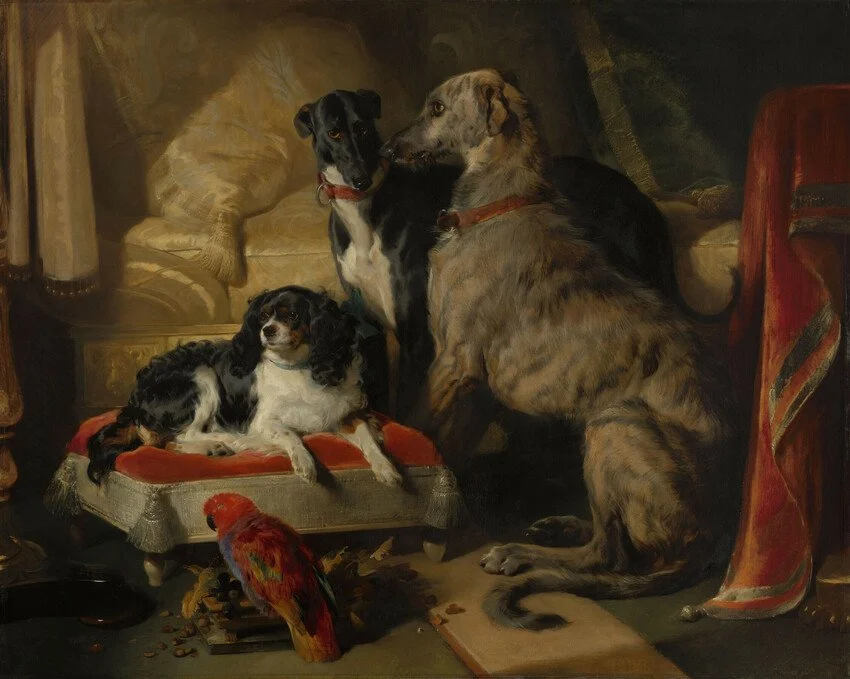
Sir Edwin Landseer (1802-73) - Hector, Nero, and Dash with the parrot, Lory | Royal Collection Trust
In my most peaceful moments on this Earth, I’ve had a four-legged friend by my side. There’s something about the company of a creature that wants nothing more from me than my time (and maybe a scratch on the butt). Sweeping tails and doting eyes feel like home to me. The only downside to these connections is how brief they can be.
This love spans across generations and civilizations. Classically, the people of ancient Egypt worshipped their cats like we do today. It feels odd, discovering vintage framed photos of the beloved pet of a 20th century family. Or the musings of a Chinese poet, Lu You on the felines he kept in his home. We’re only following in their footsteps, although at times our modern love can manifest in ways that border on obsession.
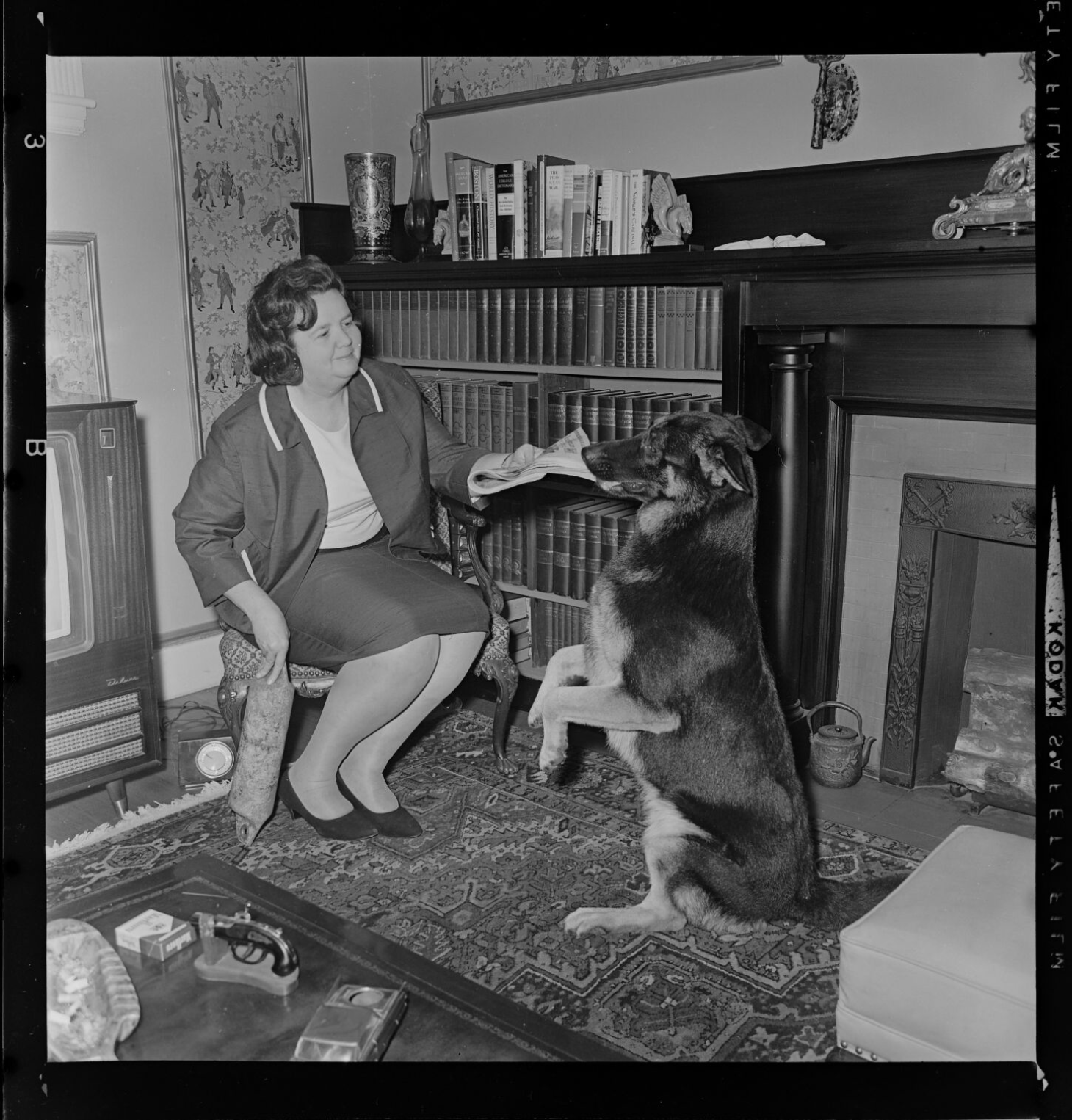
Mrs. Louise Day Hicks receives a copy of the Record American and the good news from her pet Prinz at her home | Digital Commonwealth
Something about the human condition makes us crave the world to be like us, to relate to our quadrupedal friends through our own biases; “sweet” boy cats, “mean” girl dogs, and don’t forget the elusive nature of a ginger animal. The lingo might be more annoying than impactful, but gendered language has been popping up in places it has no business. The internet is littered with instances of owners dubbing personalities over their furry companions. It’s harmless play, until less innocent users go so far as to provoke or mistreat their animals in the name of fame. In truth I struggle to understand the fun in sequestering creatures to the stereotypes of labels they’ll never understand.
Cute critters will always be beloved by the public, that much we can tell by the internet celebrities who run on all fours. Remember Moo Deng and Punch the Monkey? Their fifteen minutes of fame didn’t amount to real change. People were invested as long as they were entertained. The climates that these animals inhabit beg for our mercy. In South Florida, our own backyard, the Everglades is being chewed away by land developers backed by devilish legislation. As long as we’re watching the monkey dance will anything change?
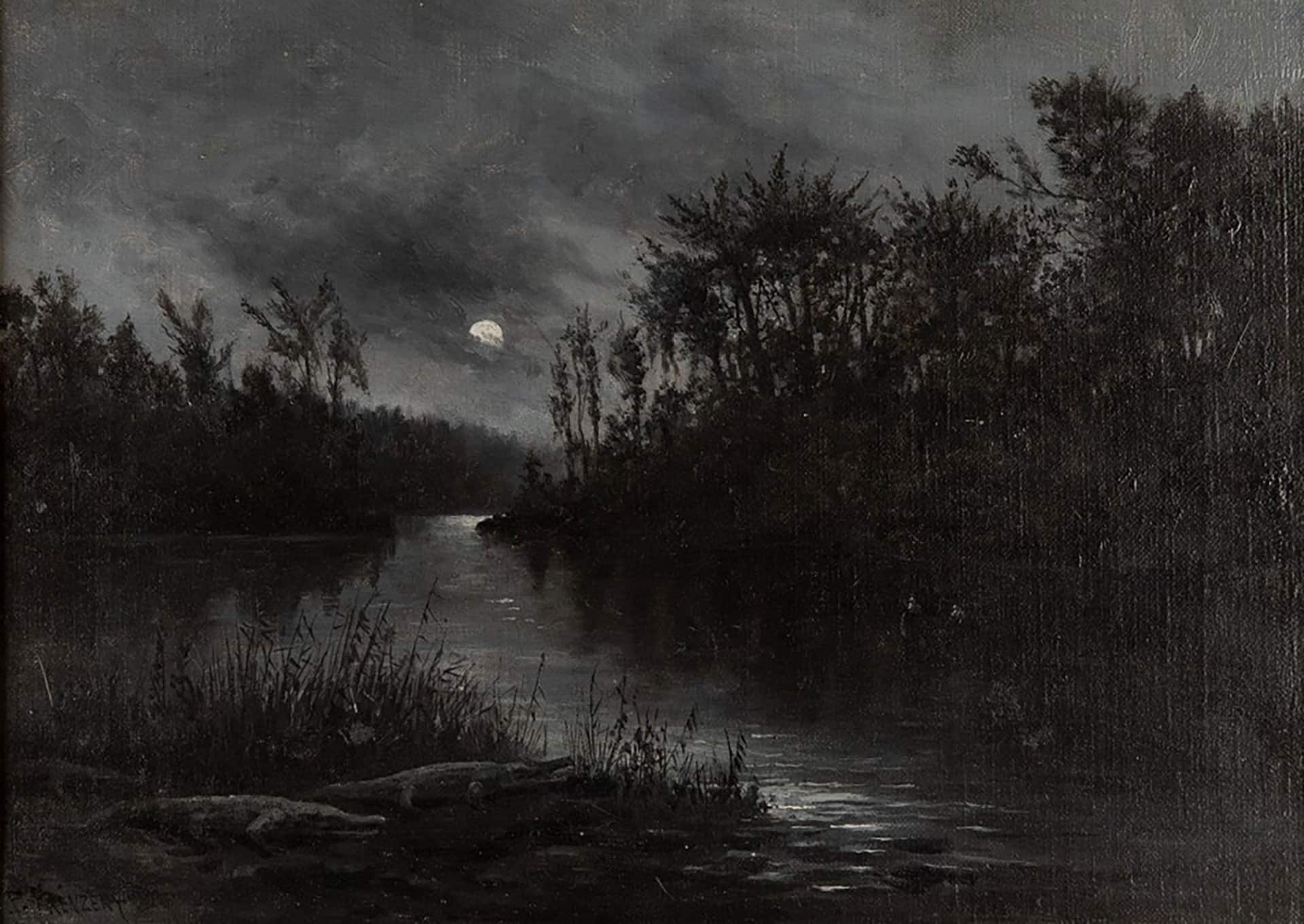
Paul Frenzeny, "Moonlight on the Everglades," 1890, Oil on linen | The Everglades - Harn Museum of Art
Before our time, the supercontinent Pangea housed a horde of ancient creatures big and small. Beings so unique they could only be thought up by a child’s imagination. Trees were bigger than skyscrapers and nestled in jungles so wildly dense the sharpest blade couldn’t dream of cutting a path. The ground broke apart, then the world froze over and thawed once again and still so much life flourished without us. Such relics from the past were no more important than their descendants. They had their own intuitions and instincts, just like the creatures we share the Earth with now.
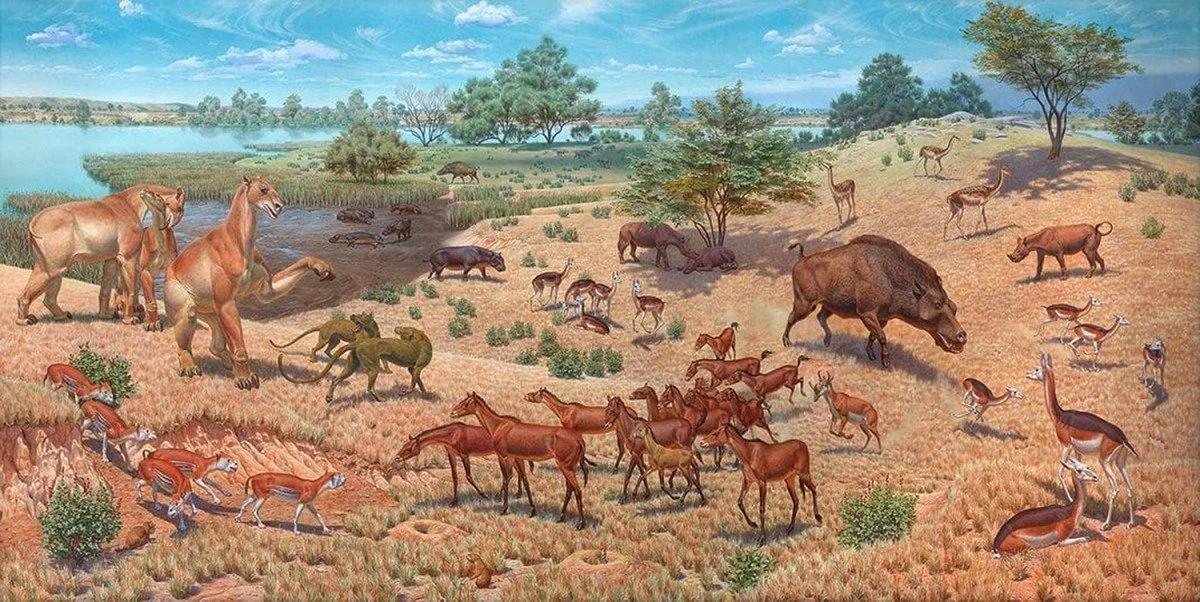
Nebraska Savannah, Late Oligocene-Early Miocene, 12 feet x 24 feet, painted by Jay Matternes for the Smithsonian National Museum of Natural History in 1961| Paleo Nerds
Our plight is thematic to life, to be so invested in the mundane we miss the bigger picture. We shouldn’t have to imbue our wills onto other beings to value them. Can we ever respect a thing without relating to it? It seems not.
These neighbors of ours, even the ones that bark and meow, have their own languages and customs. Our love for them will never change the fact that they don’t abide by our rules, especially on the undomesticated front. True love comes from understanding that differences don’t make us any less important. Scales, slime, or skin, we’re sharing this planet and it will quite literally be the last thing we do.
Strike Out,
Moriah Higgs
Miami
Moriah Higgs is a senior at Florida International University majoring in Public Relations, Advertising and Applied Communications. Often her pieces reflect her personal interest in pop-culture, the complexities of modern life, and love for evaluating Western society. You can find some of her previous work in Strike Miami’s Print Issue’s 9 & 10. Her self-expression also takes the form of fine art via painting and drawing. When she’s not writing, she’s on the field with the FIU Women’s Rugby team or spending her free time with friends and loved ones.
Edited by Ansley Ryan and Alexander Polo.