Boys, Boys, Boys
There’s a common denominator one can find through every millenium’s defining story. A throughline of lonely men. God’s lonely men. Be it Grendel, Jesus, Hamlet, Mark Zuckerberg or Travis Bickle; different iterations of a particularly lonely, marked man will be recorded. It’s all about boys, boys, boys.
The phenomenon of God’s lonely man originates from an essay by Thomas Wolfe who saw that all men are inherently lonely creatures, often believing their loneliness and isolation makes them uniquely chosen men rather than part of a collective human experience shared by all. The term was later popularized by Paul Schrader with his characterization of Travis Bickle in Taxi Driver. “Loneliness has followed me my whole life, everywhere: in bars, cars, sidewalks, stores, everything, no escape. I'm God's lonely man.” laments Travis as he pursues a teen hooker and fails an assassination attempt.
There’s a reactionary impulse to label these types of stories as “overplayed.” They’ve been done before to varying degrees of success and popularity, so much so that when a new type of film that seems to fit the bill of this archetype releases, crowds rush to the cinema with their pitchforks in hand - how many times can audiences be asked to empathize with yet another lonely loser. This was the case for 2025’s Marty Supreme.
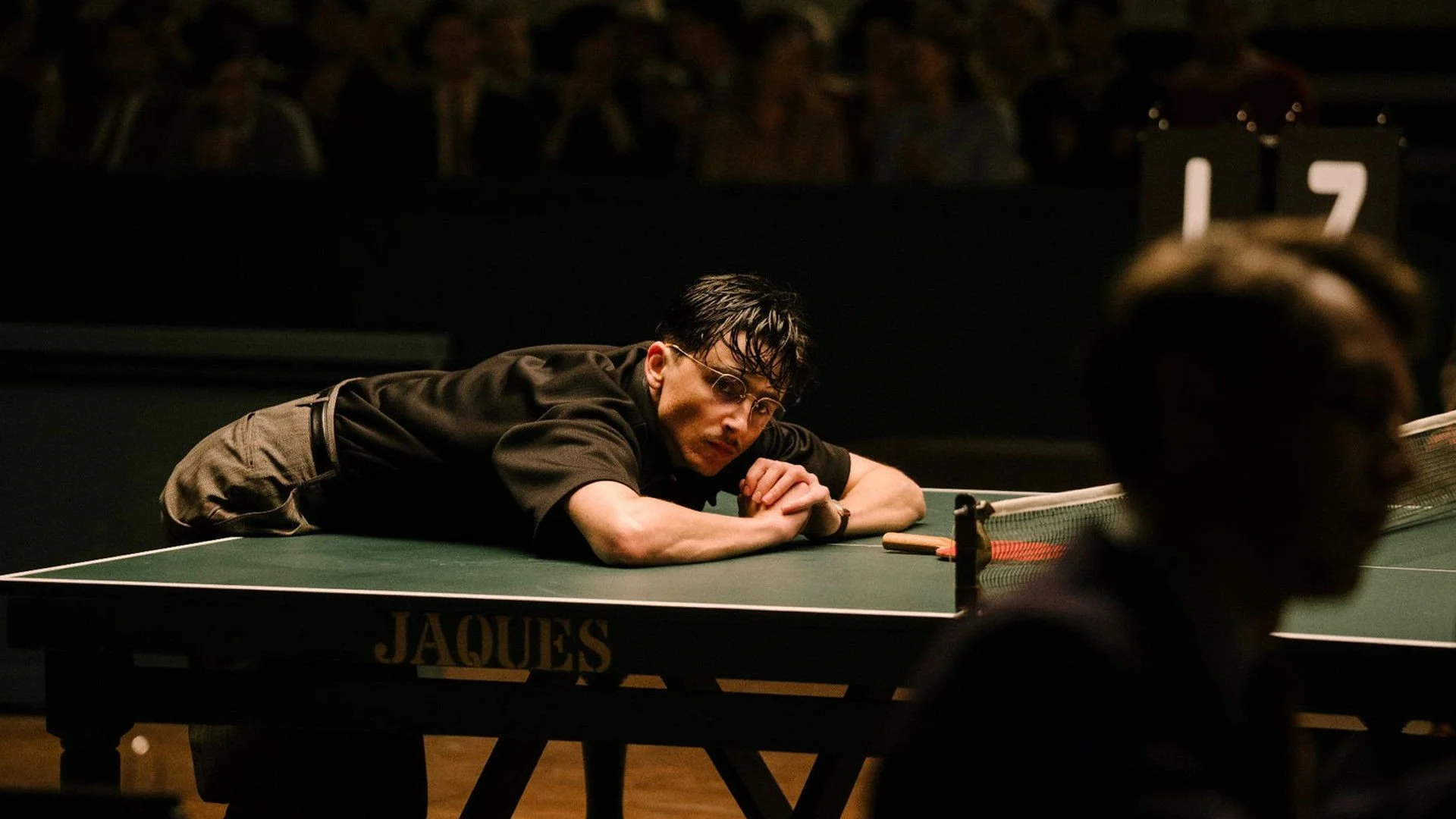
Timothee Chalamet for Marty Supreme | TMDB
Directed by Josh Safdie, Marty Supreme follows Marty Mauser’s comedy of errors as he attempts to strike it big in the 1950’s ping-pong world. The film tracks Marty’s, played by Timothee Chalamet, boundless ambition and self-serving tendencies through its nearly 3 hour runtime. Marty wreaks havoc throughout New York, apathetically harming every person he comes in contact with all in the pursuit of greatness. Immediately, this seems like a familiar tale. An aspirational, yet emotionally damaged man’s journey from bum to chum, the lonely loser staking his claim to a reward he’s destined to receive. As such, criticism on Marty’s supposed trite characterization was declared almost immediately, but the thing is Marty doesn’t really align with the trope’s all too familiar traits. Marty Mauser is charismatic, confident, and brash. He has support systems pouring out of every corner of New York, Marty Supreme is not one of God’s lonely men, Marty Supreme is a different creature entirely.
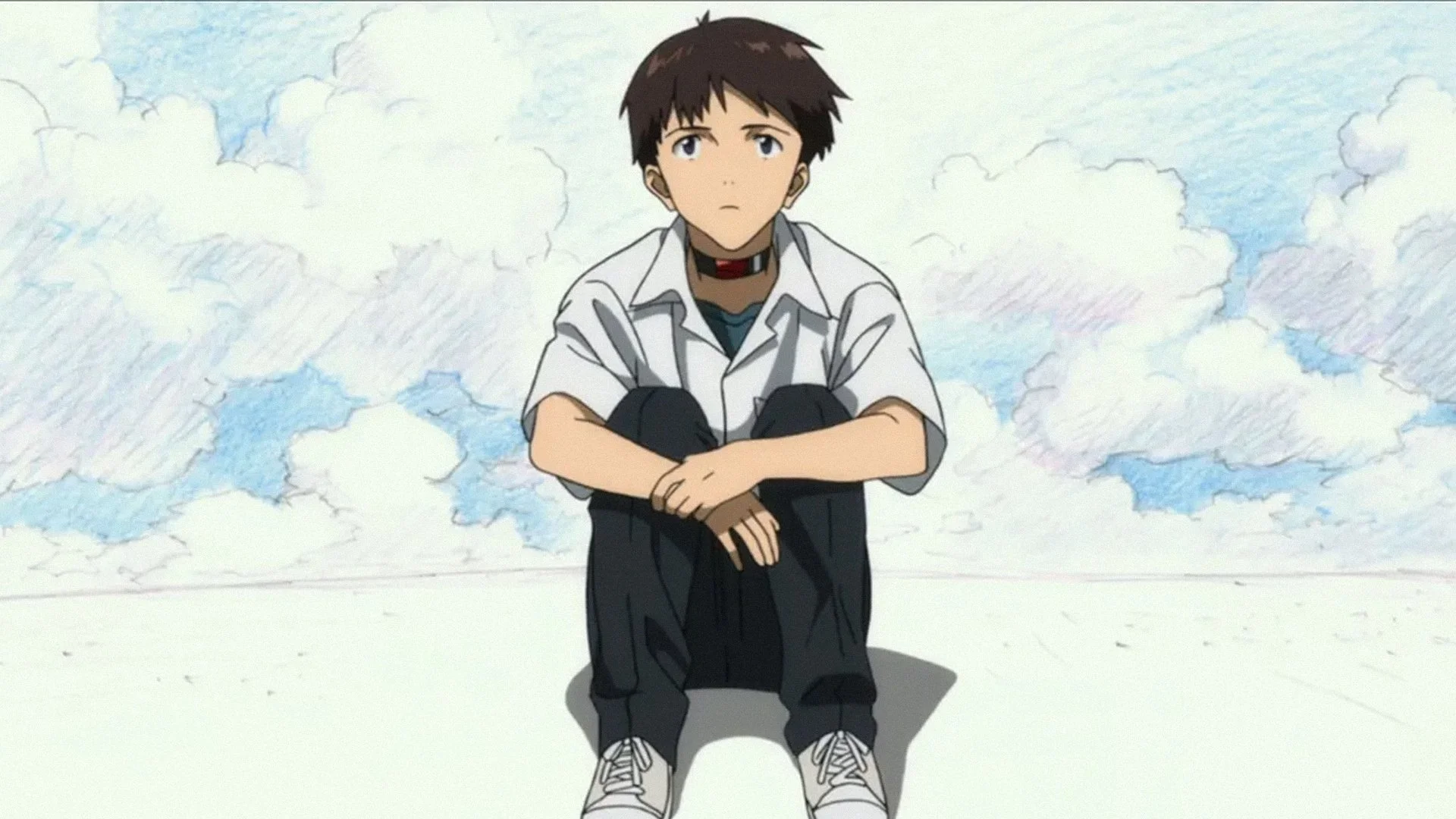
Shinji Ikari of Neon Genesis | TMDB
There’s a near infinite amount of lonely men represented across all mediums. One of the first was of course literature’s most indecisive protagonist Hamlet. A common theme across these men is the contemplation of death as a means of escape, this is a virtue all too familiar to Hamlet. Hamlet is plagued with doubt, haunted by the consequences of future actions, and spends a majority of the play in a state of dwelling, his only form of release stemming from his tirades against Ophelia. Lonely men do not have confidants, lonely men pace ‘til their thoughts outrun them or bring destruction.
Anime has their own version of God’s lonely man with Neon Genesis’ Shinji Ikari. A Jesus-esque chosen boy whose complicated relationship with his father dogs all of Shinji’s characterization. Uncertain in the face of practically everything, yet too self-critical to take a stand against it, Shinji is racked with self-doubt, guilt, shame, and above all loneliness (despite the women around him being pillars of support). The only difference here is that Neon Genesis actually lets Shinji live.
Tired of their circumstances, having relented, repented, and vented all of their self-loathing, shame, and sadness out, the lonely man takes one last stand and then succumbs to his fate, the rest is silence. Jesus gets crucified, Hamlet stabbed, Zuckerberg stays Zuckerberg, the lonely man does not advance– a fate shared by Safdie’s other two protagonists in Good Time and Uncut Gems, respectively. Marty, however, is the outlier here. Marty Mauser gains hope.

Timothee Chalamet for Marty Supreme | TMDB
After winning back his final shred of dignity in a tumultuous table tennis match, Marty races home just about missing the birth of his child days ago. He’s led to the ICU and, through a screen, meets his son, ending the movie with one well-deserved cry. The legitimacy of the child doesn’t come into question despite it being a prior plot point, the scene is a beautiful moment of vulnerability, reflection, and clarity for a character who does not give himself enough time to even breathe. Marty Supreme ends on a moment of hope, of dreams reformed to realities, Marty gets the opportunity to thrive where others were met with doom, death, and despair.
That’s why the jump to label Marty Supreme as an overplayed type of film feels rather harsh. It’s not an acceptable way to interact with art and diminishes any effect a piece of media may have on the viewer before they’ve seen it. It’s not smart or nuanced or better of a person to surmise a film off preconceived notions surrounding its genre conventions. There's no glory to constrictiveness, there’s no enjoyment to creating your own confines.
Strike Out,
Ariel Rivera
Miami
Ariel Rivera is a recent Florida International University graduate specializing in media communications and English. With a sharp, curious eye, Rivera writes about overlooked and underseen subjects, bringing them into focus and turning them into pillars of discussion. A self-described film nerd, Rivera spends his free time watching and reviewing movies, reading, and lounging with his dog, Neo.