Golden skin, tousled waves and endless legs — the "Brazilian Bombshell" took the world by storm as a global fantasy starting in the 1990s and lasted well into the early 2000s. Immortalized by the careers of Gisele Bündchen, Adriana Lima and Alessandra Ambrosio, these supermodels carved Brazil's name into the world of high fashion and cosmetics, transforming the country's image into a globally marketable aesthetic defined by a bronzed glow and effortless sensuality. The Brazilian Bombshell emulated the spirit of Brazil, but its hyperbolic eroticism is not all-encompassing of Brazil’s cultural complexity. How much of the glamorous fantasy was carefully designed and curated for Western consumption? When put on the runway, how much of Brazil's rich culture gets lost in translation?
In the decades preceding the Brazilian Bombshell, the "heroin chic" aesthetic dominated the major runways of the world with pale skin, dark circles, and a waiflike, almost gaunt look. Iconic figures like Kate Moss epitomized this style, which reflected the rampant cultural angst and drug culture in America at the time. What was once a desirable (albeit unhealthy-looking) aesthetic gradually soured in the public eye as it left audiences thirsty for something to aspire to instead of a reflection of society's mundane struggles. The public craved an idol to escape into more than a cynical dose of reality.
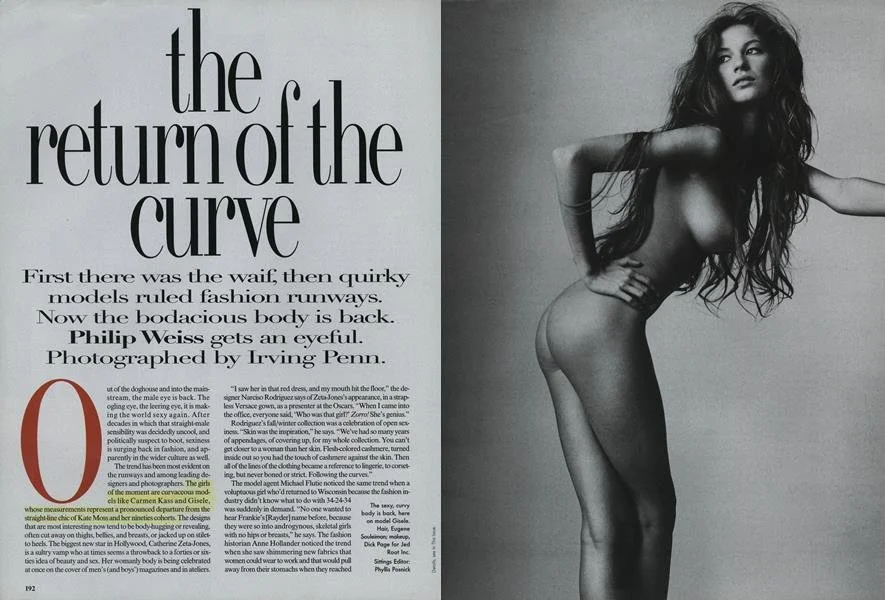
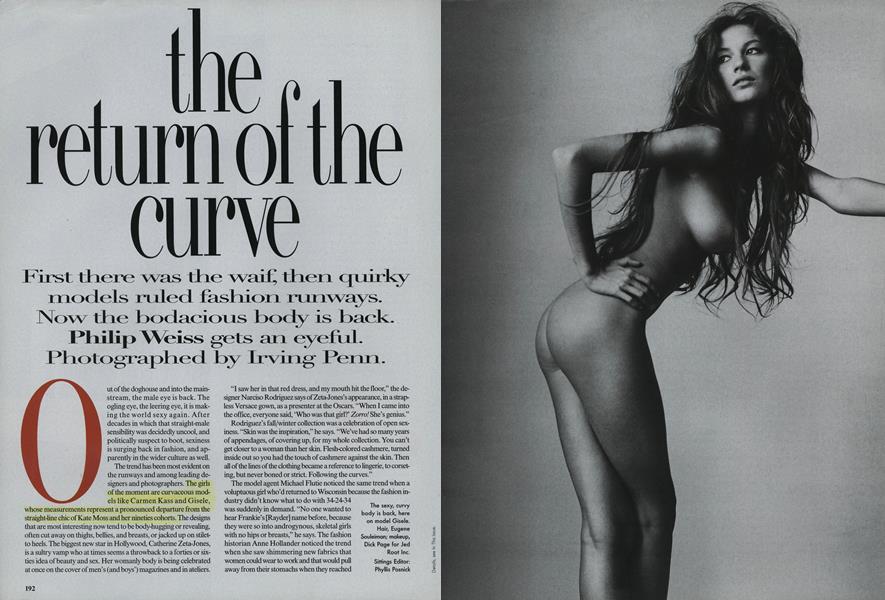
Image Courtesy: https://vogueprod.blob.core.windows.net/vogueoutput19990701thumbnails/Spreads/0x600/104.jpg
Enter Gisele Bündchen: the antithesis of heroin chic's gloom. Her tanned skin, sculpted physique, and windblown hair juxtaposed every other typical model in the industry at the time. Rejection plagued her early career (famously 42 times), but Bündchen's vitality and unbridled confidence eventually landed her a lucky break at just 19 years old. Vogue dubbed her "The Return of the Sexy Model" in 1999 as Bündchen's career took off, leading her to signing multimillion-dollar contracts with brands like Victoria's Secret. In tandem with Bündchen, other Brazilian supermodels like Adriana Lima, Alessandra Ambrosio and even Chico Lachowski went on to become household names through Victoria's Secret campaigns, hundreds of magazine covers, and walking for the likes of Alexander McQueen, Dolce and Gabanna, Chanel, Louis Vuitton, and so on. Together, they embodied a brand new archetype: the Brazilian Bombshell.
The late 1990s and early 2000s Victoria’s Secret Fashion Shows capitalized on this archetype the most, with feathered wings and colorful lingerie evoking a carnival-esque spectacle. Brazilian models became the faces of an international aestheticism empire. Bündchen, Ambrosio and Lima’s beach-bred image throughout their careers became shorthand for sun-drenched sensuality, contrasting sharply with European haute couture traditions. Their commercial success was undeniable as swimwear and lingerie sales skyrocketed, cosmetic lines marketed products that guaranteed a "Brazilian glow", and even tourism to Brazil surged on the back of the fantasy these models sold.
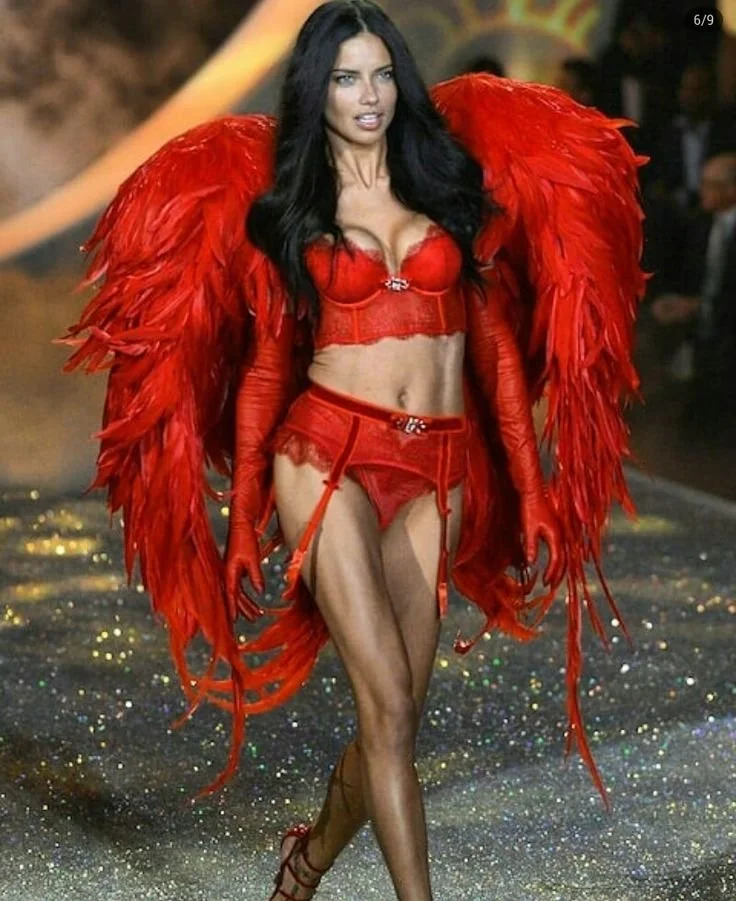
Image Courtesy: https://www.pinterest.com/pin/725009240051852816/
The fantasy of the Brazilian Bombshell branded Brazilians as having bronzed skin, beach-toned bodies and a cool air of passionate allure. Their desirability paved the way for audiences to conflate the seductive nature of these supermodels with the seductive nature of Brazil itself. And they wouldn't be entirely wrong to do this; the image of the Brazilian Bombshell aligned seamlessly with Brazil's longstanding emphasis on corporeal beauty, seen in its booming cosmetics industry, vibrant pageant world, and enthralling beach culture. Global fashion marketing, though, embellished it with words like “exotic” or “tropical”, positioning the Brazilian Bombshell as foreign enough to intrigue but familiar enough to sell. Their “Brazilian-ness” was coded through sun, sand and sex appeal, which was marketably desirable to international audiences. It was a literal breath of fresh air that made Brazilian culture a hot commodity on a global scale.
Yet this global success came with its blind spots. Yes, Brazil is rich in culture and beauty, but it also has a long-standing history of vast inequality. Poverty pollutes every corner of Brazil; despite having one of the largest economies globally, it also has one of the largest wealth gaps in the world. While Rio's beaches were being sold internationally as havens of seduction, locals were just as familiar with the city's sprawling favelas (i.e. slums) that are infamous for poverty and violence. In the world of high fashion and marketing, poverty is a challenging aesthetic to sell.
Beauty is so highly valued in Brazil because it is a form of currency that transcends economic status. Within Brazilian culture, physical appearance has long been associated with opportunity, exchanging financial capital — which has and continues to plummet due to the widening wealth gap and high inflation rates — for the capital of beauty. Achieving supermodel levels of beauty was not just about self-conceited vanity, it was about a means of signaling health, abundance, and social mobility while masking a society limited by its economic lack. Beauty opens doors in ways money can’t buy.
This sentiment can be seen with deep roots in the country's history. Much like the rest of the world, Brazil has held a preference for Eurocentric standards of beauty for centuries. In post-abolition Brazil in 1888, Brazil encouraged European immigration from countries like Italy, Germany, Portugal and even Japan in an attempt to "whiten" the population. The idea was that these waves of European immigrants would reproduce with the extensive Afro-Brazilian and Indigenous populations, generationally wiping their communities away with Eurocentric features. This was in an effort to establish the country as a global force comparable to Europe at a time when Brazil was seen as inferior, which explains why the models chosen by the world to represent Brazil seem much closer to European ideals than to the full spectrum of Brazilian reality. The nation's history of striving towards European standards of beauty mirrors the birth of the Brazilian Bombshell.
The branding of the archetype distills much of Brazil’s immense racial and ethnic diversity into a single, exportable identity that the world gets to consume. While young white girls looked up to Gisele Bündchen as aspirational, many Afro-Brazilian and Indigenous girls viewed the same idol as a symbol of their global exclusion and undesirability. By adhering their cultural identity to a Eurocentric market, Brazil paradoxically shunned the same communities responsible for the country's so-called “exotic” beauty. The disconnect is a clear sign of commodification, begging the question: was the Brazilian Bombshell truly a celebration of Brazilian beauty, or a stereotyped sex symbol crafted to serve Western appetites?
The truth is that it’s both.
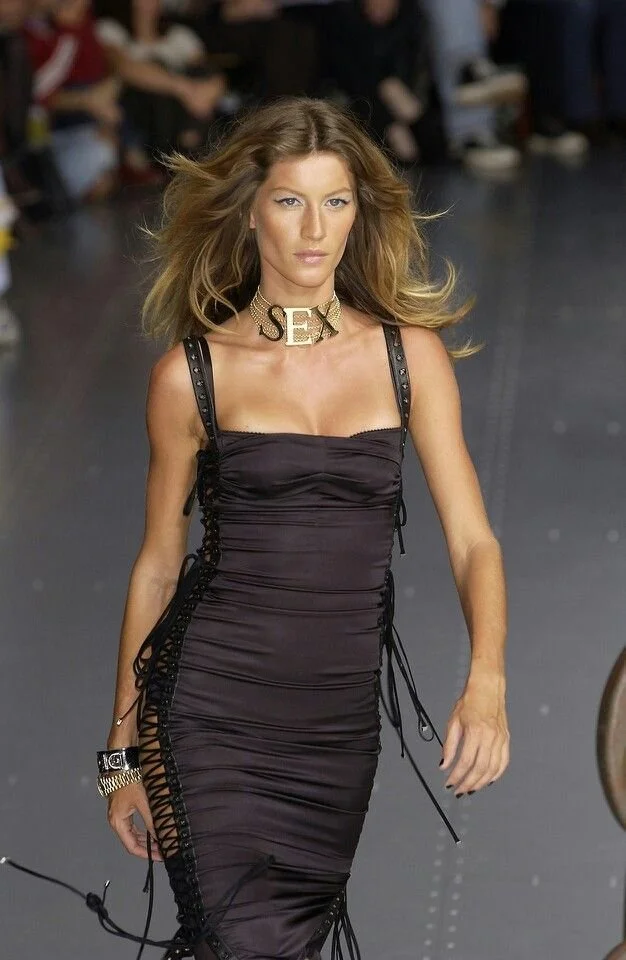
Image Courtesy: https://www.pinterest.com/pin/99501473017119619/
The legacy of the Brazilian Bombshell still stands as lucrative in an ever-evolving market nearly two decades later. Gisele Bündchen remains a cultural icon as one of the wealthiest supermodels of all time, and Adriana Lima and Alessandra Ambrosio continue to shape fashion even after stepping back from the runway. Chico Lachowski is still revered as a Brazilian heartthrob despite being a family man now. The image of these models remains as a hallmark of what it means to be a true Brazilian Bombshell.
Today, however, the archetype continues to evolve, especially in a market that values visibility and authenticity now more than ever. The contemporary marketing world emphasizes diversity, inclusivity, and empowerment more than it did in the early 2000s. Afro-Brazilian models such as Ana Flávia and Gracie Carvalho have begun to redefine the global image of Brazilian beauty. Take the well-known singer Anitta as an example, who famously grew up in the favelas; she built a successful career around shining a spotlight on the Afro-Brazilian communities she came from. Successful cultural branding—what really sells here and now—has gradually expanded from maintaining superficial ideals of beauty and sensuality to owning nuanced identities with irrevocable confidence. In the case of the Brazilian Bombshell, this means continuing to honor its roots while shining a light on Brazilian visibility, pride, and authenticity. To be a Brazilian Bombshell means to own your sensuality, authenticity, and culture all in one.
From Copacabana's sands to Paris's glass runways, the billion-dollar aesthetic of the Brazilian Bombshell proved that Brazil could capture the world's attention and keep it. Yet what began as a sun-kissed stereotype has now evolved into something much richer: an international stage where Brazilian models, designers, and creatives are redefining what beauty really means—o poder real de beleza. The archetype may have been born in the 90s, but its legacy is being transformed into a vision of Brazil that encompasses its true vibrancy, resilience, and cultural power.
Strike Out,
Orlando
Written by Erick Matosinho
Edited by Delaney Gunnell & Arsheeya Garg
Erick Matosinho is a Staff Writer for Strike Magazine Orlando. A senior at UCF majoring in Business Communications with a minor in Writing and Rhetoric and a Brazilian Studies certificate, Erick blends his passion for storytelling and creating with his Brazilian-American background. Beyond writing, he loves to model, swim, and drink coffee! Anything that will help him with his aspirations to change the world… or become a stay-at-home novelist who knows. You can connect with him on Instagram @_erixk.m_ or through his email matosinhoerick.irms@gmail.com.