
Déjà Vu: When Does Inspiration Become Imitation?
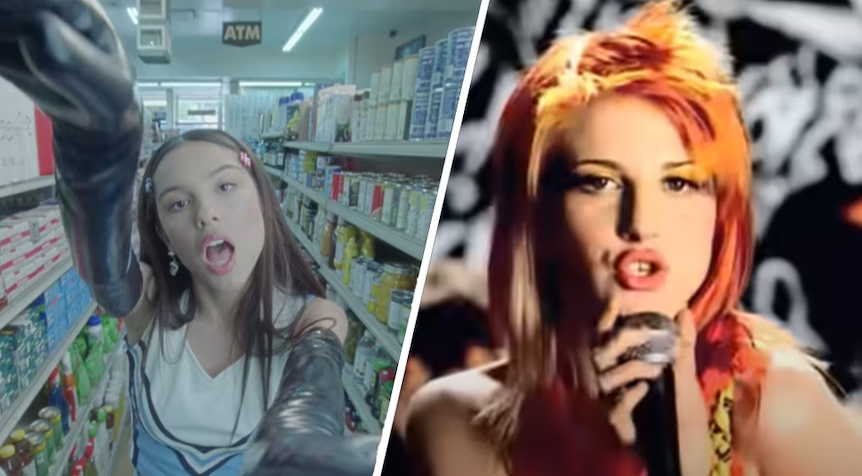
Image Courtesy: ABC News
As an avid playlist connoisseur, music is always playing in my ears. Whether that be on the way to class, while getting ready, at the gym, or during a wine night, music creates the environment and community that we surround ourselves with. Even though we might not realize it, the music we consume has a way of slipping into our own tastes and identities.
But like us, artists are listeners too. Famous artists have the same connection to music that we do. Songs from their childhood can provide vast inspiration. And let’s be honest, after the amount of overcrowding in the industry, some melodies or beats are bound to sound the same. Inspiration has always been part of the creation of music. However, because of this, we have started to see inspiration crossing into imitation.
Olivia Rodrigo became the face of it almost overnight. Originally garnering fame on the High School Musical reboot, Rodrigo achieved success with her debut album, SOUR, which catapulted her into becoming a global pop star. She received praise for having a nostalgic yet distinct sound. Teenage girls found solace in her, seeing as she was only 17 at the time of her album release. As people kept replaying it, they noticed a similarity between her hit, “good 4 u,” and Paramore’s “Misery Business.” Rodrigo’s sound took heavy inspiration from early 2000s pop rock. She used punchy drums, explosive choruses, and angsty teenage lyrics. Listeners originally caught a distinct melodic similarity, so much so that Hayley Williams and Josh Farro got added retroactively into the credits of the song.

Image Courtesy: The Guardian
“good 4 u” was not the only song that received traffic from an inspiration standpoint. “Deja Vu”, another single on SOUR, got called out for having an almost identical chorus to Taylor Swift’s “Cruel Summer”. Rodrigo had noted in several interviews that Swift was a big inspiration to her music. Swift had been very publicly supportive of Rodrigo, especially at award shows and events. After this was pointed out, Taylor Swift and her producer, Jack Antonoff, were credited on the track.

Image Courtesy: Cosmopolitan
To me, Olivia Rodrigo’s songs spark analysis because of her young age and the era of music she was surrounded by growing up. When an artist is open about their influences, where does inspiration end and copying begin? We know what sampling is, but does just giving credit to somebody you were trying to gain inspiration from immediately get categorized as imitation? It seems to be a question that nobody has the “right” answer to regarding the line in differentiating the two. In an industry where creativity is encouraged despite an overpopulation of similar sounds, maybe the goal is to transform the inspiration of your sound into an innovative piece that is unmistakably your own.
Strike Out,
Writer: Maria Carrillo
Editor: Abby Marshall
Graphic Designer: Gianna Graziano
Tallahassee