Evolution Of Festival Fashion
Is it a festival or a fashion show?
Over the years, we’ve seen many fashion trends come and go– but festival fashion has endured the most. Whether it was flower crowns or fringe, flannels or fur, each era left its mark on festival fashion in its own unmistakable way.
In 1969, the revolutionary Woodstock festival was held on a dairy farm in Bethel, New York. It represented an era of protest, of counter-culture and rejection of mainstream values through artistic self-expression; it was a time of progression, and the birth of the “hippies”. Often wearing psychedelic prints, fringe, beads, and long hair with a loose silhouette, it was an eclectic yet iconic style.
In a world of exclusion, Woodstock exemplified how millions of people can come together over one thing: music. It showed how no matter where you’re from or what you look like, you have a place. Riding into the 1970s with this mindset, the festivals continued— but with a different look. The ‘70s brought bohemian style and a rising cult fashion. Tie-dye, high-waisted bell-bottom jeans, and flowy maxi skirts were staples throughout the era of festival fashion.
Along with the birth of electronic music in the late ‘80s, originating in the American and British club scenes, came a new style of festival fashion. The ‘80s were an era of alternative style, “afropunk”, and pop colors, all reflected in their widely recognizable looks. Fans created their own space— a space that was unique and embraced the genre's spirits.
Festival fashion in the ‘90s leaned more towards a casual style— big pants and t-shirts, flannels, and an emphasis on the music. The Lilith Fair, a women-led music festival that ran through the late ‘90s, displayed looks like denim-on-denim, chunky boots, and the same bohemian and grunge-inspired looks that never seemed to fade.
Festival fashion in the early 2000s to 2010s was redefined with inspiration from the bohemian influences of the ‘70s, and the indie sleaze styles tying into the ‘90s as well. With festivals like Coachella, wearing flower crowns and fringe, to ones like Glastonbury, with muddy boots and a t-shirt.
Nowadays, these outfits are all about being niche and trendy, as festival fashion has become its own trend— especially when there are hundreds of thousands of people attending. Despite the comedown of micro trends, becoming niche and unique has changed the outlook on what we perceive to be ‘in style’. You’ll see people dressed like B-list celebrities, characters from movies or TV shows, or even one of the aliens from Avatar (in full body paint), and be completely unfazed by it. We’re the burnout generation, and it reflects in our fashion.
Festival culture has always been about togetherness. We bond through the music we share and the atmosphere of the crowd, making friends by dancing with people nearby; no shoving, no yelling, just good energy.
While this evolution of festival fashion reflects our generational struggles, it largely remains the same socially. Even today, we’ve managed to carry the principles that began with the first festivals in the ‘60s and will continue to travel through decades to come. Self-expression is back— alongside the death of micro trends, and the comeback of individuality in our style. We’re reverting to our old ways, like never before.
Strike Out,
Elise Archer
Boca Raton
Elise Archer is a Content Writer for Strike Magazine Boca. She has a passion for everything creative- and she’s a firm believer that everything happens for a reason. If you can’t reach her, she’s either busy shopping, lost somewhere, or writing. But if you would like to: elisearcher111@gmail.com or on Instagram @elisearcherr
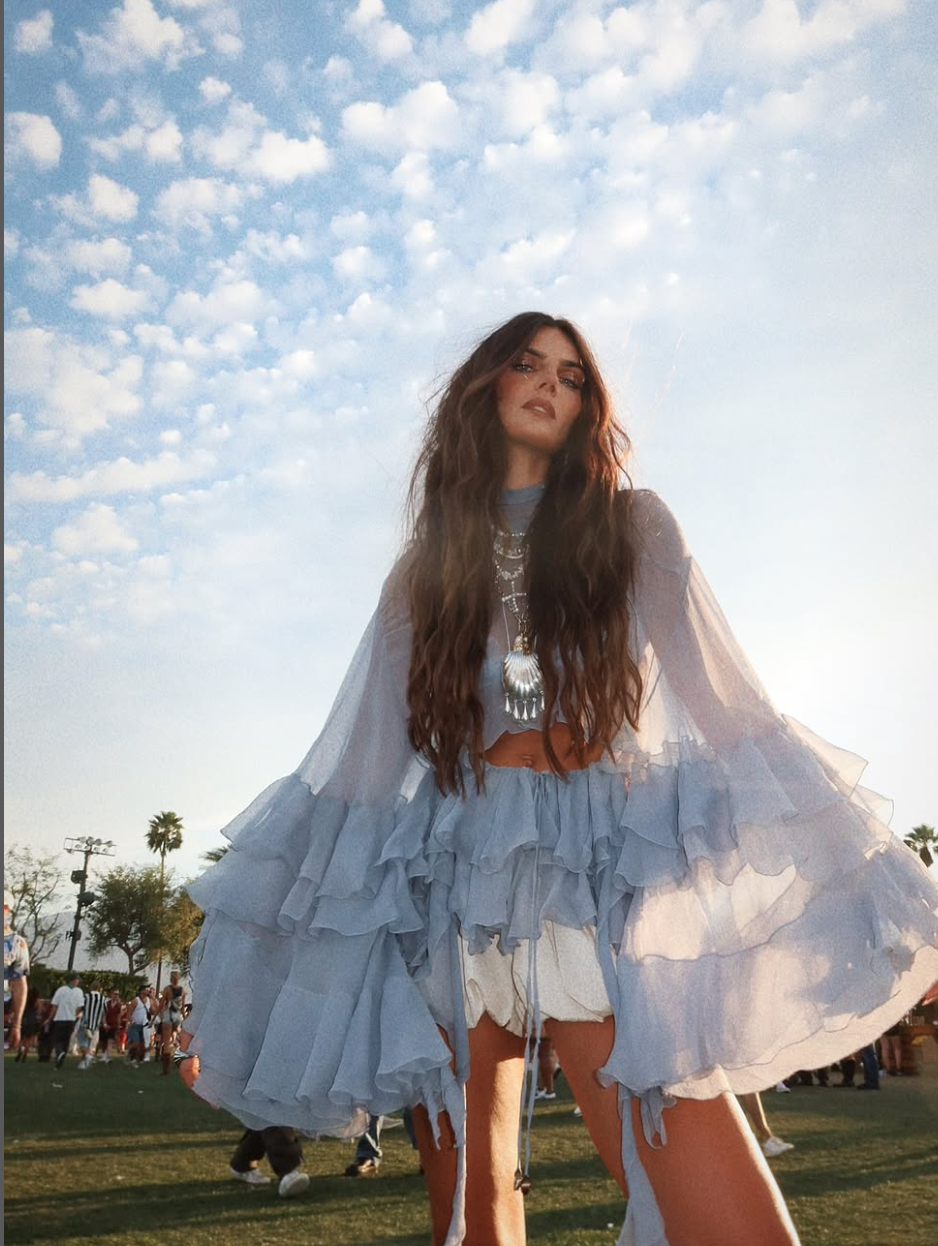
Cover Image Courtesy: Instagram / @ tezza.barton