Fandom: Community or Competition
Making his return to the stage after nearly a decade, Bruno Mars has announced The Romantic Tour. With questions about when he may venture on tour again, fans have been scrambling to secure tickets.
Global K-Pop sensation BTS has announced a new album along with a world tour, with North American dates starting as early as April 2026. With only a week to prepare for ticketing, the BTS fandom has expressed anxiety about the ticket sales.
After his 22-month hiatus, Harry Styles announced his momentous return to the stage on the Together, Together tour, which included residencies in seven major cities, including New York City. The few dates have made ticketing for the events highly competitive, and fans have acted accordingly.
Following the excitement and anxiety about ticketing for these new music events, fans have become increasingly agitated and boisterous, resulting in animosity across social media. @ieucookie on TikTok states, “If I see another Instagram story saying 'WE DID IT!’ with a screenshot of your Harry Styles ticket, I’m gonna start blocking people, and you’re gonna say, ‘You’re just bitter,’ and yes. Yes, I am.”
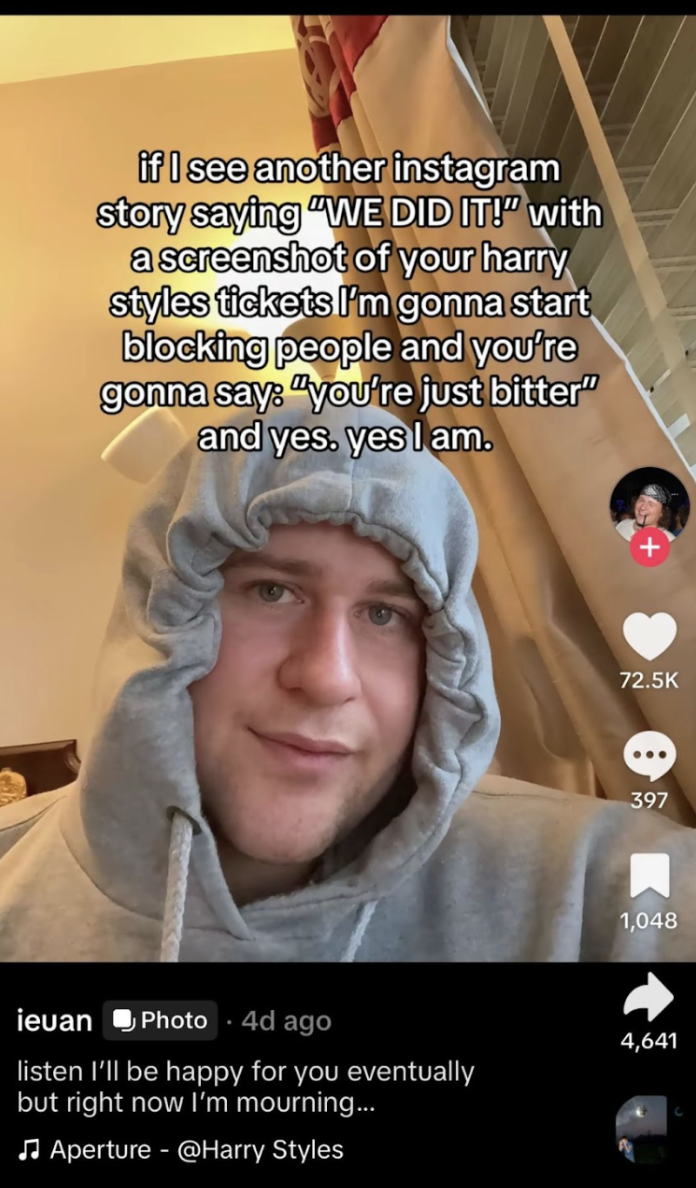
Courtesy of @ieucookie on TikTok
Under a TikTok video stating BTS fans should not buy tickets without knowing a specific song, a comment read, “That’s the problem, everyone won’t be able to go, so the ppl that only know one or two songs and just found out about them a year ago, compared to us real ARMY that have waited 10 years. Which one do you think deserves the tickets?”
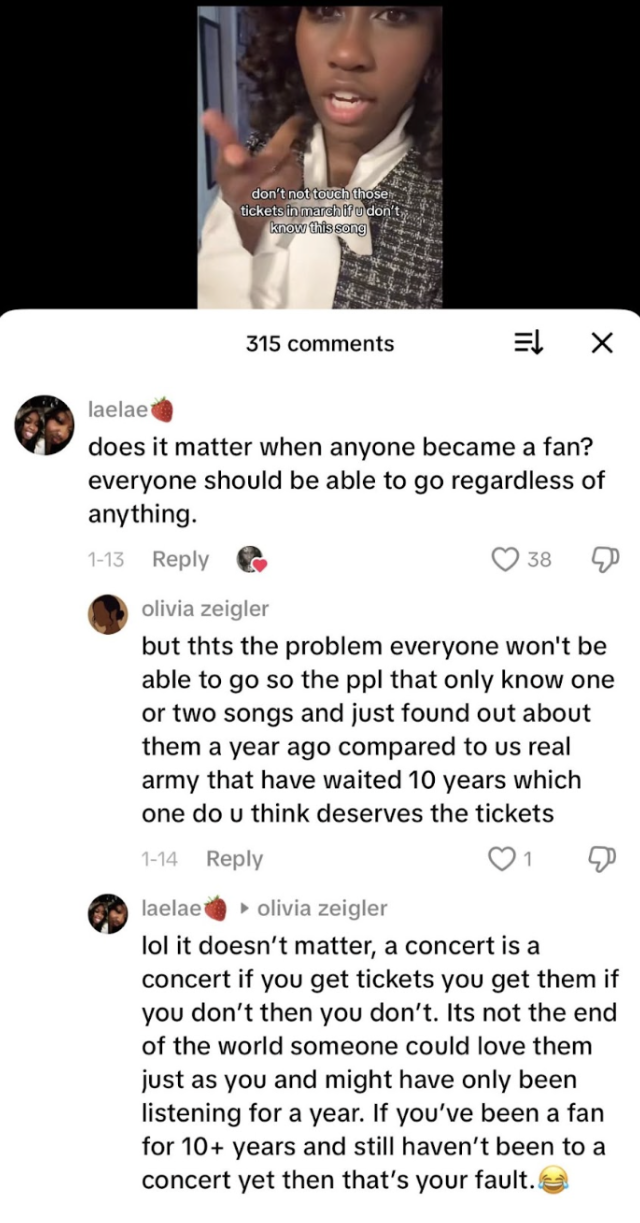
Courtesy of @vercheri and @livi17337 on TikTok
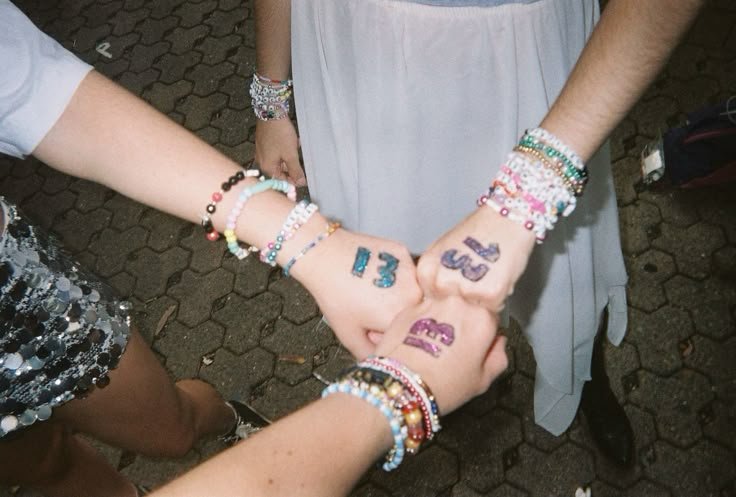
It is difficult to imagine these same fandoms yearning for community and connection under their respective artists. Harry Styles fans have recalled his 2021-2023 Love On Tour, nostalgically hoping for the same feeling of community. Some BTS fans have begun making charm bracelets and keychains to hand out during their concert date to spread a tangible connection across the fandom. Why does animosity brew within a fandom that yearns for community?
Fandom within the last few years has changed, developing with the music industry to reflect a group of people hungry for belonging. Live Nation Entertainment has monopolized the live music industry, narrowing down the spaces for ticketing, fan services, and credited concert deals to one singular platform, Ticketmaster. While the site was developed to make ticketing easier and more efficient, narrowing it down to a singular ticketing space has only made concert-going more difficult. Social media has also changed fans’ respective relationships. With the freedom to express opinions and frustrations in the void of TikTok, Instagram, and X comes arguments and internet discourse.
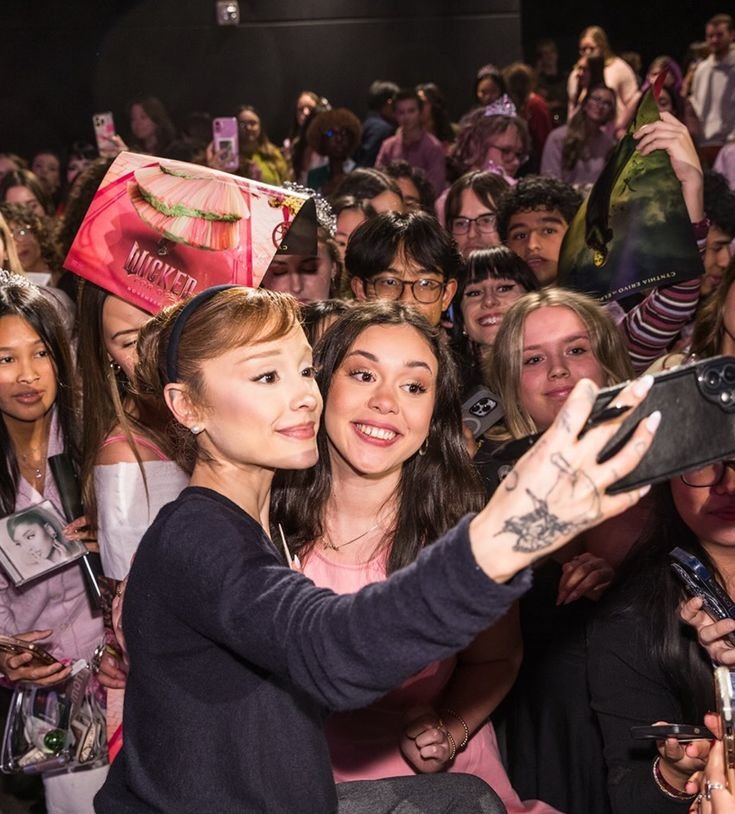
Fans become easily agitated in an attempt to prove to themselves and others that they have achieved “real fan” status. The fight for front row or barricade tickets has become highly competitive, with fans camping for hours or even days in front of a venue in order to secure a good spot in line. As the breeding ground for messy arguments, fans have taken to social media to shame new fans and argue why they are a #1 Fan.
Courtesy of yness on Pinterest
All of this animosity stems from a deep yearning within patrons. When fans are passionate about an artist, they wish to be close to them in every sense of the word. This yearning stems from a parasocial relationship with the artist, a deep sense of ownership of an artist because “they made them.” Spending time, money, and investments on a music artist should result in the reaping of benefits. Through honest lyricism, interviews, and camera time, fans have gotten to know their artist personas and believe they have gotten to know an artist personally.
This can then translate into a sense of fear, of investing so much of yourself into an artist, only to miss out on the best experiences with that artist. This Fandom FOMO seems to never go away, as there is always another fan experience to miss out on, feeding jealousy amongst fans. Some were able to buy the special edition album, but couldn’t secure tickets. Others were able to secure tickets, but couldn’t be in the front row. After securing several front row experiences, some fans have never met their artists. It feels that there is nothing that can satisfy the hunger within fans, except for maybe one thing: the fan community itself.
Courtesy of eden atkinson on Pinterest
Fans become incredibly dependent on an artist because their music deeply resonates, and feeling close to an artist is sometimes the only way someone can feel understood. Yet, the truth is that no experience with an artist can satiate that hunger. The belonging fans search for in their artist can be found in the companionship of those around them. Fans have the chance to swap stories and connect through their respective communities in concerts, online spaces, and music pop-ups or events. The same songs and stories that connect the artist to the fan also connect every individual member of a fanbase. The intimacy and kinship fans find within the lyrics and melodies of their favorite artists can be found in friendships and amity amongst fans.
Community and belonging cannot be exclusive, and in times of anxiety or worry, it is important to translate music through love for one another.
Strike Out,
Sarah Franquelo
Edited by: Delaney Gunnell & Arsheeya Garg
Sarah Franquelo is a Copy Editor for Strike Magazine Orlando. As a fresh graduate from the University of Central Florida, she pursues book publishing and digital marketing. Outside of her passion for writing and literature, she is an actor, filmmaker, and avid concert attendee. Her works surround themes of pop culture and personal growth. You can reach her on socials @sarahfranquelo_