
From Fearless to Safe
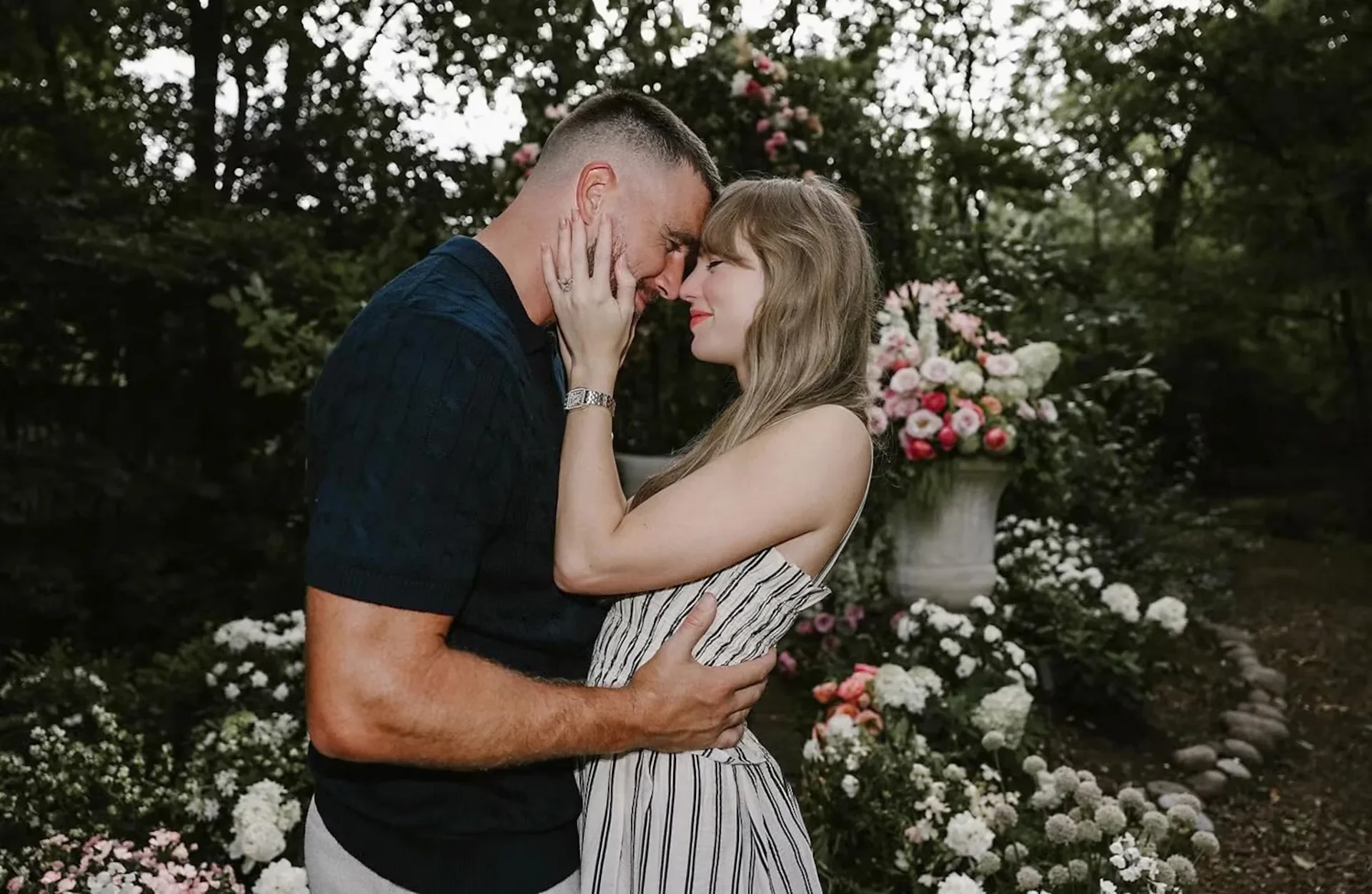
Image Courtesy: BBC
I have had enough of Taylor Swift. A few years ago, I never imagined I would say this: I was the biggest Swiftie on the planet. During my 3+ hour commute back home from school (Nairobi traffic is despicable), the prospect of listening to 1989 as I labored through my history homework kept me going. Her catchy melodies, her vivid storytelling, and her relatability all propelled me through an arduous childhood. What did I know about heartbreak at eleven years old? Obviously not much, however, I did know the struggles of being queer in Kenya, and in a strange way, only possible through rare talent, her music felt like she did too.
So, what happened? In short, I grew up.
Before diving deeper into this, I want to make it clear that I find Swift’s work up until her ninth album, Evermore, middling at worst and the zenith of pop music at best. Swift’s creative prowess seems to have peaked on Folklore and has been on a violently fast and heartbreaking decline ever since, each album worse than the last (even the re-recorded versions of her stolen records are worse than the originals). Her latest record, The Life of a Showgirl, is not only the weakest album she has released, but also a worrisome signal of the resurgence of conservatism in America.
On the press tour for The Life of a Showgirl, Swift said on BBC Radio 1 that “I used to have this dark fear that…if I ever were truly happy and free, being myself and nurtured by a relationship, what happens if the writing just dries up?” Well, it sort of did. It goes without saying that Taylor Swift has time and time again proven she is one of the most proficient songwriters of our generation (I mean, she wrote “All Too Well” and “The Last Great American Dynasty”). With her later work, however, she has taken the whole ‘poetic songwriter’ schtick to a questionable level. Simply, she overwrites.
“Your English teacher and your gym teacher are getting married,” reads the caption to Taylor Swift’s engagement post on Instagram, thirteen days after she announced the forthcoming album. This was a clue as to the thematic direction the album would go in. After a string of disappointing projects, I had hope for the record, especially after the engagement announcement. I thought this would be a wonderful exploration of finally finding safety and stability in a romantic partner.
Back in 2021, Twitter user @bigduaenergy who happens to be an Arianator (Ariana Grande stan) jokingly tweeted: “swifties when ariana sings about sex and doesn’t write it like ‘he stuck his long wood into my redwood forest and let his sap ferment my roots,’” with a video of Viola Davis crying, a satirical commentary on Taylor’s weak metaphors. Swift seemingly references this tweet on one of the songs on The Life of a Showgirl, “Wood,” but it doesn’t quite stick the landing. I could go on about the decline of Swift’s writing, but there have been countless thinkpieces about that on social media. I am more concerned with how her newest record flirts with conservatism behind the thinly veiled guise of sexual liberation.
When I talk about conservatism, I do not mean that Swift has transformed into a right-wing darling who preaches the gospel of making America great again. It’s subtle. Throughout the record, Swift positions fulfillment as something achievable through domestic stability and romantic partnership. While these desires are not necessarily regressive, Swift presents them as an antidote to complexity. This framing is where ideological regression appears.
In the first verse of “Wi$h Li$t,” she sings, “They want that complex female character” before contrasting herself from the ambiguous “they” in the chorus when she sings, “I just want you, huh / Have a couple kids,” over a lazy beat. She might be attempting to highlight society’s propensity for expecting too much complexity from women; however, given the shallowness of the album, Swift comes off as sanctimonious. In place of the performative complexity she ridicules, Swift reproduces regressive ideas about being a woman, that of settling down with a husband and having kids. There’s nothing wrong with wanting these things (I know I do), but when offered as a counter to the “complex female character,” Swift aligns herself with conservative ideology. She doesn’t propose a better alternative but rather a tired one. Women can want domesticity and still be complex!
On “Actually Romantic,” Swift flatly responds to Charli xcx’s emotional “Sympathy is a knife,” a song that poignantly captures the struggle of being in the midst of someone so successful and comparing yourself to them. Taylor’s sarcastic response in the second verse, “Like a toy chihuahua barking at me from a tiny purse,” reeks of misogyny. She reduces Charli to a whiny bitch, one of the oldest and overused insults towards women. She goes on to ask, “How many times has your boyfriend said / ‘Why are we always talking ‘bout her?’” I think the take that Taylor Swift is man-obsessed is tired and, in itself, misogynistic, but here, when she centers men in the complex conversation about women in show business, Swift completely misses the mark. Her lyrics here, other than being lazy, are actually just unnecessarily mean.
Pop diva feuds have existed for as long as pop divas have been around. Some of the most iconic rivalries include those between Mariah Carey and Jennifer Lopez, Britney Spears and Christina Aguilera, and Nicki Minaj and Cardi B. Even Taylor Swift herself has famously feuded with Katy Perry. What propels these feuds, with a rise in social media, is the queer community. Most of the time, it’s all in the name of fun. The aforementioned artists and others would engage in feuds by throwing shade in their songs (i.e., Swift’s “Bad Blood”), in interviews, or on social media. Reading (playful and witty teasing) and throwing shade are essential aspects of queer culture. This practice can be traced back to the drag ball scene in New York. Further, it is “often rooted in a shared understanding and language within the queer community.”
Swift, who has been seen as a prominent gay ally, has shown understanding and appreciation of this concept. In her iconic ode to the queer community, “You Need To Calm Down,” she sings, “shade never made anybody less gay.” The music video also features drag queens dressed up as famous pop icons such as Adele and Beyoncé. Although the song teeters on corny and performative, it would be unjust to disregard the positive intent behind it. Having a figure as big as Taylor openly embracing queer culture was incredibly important for visibility.
After the negative reception to The Life of a Showgirl, Swift said in an interview with Variety that as long as people kept talking about her, she was benefiting. She is unconcerned with dismantling the structures she performatively condemns. As long as the billions stack up in her bank account, she doesn’t care. Therein lies the issue. This is where her feminism falters. Her wealth and influence protect her—to a certain extent—from the regular experience of being a woman in the world. I’m not saying she’s completely immune to patriarchal violence; however, it would be naive to say that her wealth doesn’t separate her from the normal woman.
What saddens me the most is that Swift has decided to frame palatability and passivity as liberation. Growing up queer in an environment that vehemently demonizes the LGBTQ+ community, her music was a lifeline. Today, her music does not imagine freedom beyond or challenge the world's problematic structures. Instead, it demonstrates complacency and reiterates the structures that reward her. Palatability for queer people is, in some cases, a strategic move for survival, but it also means erasure. Even moving beyond the queer community, palatability requires suppression (for everybody) in order to fit the status quo. It is disheartening to see an artist who once championed individuality ultimately reduce their work to propagandist slop.
Strike Out,
Written by: Kwame Tuva
Edited by: Harrison Arons, Natalia Jamula, Ella Doppke
Strike STL