
My Childhood Genealogy Obsession
As a kid, everyone has weird obsessions that they can look back on and cringe at. Many of my friends were obsessed with Minecraft, One Direction, anime, and rainbow hair clips. Now, those childhood phases are almost like ghosts, haunting the bedrooms and closets of the homes where they grew up. A One Direction shirt lies forgotten in the back of a clothing drawer, an old Minecraft account sits untouched, and a rainbow hair clip rests face down between a wall and a bed.
The childhood obsession that still torments me was a rather unusual, almost grandmotherly one: genealogy.
I was around nine years old when I started creating my own family tree, dating back to the 1850s. I sat at my dark brown wooden dining room table, which creaked every time I moved a muscle or even picked up a pencil. The light was dim because it was dark outside, and the nightly news with Lester Holt played from the TV in the other room. My mom’s phone sat next to me as I talked to my grandmother, asking her every detail she could remember from her childhood.
“Where were your parents from? What were their names? What were their birthdays?”
Except the questions that meant the most to me were:
“Would they have liked me, and do I resemble them in any sort of way?”
Yet, even after hearing those questions answered countless times, they were the ones I kept coming back to.
At nine, I didn't understand why those questions mattered so much. It wasn't enough for me to know their names, where they lived, or when they were born. I wanted to know if I might have fit in with them. I wanted to know if, had we been born at the same time, they would have understood me. Maybe I was looking for proof that I belonged to the family I came from. Even if they were people I could never meet.
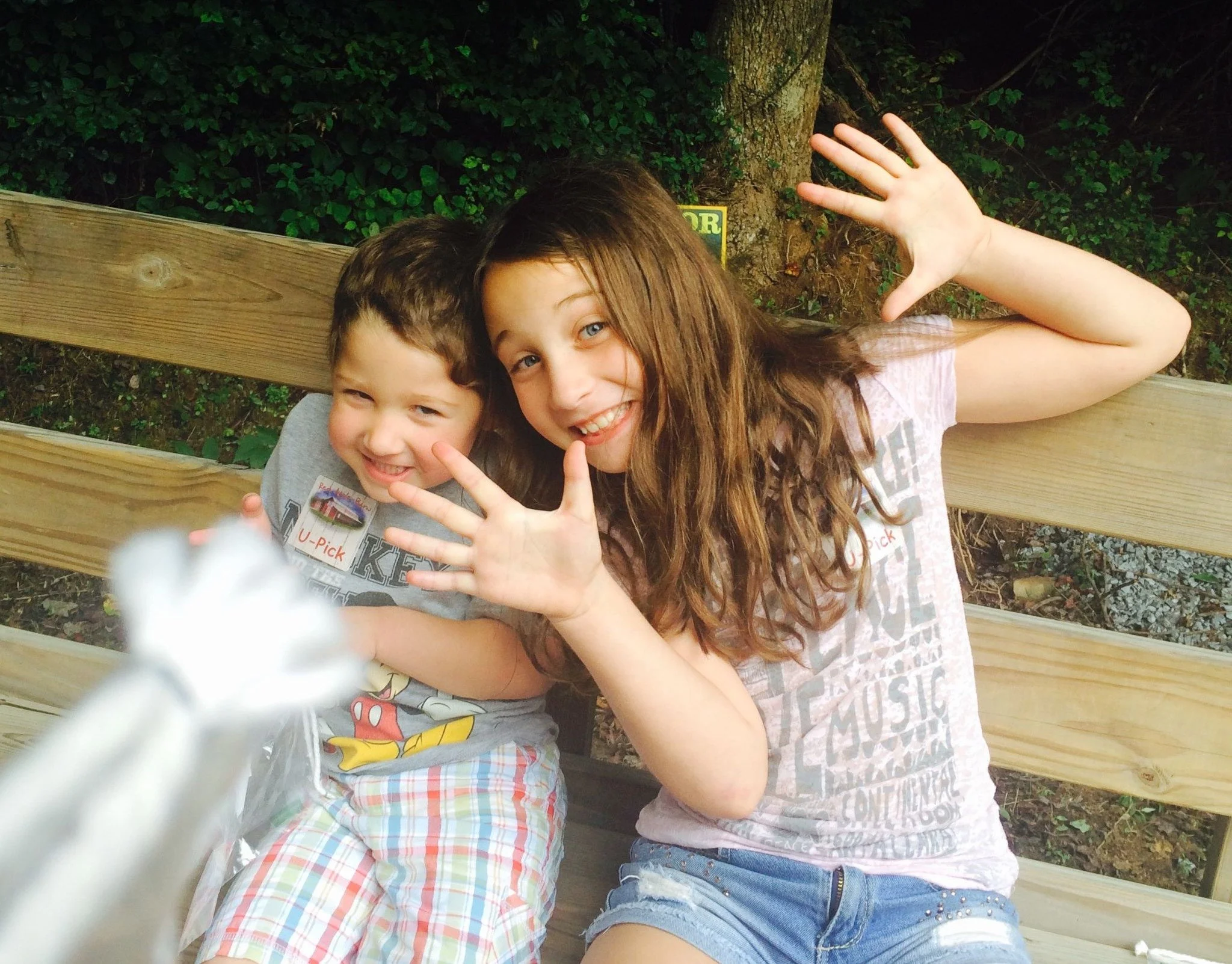
My brother and me, age nine
Image courtesy of Ava Jane Bowie
Every Wednesday night after ballet class, I came home, took a shower, ate dinner, and turned on Finding Your Roots with Henry Louis Gates, Jr.—eyes wide and volume turned up. My family knew that Wednesday’s were the nights I got to choose what to watch on TV, and it became a routine. I used to lie on my couch and learn about the three celebrities that week. Gates uncovered their familial secrets by looking at historical archives and, at the end of the episode, showed them their DNA region summary. Every time I watched the show, I thought about how I needed to become famous so that I could someday be featured on it. As it turns out, I didn't actually want to be famous: I wanted someone to uncover something about me that I hadn't even been able to uncover myself.
This weekly thrill was shared by me, my maternal grandmother, and her friends who lived in her retirement home.
The most exciting time of the year for me was not Halloween, Hanukkah, or my birthday, but when I got to visit my grandparents. It was a chance to wake up early, have my grandmother make me blueberry pancakes and biscuits, and go into the closet attached to her laundry room, which felt like a time capsule. I walked inside, pulled the long metal chain hanging from the ceiling to turn on the light, and was immediately met with shelves upon shelves of scrapbooks, newspapers, photos, yearbooks, cookbooks, artifacts, and lots and lots of boxes. To me, it was my own little safe haven. My grandmother, my partner in crime, walked me through everything she knew about our family.
I remember holding up photos and asking, “Do you think I look like her?” I smiled with all my teeth showing, patiently waiting for a response.
But the answer was always, “Oh, Ava Jane, no one is as beautiful as you.”
As sweet as it may sound, all I wanted was for someone to tell me:
“Why, yes! You look so much like her, and she was so similar to you.”
“She would have loved you.”
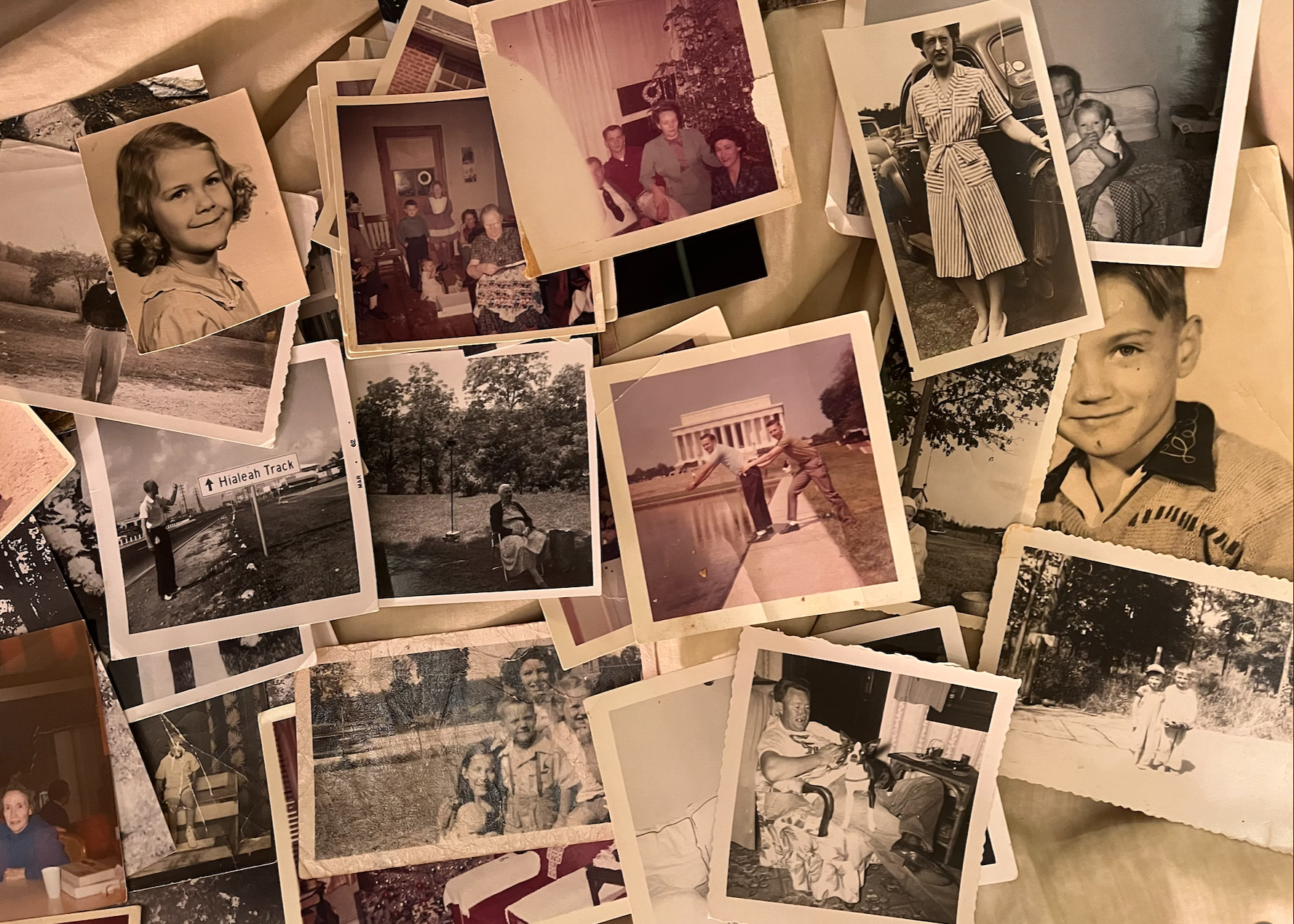
Photos from my grandmother's closet of her, my grandfather, and other relatives in the family
Image courtesy of Ava Jane Bowie
As I got older, I waited to discover a relative who looked like me, even though I thought I knew everyone there was to know about. Yet, I began to notice another shift that I was too young to appreciate at the time.
I began listening more to the stories of the people who came before me and started feeling inspired. I come from a woman who fought for women's rights and even got arrested for it; a man who dedicated his life to farming and growing crops for his children and town; a woman who was a ballerina, singer, and playwright; a man who was a conductor for a major railroad system; a man who was a colonel in the Air Force; and a couple who immigrated from Poland to New York for a better life despite having little money. All of these people have one thing in common: they fought to make their lives better for themselves and the people around them. They all demonstrated persistence in conditions that challenged them.
Instead of caring about who I got my exact shade of blue eyes from, I started caring about who I got my creativity from. Who I got my interest in helping people from. Who I got my strong will from. Growing up, I was always curious about why I was the way that I was.
When I began college, it became clear that searching for something buried within the people who existed before me wouldn't lead to the answers I wanted. Not even if I went back to the 1600s. Genealogy became a black hole. I entered it expecting to discover more about my identity, but it could not tell me exactly who I was.
The feeling of constantly digging but never finding the answer loomed over my head every night I went to bed. Waking up in cold sweats about the possibility of not having done enough made me wonder if I should give up as a whole. I started becoming frustrated. Every time I would ask my mom about my great-grandfather, I became jealous that she got to know him when I never would. Everyone in my family had always said that we possessed similar traits, and that small connection kept pulling me back. Maybe I would never find the answer I was looking for, but knowing I still inherited a piece of him was encouraging enough to keep searching.
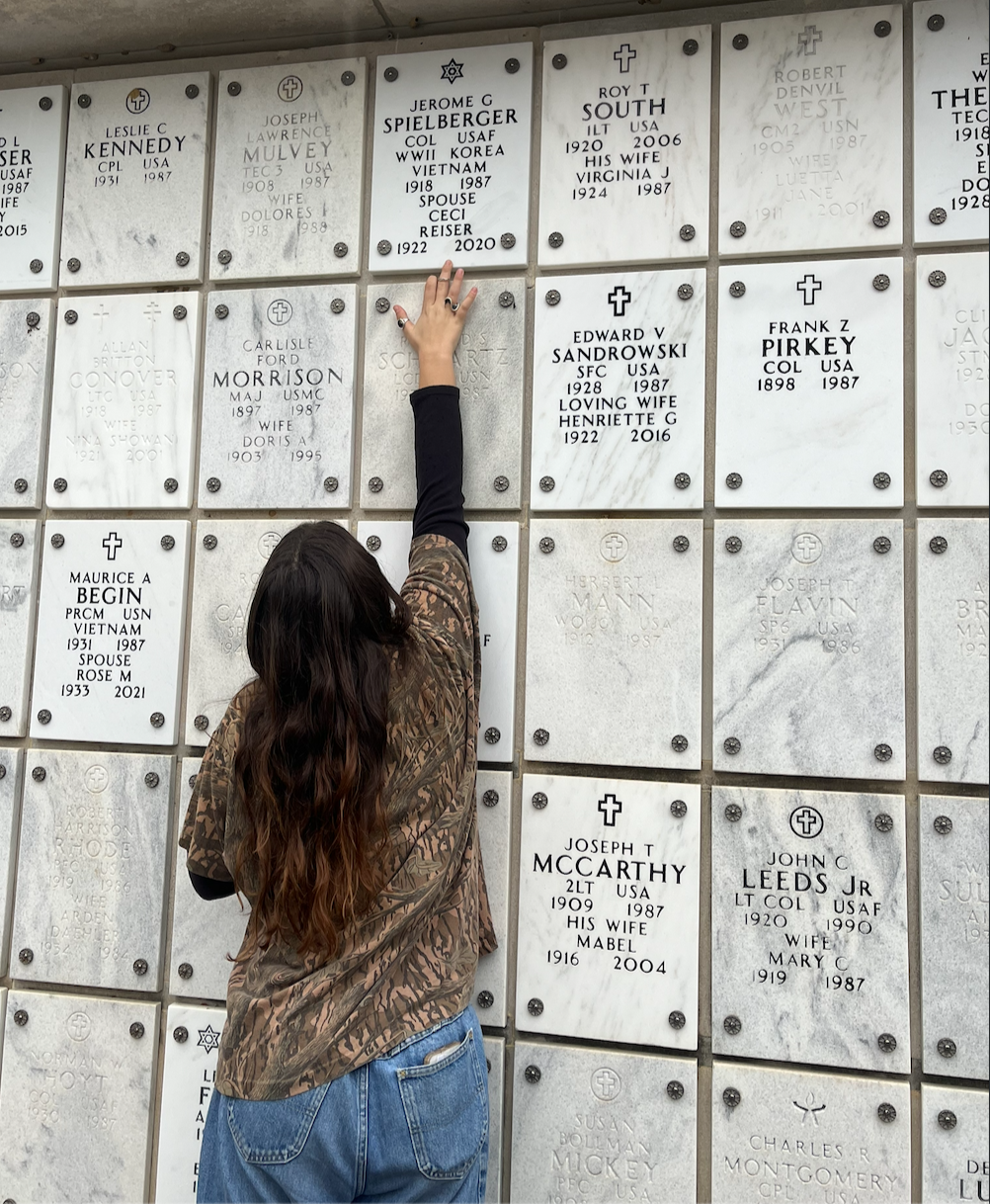
Me touching my great-grandfather’s grave
Image courtesy of Ava Jane Bowie
Part of me believed that if I could find the source of something I did not understand about myself, I wouldn’t have to question it anymore. It was comforting to consider that some parts of me had already been written before I was born. If I could trace a part of myself back far enough, then maybe I didn't have to wonder why it was there. It had a source, and somehow having a source made it easier to accept.
The question underneath all of my questions was never really about genealogy: it was about behavior. Why do I act the way I do? Why do I think the way I think? Why do certain parts of me feel so natural, while other parts feel like something I have to fight against?
Now that I am 20 years old, I often look back at my younger self and don't know whether I should pity her, because this obsession may have been part of something deeper rather than something more surface-level, like a boy band.
The truth is, I will never know exactly where my stubbornness came from, or who gave me my curiosity, or whether a relative from 150 years ago might have liked me. Maybe I don't need to. I am made up of everyone who came before me, but I am also the first person who gets to decide what I do with everything they left behind. And that is beautiful as it is.
Strike out,
Writer: Ava Jane Bowie
Editor: Reagan Alapa
Copy Editor: Annalise Bodine
Ava Jane Bowie is a writer for Strike Magazine GNV. She is an avid concert attendee and hopes to reach 100 concerts in the next 2 years. When she isn’t at Library West or on a nature walk, she can be found making pumpkin bread, watching music videos, or talking to her journal like an old friend. You can reach her on Instagram @avajanebowie, or by email avajane3000@gmail.com.
