
From Pale Powders to Plumping Serums

Image Courtesy: Pinterest
Long before lip peptides, Gel-X, and hydrating scalp serums, grooming tools were limited; nails grew long, and hair ran wild. In this mirrorless time centuries ago, reflection could only be found in a puddle of dirty rainwater or carefully polished metal, if at all.
Fast-forward to the 21st century, and the reflection staring back looks a bit different: eyebrows are perfectly plucked, lips seem slightly plumper, and cheeks have become abnormally pink. How did we get here? Who decided that James Charles X Morphe palettes and nose contour were an essential step to present-day beautification? One thing is clear: modern beauty standards and the cosmetics industry have teamed up in the age of consumption to become partners in crime.
A frequently cited case is Gillette’s early 20th-century pivot to women’s shaving that highlights the modern overlap between society's definition of idealistic beauty and the beauty industry. As skirts shortened and more skin became visible, the shaving company capitalized on the shift in feminine culture amidst the early 20th century, seeing the newly exposed skin as a window of opportunity to promote a negative ideology about female body hair to promote their product.This myth has echoed across women's self-care routines to this day.
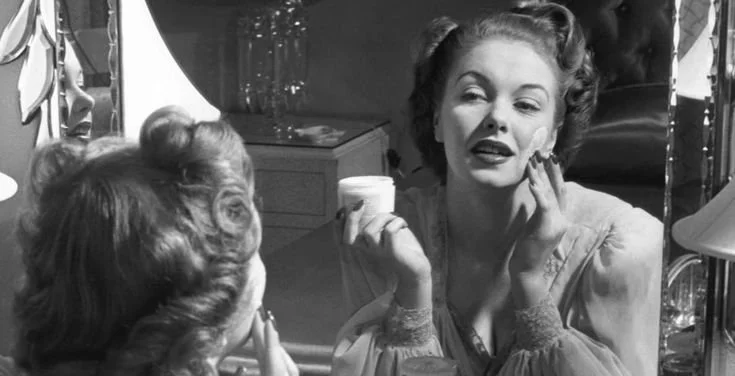
Image Courtesy: Pinterest
Many other companies within the industry have simply taken a good look at current aesthetic hyper fixations and evolved from there. Take, for instance, the nose: in the classical antiquity period, the Roman nose was once considered a sign of nobility, strength, and distinguished beauty, but it is now often critiqued as a “flaw” to correct amidst certain trend cycles. Today, a new ideal dominates the nose genre. Achieved with a cream contour stick, changing the appearance of one's nose has become an all-too-familiar practice for makeup enthusiasts hoping to emulate the so-called “button nose,” and most major beauty lines now follow suit. Along those same lines, it’s no coincidence that lip-plumping serums emerged right around the time the tan, BBL-esque Kim K figure was all the rage. Serums turned into syringes, and now, cosmetic procedures are almost as routine as applying lipstick.
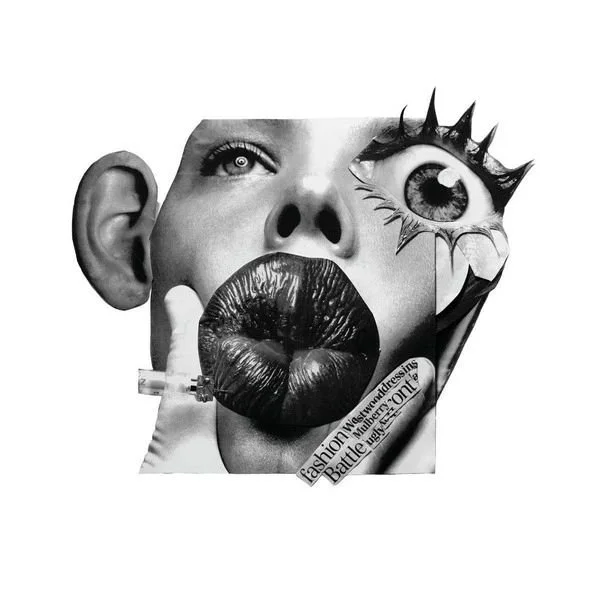
Image Courtesy: Pinterest
This isn’t an anti-cosmetics piece in which I pull a Pamela Anderson and symbolically rebel against the industry. The world dynamically shifts, and so do the businesses that want to stay relevant. Just as women plucked their hairlines to show off their large foreheads as a symbol of intelligence in medieval and Renaissance Europe, men today take trips to Turkey to acquire the highly sought-after hair transplant.
In today's world, consumers of beauty products and services have an abundance of choices and information, which can feel overwhelming and materialistic at times, but that can also be viewed as a present benefit. All beauty standards across eras have led us to this very moment in which we are allowed to shave or not to shave, to contour or not to contour, to manicure or not to manicure. Near-endless options in a relatively accepting point in time allow individuals to go from black to blue to brown to blonde to pink hair in the span of a year, which would have gotten you branded as a heretic and executed in the 1400s.
Strike Out,
Writer: Samantha Goldberg
Editor: Salette Cambra
Graphic Designer:
Tallahassee