
Public Portals: Accessible Transportation as a Source of Inspiration
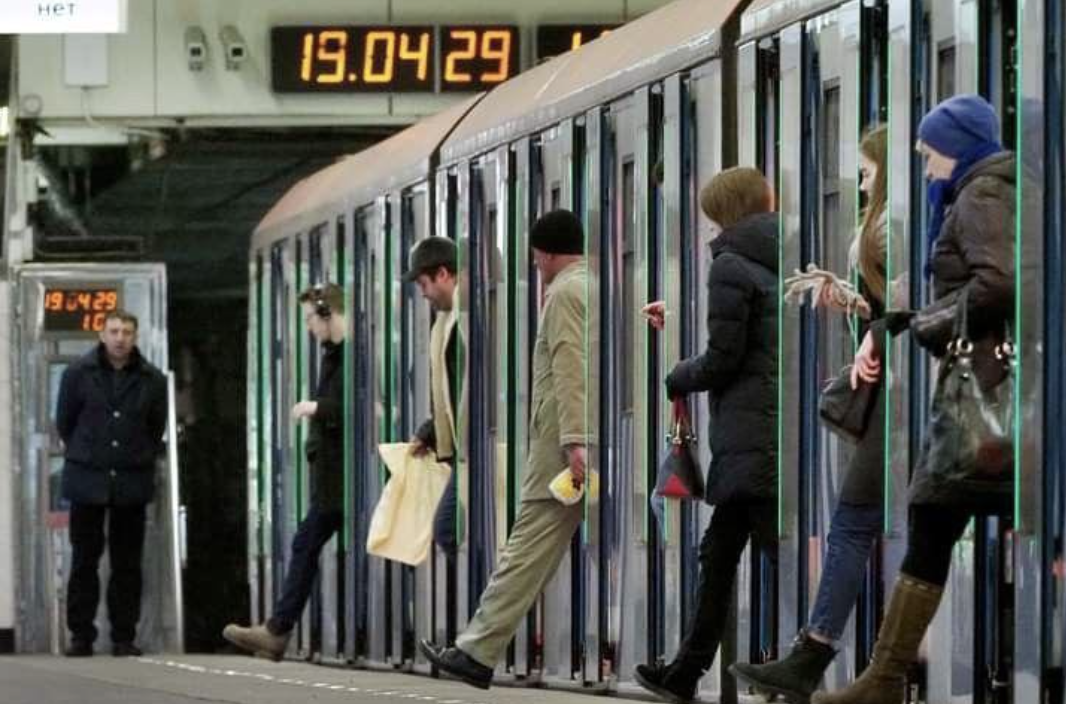
Image Courtesy: Pinterest
Creativity is a subset of transportation that is only partially recognized. We acknowledge the innovation that allows us to commute to work safely every morning, but we forget how the relationship between the individual and their destination has changed due to the accessibility of the latter.
Public transportation serves as a vessel to give us more time in the day, allowing its users to do with each extra minute free from the wheel whatever they see most fit. Some read, others catch up on work, most scroll on their phones. While community has been traditionally immobile until the past century, existing in small spaces between individuals across the world, we cannot assume that it must always stay that way. Many of us believe that connection will crash into us like waves in the sea, or we will ultimately be brought towards some fundamental understanding of where we fit in among the people around us. In the tiny moments where we can consciously peer into our wider neighbors’ lives, perhaps it is worth it to take the chance.

Image Courtesy: Pinterest
A third space is an informal gathering space that exists outside of both home (the first space) and work (the second). In 1989, sociologist Ray Oldenburg published a book titled “The Great Good Place,” where he argued that public spaces are essential for the maintenance of a healthy civil society. In his text, he explains that the function of public transportation places us in a perpetual “home-to-work-to-back-again shuttle.” There is no habit of association; we cannot seem to meet the eyes of the people we have been commuting with for most of our adult lives. Oldenburg argues that there are multiple benefits that these public places have on our communities, and very few constraints to the production of such places. He cites that one community in New Haven, Connecticut, has transformed one of its streets bordering the Yale University campus by reducing it to make space for a larger sidewalk. There is outdoor seating provided, and it is located across from a popular coffee shop. Students now meet up with one another there to enjoy conversations with old friends and meet some new ones in the process.
Third spaces help unify neighborhoods, and, in the wake of their absence, people live in the same area for years without ever getting to know one another. The rapid development of global subway and metro systems due to urbanization does not match the development of our interpersonal relationships. People are lonelier than ever, yet the thought of chatting with our train stop’s regulars feels sacrilegious. The truth is that it can be disorienting to feel behind in a city that is always moving. Everyone acts as if they have found their people, even if they themselves feel lonelier than ever. It may be uncomfortable to ask a lady where she bought her shoes, but it is a different kind of torture to spend your whole life waiting for connection to find you.

Image Courtesy: Pinterest
If a world filled with more caring and connection is all we have ever dreamed of, we must be willing to uproot the instilled social normality that has only led to the unraveling of community infrastructure. My proposal is for the creation of urban villages – where we are not bound to neighborhood lines, and friendships can commute with us across the city. An urban village is a network of relationships that exist outside of a singular space. More than ever before, we require compassion as the foundational sector of our relationships. We need systems that support cooperation to meet one another’s many needs, whether they are residential, economic, or exist in a larger social framework. It is not about our unwillingness to reach out to our neighbors; it is the stigma around doing so. Nothing is individual about our desire for love and togetherness, and certainly nothing is individual about the train we share with thousands of other human beings.
With the liberation from a vehicle, we are the ultimate drive for our own mobility. This lives on beyond its literal sense; we are capable of forming connections with others in nontraditional ways, expressing our interests, and creating our own realities.
Strike Out,
Writer: Sarah Weber
Editor: Samantha Goldberg
Graphic Designer: Rebecca DeCamp
Tallahassee