

Image Courtesy: Static
The beauty industry is seeing red, but is the science behind its latest obsession actually worth the hype? If you’ve spent more than five minutes scrolling through TikTok lately, chances are you’ve encountered someone lying beneath a glowing red mask that looks like it belongs in a sci-fi movie. From LED face masks to full-body light panels, red light therapy has seemingly become the beauty industry’s latest holy grail. Influencers swear by it, celebrities are incorporating it into their routines, and suddenly, we’re all supposed to believe that sitting under a red light is the secret to flawless skin.
But in an industry where every new product promises to turn back the clock, it’s getting increasingly difficult to distinguish scientific breakthroughs from beautifully packaged marketing schemes. So, is red light therapy revolutionary, or are we quite literally being blinded by the light?
Red light therapy isn’t exactly new. According to the Cleveland Clinic, NASA originally experimented with red light to promote plant growth in space before researchers began investigating its potential for healing wounds. Also known as photobiomodulation, red light therapy uses specific wavelengths of light to stimulate cellular activity. Unlike the UV rays responsible for skin damage, red light works without exposing your skin to UV radiation.
The idea is that exposing cells to these wavelengths can influence their energy production and support processes involved in healing. In simpler terms, red light therapy is supposed to give your cells a little extra encouragement to do what they’re already designed to do. And while that may sound promising, the question remains: Does any of this actually translate into better skin?
According to Cleveland Clinic, research suggests that red light therapy may stimulate collagen production, reduce inflammation, and increase circulation. Since collagen helps maintain the skin’s structure and elasticity, its potential stimulation could contribute to improvements in the skin’s texture.

Image Courtesy: Wellness USA
Brown University Health identifies acne, eczema, psoriasis, hair loss, and minor wounds as conditions for which red light therapy is used or being explored. However, there’s one tiny detail that tends to get lost somewhere between the before-and-after photos and sponsored posts: promising research isn’t always the same thing as proven results.
Cleveland Clinic emphasizes that much of the existing research involves small sample sizes, limited placebo controls, or studies conducted on animals rather than humans. Larger, higher- quality trials are still needed to determine exactly how effective red light therapy is. According to Brown University Health, professional red light therapy sessions can cost anywhere from $25 to $200, while at-home devices typically range from $50 to $500. And unfortunately, one session probably won’t transform your skin overnight.
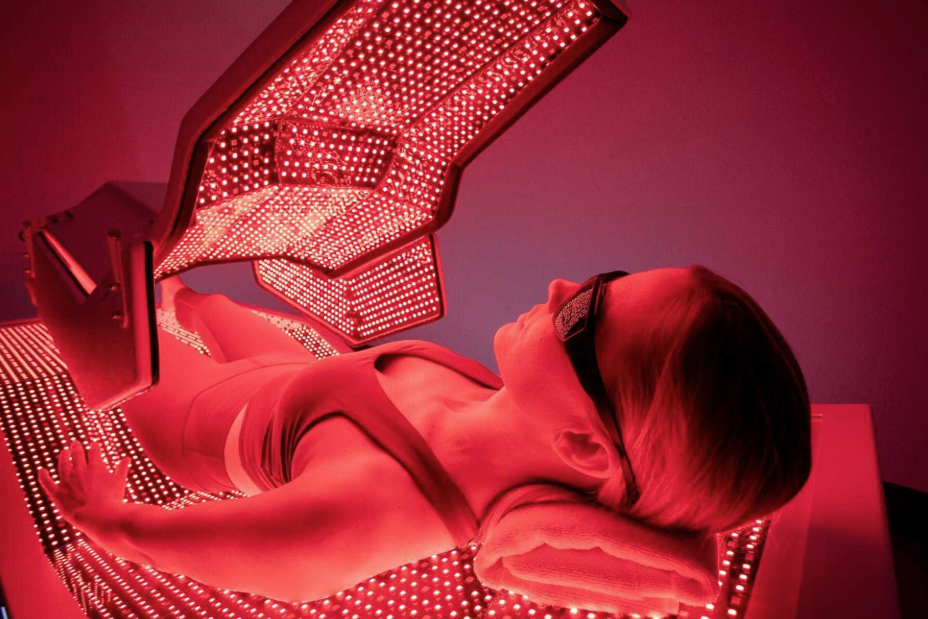
Image Courtesy: Canyon Ranch
After looking at the research, I wouldn't go as far as calling red light therapy a scam. But I also wouldn't call it the miracle treatment the internet makes it out to be. Technology has a scientific foundation, and early research suggests it may offer benefits for certain skin conditions. What remains uncertain is just how long-lasting those benefits really are.
Ultimately, red light therapy exists somewhere between scientific potential and beauty-industry exaggeration. It's not necessarily a waste of money, but it's also not a guaranteed investment in perfect skin. While the future of skin care might look bright red, the science is still shedding light on what actually works.
Strike Out,
Writer: Alison LaTorre
Editor: Abby Marshall
Graphic Designer: Eliza Crawley
Tallahassee