“David” closes Virgin (2025) like a hymn dismantled—a love song where worship curdles into defiance. Lorde’s virginity is not chastity, but renewal: she chisels herself from the ruins of what was once sacred. By fusing the holy and the erotic, she transforms desecration into revelation. In her voice, the body becomes both altar and weapon, a vessel of prayer and resistance.
David embodies a figure whom we project our ideals on. He is a central figure in the Hebrew Bible, beginning as a shepherd boy and rising to King of Israel, celebrated as a man after God’s own heart—brave, clever, musical, and poetic. His Psalms stitch together art, prayer, and emotion, bringing the imperfect, human heart vividly to life. His life swings between triumph, desire, guilt, and repentance. Michelangelo captures his volatility in his statue: young, balanced, poised before battle, strong and idealized. Yet even the most devout fall—David sins and orchestrates a murder, only to seek redemption through reflection and remorse.

Image Courtesy: Instagram
Where David embodies power, desire, and moral complexity, the Virgin embodies vulnerability, creation, and the tension between innocence and experience. She appears as Mary, mother of God—pure, selfless, and generative—and as Mary Magdalene—fallen, sexual, and confessional, yet still capable of insight, resilience, and spiritual authority. This is where the song is situated: what does it mean to be both devotee and creator?
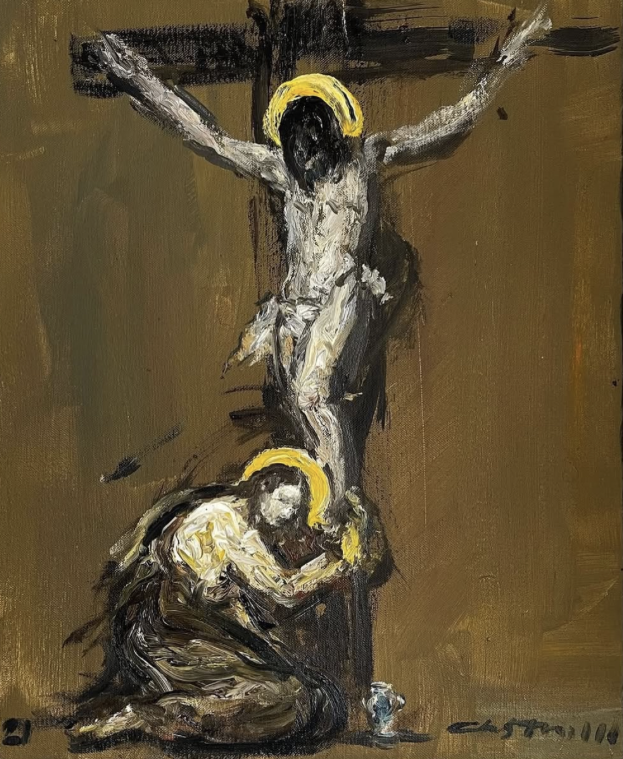
Image Courtesy: Instagram
In The Pornographic Imagination (1967), Susan Sontag writes, “It is in the nature of all spiritual projects to tend to consume themselves—exhausting their own sense, the very meaning of the terms.” She describes the way devotion, creation, and self-exposure demand total investment, often blurring the line between worship and self-dismantling. In “David,” Lorde embodies this tension: she gives, worships, and exposes herself, simultaneously shaping and fracturing her identity. Loving—and being made to feel both sacred and profaned—becomes a spiritual project that consumes and remakes her, almost Frankensteinian.
Mary Shelley’s Frankenstein (1818) is often read as a story of creation gone wrong, but at its heart it is a meditation on the monstrous, imperfect process of making life itself. Shelley shows that acts of making—whether by God, man, or artist—are inseparable from imperfection, desire, and the need for recognition. The creature’s longing to be loved mirrors the human impulse for romantic devotion, much like the absent lover in Lorde’s song, as she enacts her own Frankenstein moment.

Image Courtesy: Instagram
This tension between creation and imperfection carries into pop culture, where female artists navigate the Madonna/Magdalene duality—pure versus fallen, ethereal versus sexual. Madonna’s career plays with this binary. From “Like a Prayer” to “Like a Virgin” and her Erotica (1992) era, she uses religious imagery to confront cultural purity myths, turning the word “virgin” into a site of performance, irony, and empowerment, showing that holiness and sexuality are never mutually exclusive.
FKA twigs continues this lineage in Magdalene (2019), explicitly reclaiming Mary Magdalene, historically mischaracterized as a fallen woman. Its most popular song, “Cellophane,” exemplifies this: a heartbreakingly intimate confession that became a massive hit. Vulnerability—once private and even shameful—is celebrated publicly. In both cases, Madonna and twigs demonstrate that female artists can reclaim religious myth and prejudice to explore the self, just as Lorde does in Virgin.
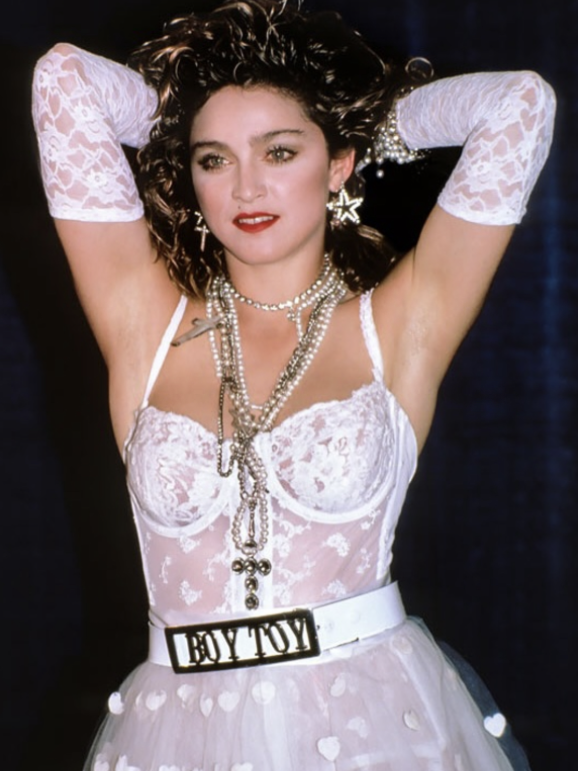
Image Courtesy: Instagram
Lines like “I made you God ’cause it was all I knew how to do” tap into the tension between devotion and self-possession, the impulse to elevate another—lover or ideal—to divinity. It is an act of devotion born from desire, scarcity, and inexperience. The lyric captures the cycle of projection and self-sacrifice, the way devotion can become habitual, almost instinctual, even when it exposes us to hurt. This naturally leads to the repeated question, “Why do we run to the ones we do?”—confronting the familiar forms of attachment. It’s not just about a specific lover, but the human compulsion to seek the same intensity, the same devotion, over and over.
Yet it is the line, “Will I ever love again, will you ever just be more than a friend,” that carries the deepest sorrow—a fear that her capacity for love has been fractured. The lyric is not just longing; it is grief over a part of herself that feels irretrievably wounded. In previous lines, she made the other person “God.” Now she reduces them to a friend—a much more human, mundane, and limited role. In conjunction with “I don’t belong to anyone,” this shift highlights the collapse of idealization, showing her attempt to reclaim reality and self-possession. Her breathy, strained delivery transforms the lyric into a declaration: she will no longer make a religion out of lovers.

Image Courtesy: Instagram
Lorde transforms devotion, desire, and heartbreak into a process of self-reclamation. She navigates the tension between worship and autonomy, showing that love—even when it fractures the self—can be a vehicle for renewal. Invoking the Virgin archetype, biblical David, and the lineage of pop artists who subvert purity and shame, she situates personal grief within broader cultural and spiritual frameworks. By asserting her own agency, she makes her own mythos. “David” closes Virgin not with resolution, but with the resolute promise of becoming herself again.
Strike Out,
Jessica Giraldo
Editors: Amia King, Kaya O'Rourke
Saint Augustine
Jessica Giraldo is the Head Writer of Strike Magazine St. Augustine, as well as a stylist and digital graphic designer. She has been on the writing team since Issue 06, and served as Editor-in-Chief for Issues 08 and 09. Jess tutors high schoolers for the English section of the ACT, as well as middle schoolers in Shakespeare. Her work gravitates towards the Gothic, the Romantic, with a sharp eye for cultural critique.
Reach her @jessicalynnegiraldo@gmail.com