
Shopping My Closet
Graphic Designer: Eliza Crawley
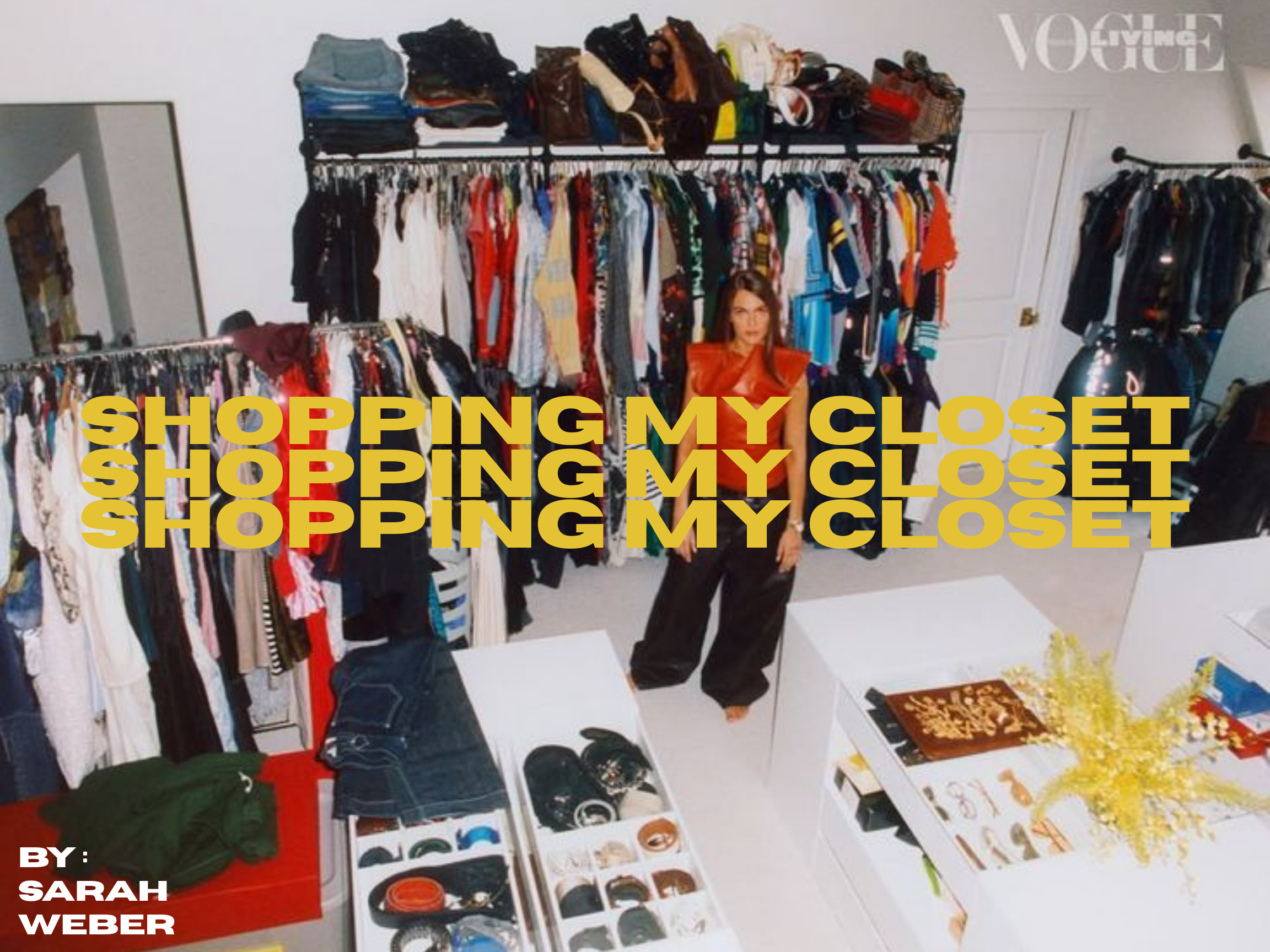
Every self-proclaimed “shopaholic” has come face-to-face with the culturally secluded purgatory of her own closet. I, too, have traded personality for aesthetics—spent my days aimlessly walking around Fashion District, finding shoes that only look good when hidden behind hangers full of clothing. I was obsessed with the next high. “Oh my god, that is SO cute. Where do you shop anyway?” But the sad reality was that my money was going to a landfill. Or more romantically, a Goodwill where my donations never made the rack. Every cute top expired further with each passing season, until finally all I could see was the moldy essence of what I once spent $200 on. I was trying to communicate myself, actualize my identity by building a wardrobe that spoke before I had to. My skin was thickened by the clothing resting on its surface, but none of it represented who I truly am.
I have had the privilege of both witnessing and participating in some of the most notable addictions of our past few decades. These trends, however ephemeral, are significant exercises in recognition of how our lived identities as consumers intersect. I watched each era of fashion promise one strong, singular style. Everything was framed as the becoming of something new.
But that wasn’t necessarily true. Packaging painted a pretty picture, but the silhouettes were always scarily similar to the clothing of our past. For instance, 2016 is back because it never left; we are still so obsessed with being cool. Hypebeast culture peaked in 2015-2019, but some of its primary brands—Supreme, Stüssy, Palace, Off-White, Yeez —are now making a comeback. Status in hypebeast communities requires both the funds to acquire goods and the leisure time to support the temporal demands of waiting in line for product drops. And while we could never demean the rebranded “conscious consumer” as a “hypebeast”, we practice all the same customs now when Parke releases a drop. Fashion is sourced as a way to exercise these luxuries, rather than just a luxury in itself. The act of obtaining the product becomes a reflection of lifestyle.
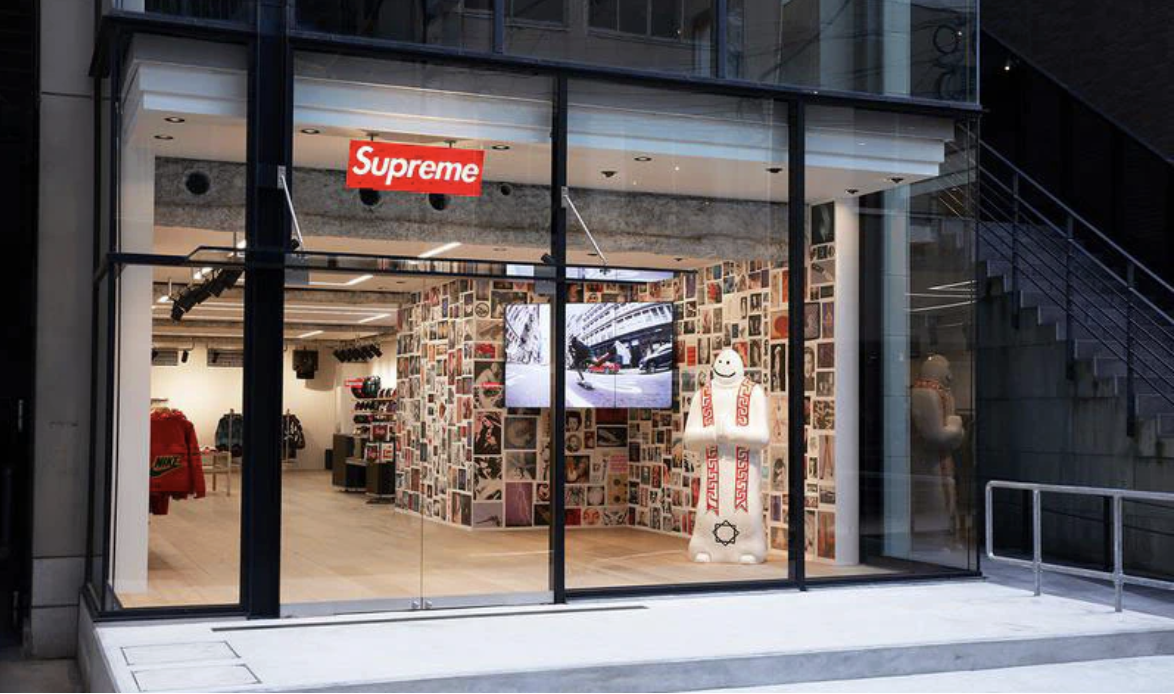
Image Courtesy: Supreme
And I guess that is why it is so easy to revert when faced with what we once had. When shame wasn’t as opportune, and the projection of wealth was what kept us coming back for more. As another representation of leisure, active wear brands that prioritize the care-free, fit lifestyle are making a resurgence. Pops of color in Free City and Aviator Nation are signifiers that you can fit the standard without succumbing to it. Why wear neutrals to blend in when you can be the girl to stand out?
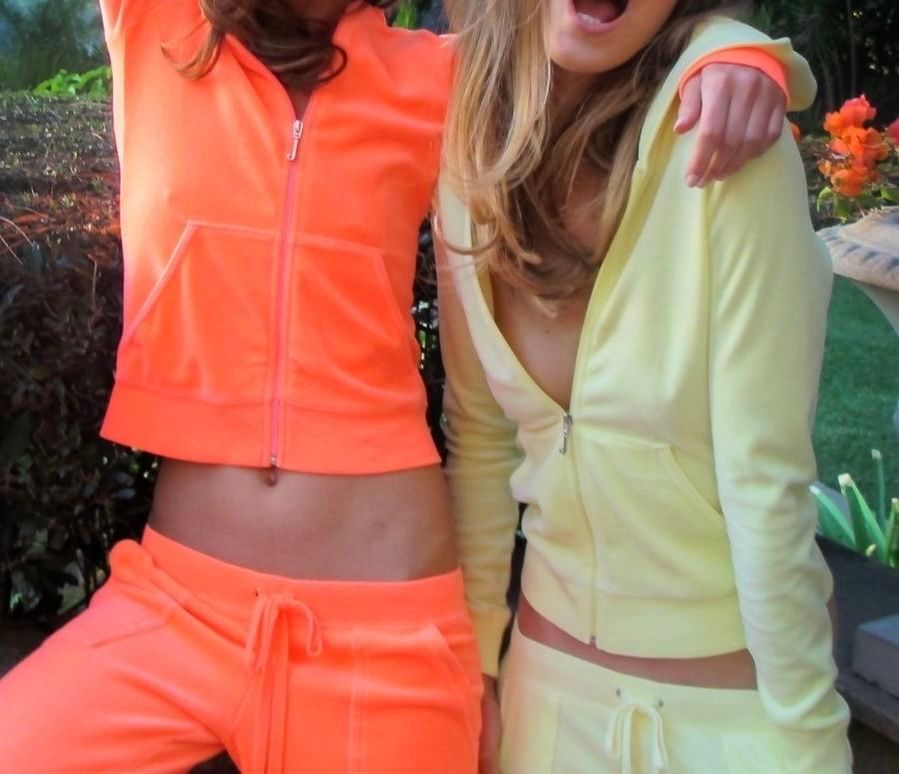
Image Courtesy: Pinterest
We care so badly to be perceived as “carefree,” when the lifestyles we assume reflect the opposite of this. You can search through your closet to scavenge for bright statement leggings or a sweatshirt with some notable brand, but acknowledging that fashion is cyclical won’t make you more aware of your own shortcomings. Shop your closet if you want, but watch the trend cycle while you do it.
Strike Out,
Writer: Sarah Weber
Editors: Melany Rodriguez, Dani Hernandez
Graphic Designer: Eliza Crawley
Tallahassee