
Split Toes, Split Meanings: From Samurai Tabis to Soho Pretension
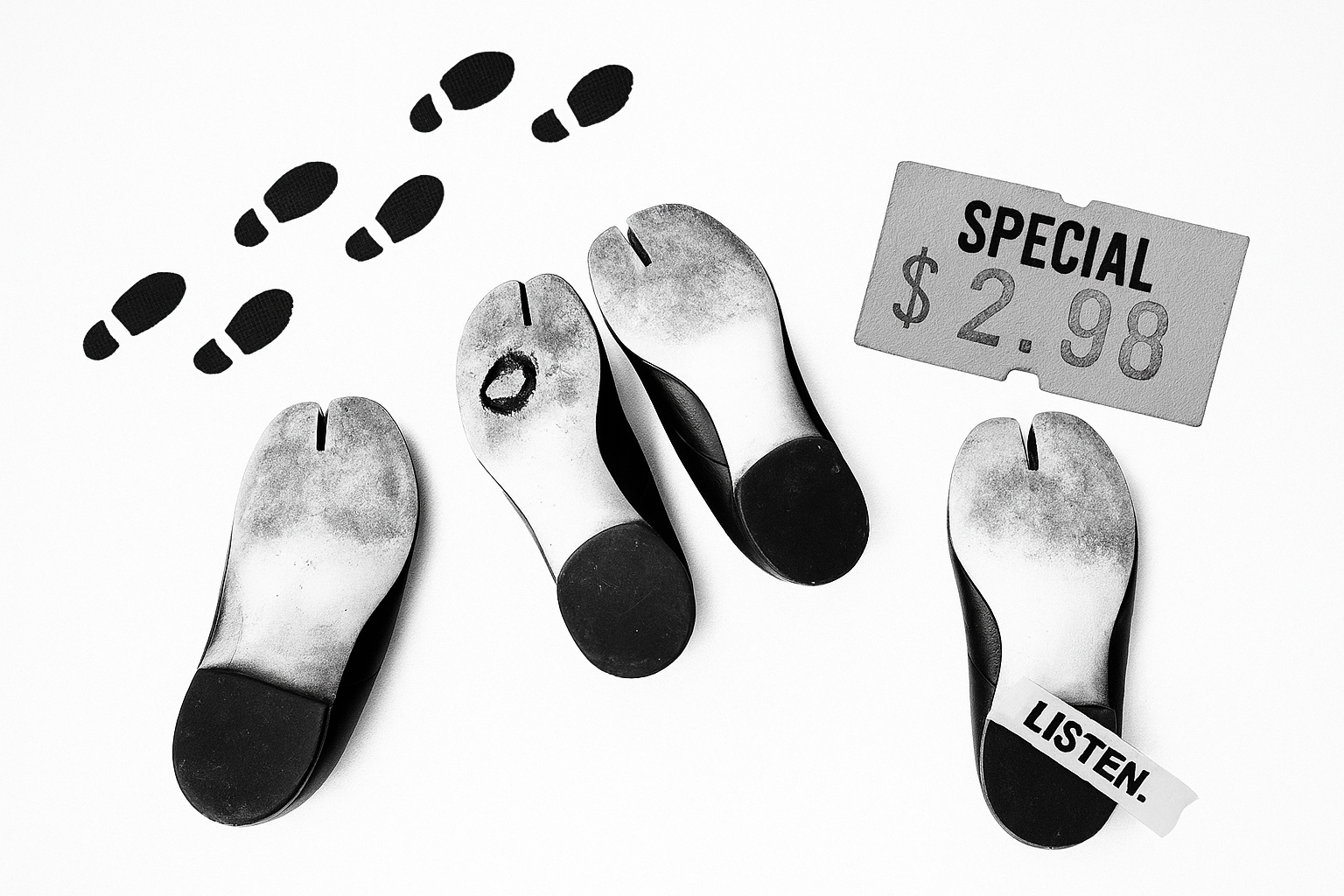
Image Courtesy: Pinterest
The Tabi is more than a shoe. It’s a story, a lineage, a practice rooted in balance: physical, mental, and cultural. Its split toe, at once radical and humble, has traversed centuries and continents, from 15th-century Japan to the gleaming streets of Soho. Yet in its journey, something subtle has been lost: the understanding that a Tabi is meant to ground the wearer, from heel to head, and to remind us of the quiet dignity of labor, ritual, and everyday movement.

Image Courtesy: Royumi
Originally, the Tabi was a sock. The split-toe design separated the big toe from the others, promoting balance, alertness, and even a subtle connection to the self, a primitive kind of reflexology that aligned body and mind. At first, these socks were a mark of class. Upper-class samurai wore them in muted purples and golds; commoners in blues. Cotton scarcity made it a luxury, but trade with China democratized the material, and the Tabi gradually became part of daily life, functional and accessible. By the 1900s, rubber soles were stitched to create the jika-tabi, the working man’s shoe, still worn by farmers, construction workers, and festival-goers today. Flexibility, protection, and stability mattered far more than prestige.

Image Courtesy: NIT
Then came Martin Margiela. Margiela did not invent the Tabi but instead deconstructed, reimagined, and framed it for a new stage: high fashion. Inspired by a trip to Japan, he fused the practical split-toe design with his signature theatricality: a narrow-fronted, high-heeled leather boot with inner clasps, debuting in 1988 alongside a body-conscious, tattooed, chiffon-clad runway ensemble. Models left the studio in white coats, their boots dipped in red paint, leaving footprints that were not quite human, not quite animal. Margiela’s Tabi was now a spectacle, a statement, and a loving homage to centuries of Japanese footwear.
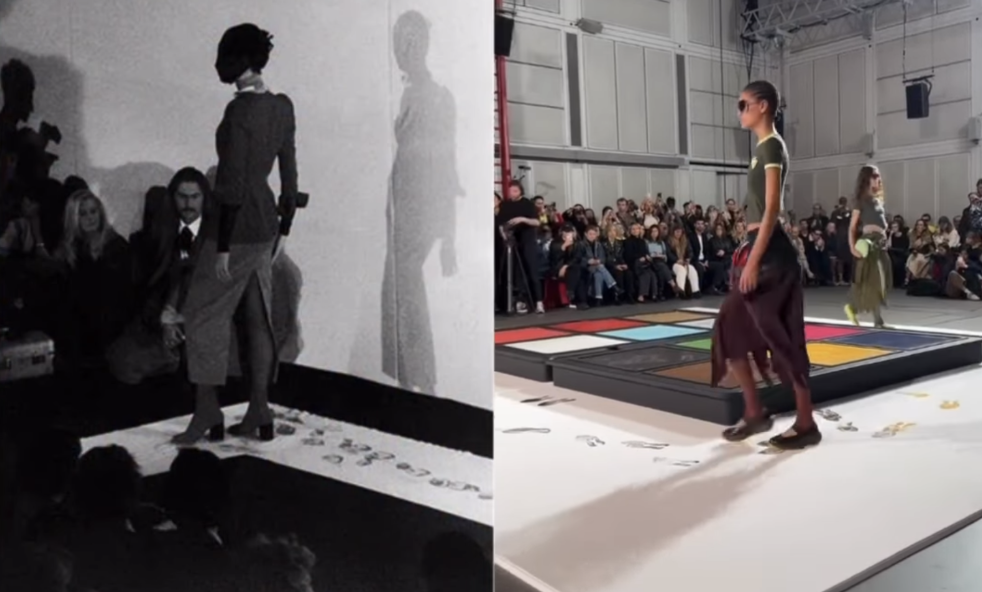
Image Courtesy: Instagram
What feels strange today is the way fashion discourse frames Margiela as “niche,” “high-class,” or “elitist.” This has only grown louder with the rise of “dupes.” Recently, Steve Madden released a Tabi-inspired shoe, and the internet erupted: people were furious, claiming these were cheap knockoffs, disrespecting Margiela’s legacy. This rage reveals a deeper truth: for some, fashion is less about inspiration, history, and craft, and more about brand names, exclusivity, and status.

Image Courtesy: FarFetch, Steve Madden
Tabi's journey reminds us that fashion is a conversation, not a competition. Margiela’s genius lies in translating the Japanese Tabi into a new form, with the shoe’s history stretching far beyond a single designer. The split toe should not be reduced to pretentious culture or status symbolism; it is part of a living, breathing cultural legacy. Celebrating Margiela does not mean ignoring the centuries of balance, labor, and ritual embedded in the design. It also means acknowledging that reinterpretations, like Steve Madden’s, keep the Tabi relevant and accessible, inviting more people to experience the grounding power of the split toe.
In Japan, the Tabi remains an ordinary shoe, woven into daily life, on the feet of children at festivals, farmers in the fields, builders on the beams. Each step is practical, balanced, and grounded. When the Tabi crossed oceans, however, it became something extraordinary. What was once ordinary became a mark of distinction; people now wear them to be different, to appear niche, to signal taste and belonging within the elusive world of high fashion. The same split toe that once symbolized balance and labor now carries the aura of Maison Margiela, mystery, rebellion, and exclusivity. It’s fascinating how cultures assign different values to the same object: in Japan, the Tabi connects one to the ground; in the West, it elevates one above it. Imagine if that ethos traveled with the shoe into fashion: style could be playful without being elitist, radical without being pretentious, inspired without erasing its origin. Step into a Tabi, feel your balance, your connection, and remember, it's toe once pointed not toward luxury, but toward the ground itself.
So, let everyone wear Tabis, Margiela originals, modern reinterpretations, or playful dupes. Let the focus shift from brand to shape, from price to purpose, from hype to history. Step into a Tabi, feel your toes, your balance, your connection. Step lightly, step firmly, and remember: the Tabi does not belong to Soho. It belongs to your feet, and to the generations of wearers who came before, who walked, worked, and grounded themselves in a split-toed rhythm that predates fashion itself.
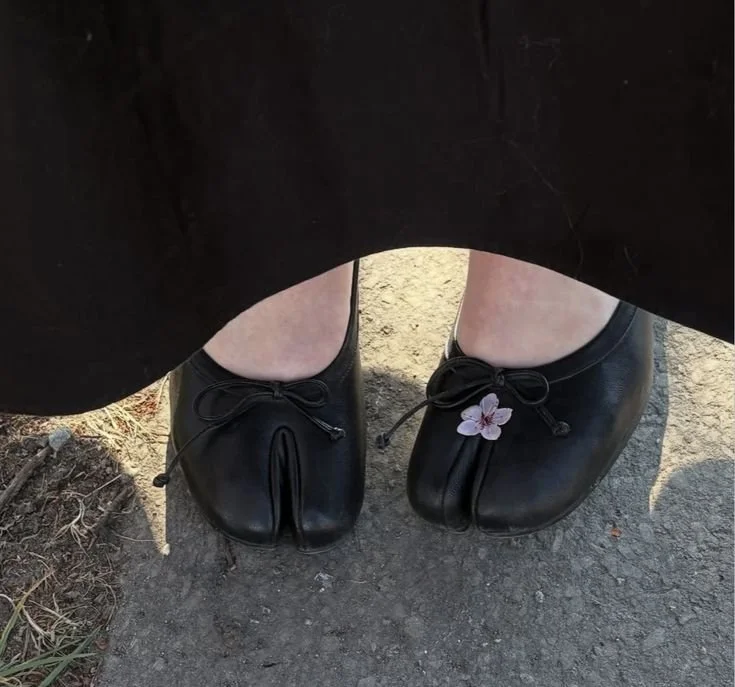
Image Courtesy: Pinterest
Because in the end, the question should not be: Is that Margiela?
It should be: Where did you get your Tabis?
Strike Out,
Writer: Alexia Cretoiu
Editor: Daniela Mendoza
Graphic Designer:
Tallahassee