Strike’s Guide to Space: NASA’s Current Artemis Missions
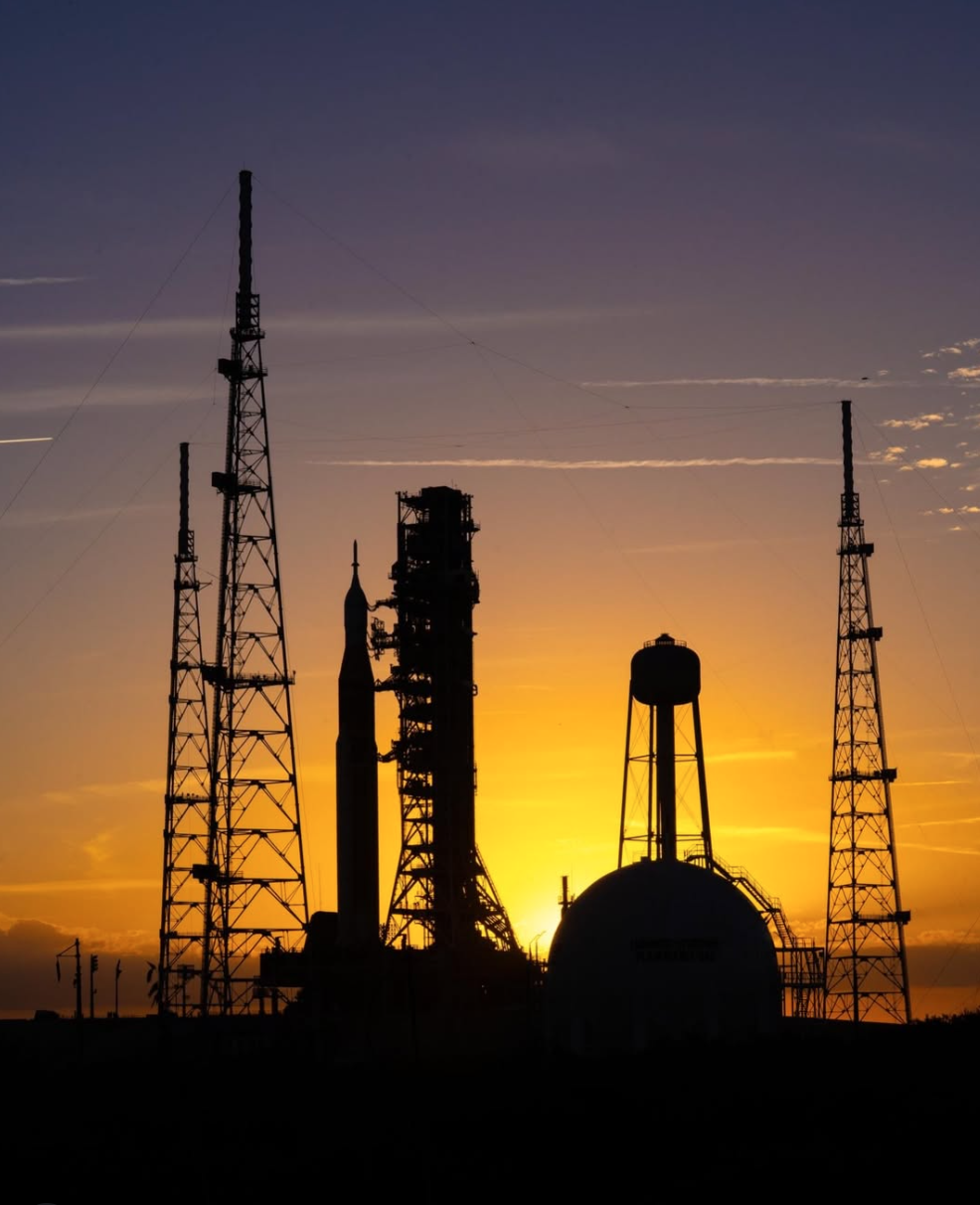
Image Courtesy: @nasaartemis / Instagram
The last human moon landing occurred Dec. 11, 1972. America’s Apollo missions successfully landed 12 crew members on the moon between the late 60s and early 70s, making international history.
Since then, no human life has set foot on the moon's surface. Until now.
NASA is currently working on its Artemis missions. Artemis I was an uncrewed flight test in late 2022, which sent the rocket into space for 25 days to test its capabilities.
The Artemis II mission is set to launch in March of 2026 from the Kennedy Space Center in Florida. It was originally set to launch earlier this year, but a few technical complications delayed the launch. This mission is a 10-day trip around the moon (not yet landing on it) to test the safety for humans on board. This launch will have the Artemis crew members on board, unlike Artemis I.
Finally, Artemis III is set to launch no later than 2028, also from the Kennedy Space Center. While there is no official launch date, we can start marking our calendars for this grand event.
This 30-day trip will be the first time a human lands on the moon since 1972. There are many reasons why this moon landing is unique from the rest.
Firstly, NASA wants to conduct new scientific research on the south pole of the moon. According to NASA, this research will help scientists better understand the solar system, our home planet, and future missions to Mars. Artemis III is also set to prove how humans can remain on the moon for longer periods of time.
Another reason why this launch will be unforgettable is the crew members on it.
Although NASA hasn’t announced any official names of who will be onboard for Artemis III, they have stated they want a woman and a person of color to be the ones who land on the moon.
Originally in 2023, NASA said it would “land the first woman, first person of color, and first international partner astronaut on the moon using innovative technologies to explore more of the lunar surface than ever before.”
However, NASA had to remove this statement as the Trump administration cracked down on language relating to diversity, equity, and inclusion.
“In accordance with an Executive Order signed by President Trump, NASA is updating its language… It is important to note that the change in language does not indicate a change in crew assignments,” NASA reported to NPR.
One of Artemis III’s main goals is to inspire a new generation of Astronauts, or the “Artemis Generation,” as NASA likes to call it. Having a diverse crew is just the beginning.
The crew will contain four astronauts, with two of them using a SpaceX human landing system to arrive at the lunar south pole from the aircraft and remain there for about a week. The other two astronauts will stay in the aircraft, orbiting the moon, before they all fly back to Earth.
All in all, you won’t want to miss NASA’s next rocket launch in Florida. If you’re around, pop by the Kennedy Space Center and watch history being made.
After all, who knows how long it’ll be until the next moon landing?
Strike out,
Sol Moyano
Boca Raton
Sol Moyano is a content writer for Strike Magazine Boca. When she’s not busy writing, she’s ignoring all of her responsibilities in favor of reading fiction novels. She updates her Goodreads and Letterboxd way more often than her LinkedIn. You can reach her at solmoyano05@hotmail.com or her instagram: @solmoyanooo.