
Teen Queen: Sofia Coppola’s Marie Antoinette & Dressing for Power
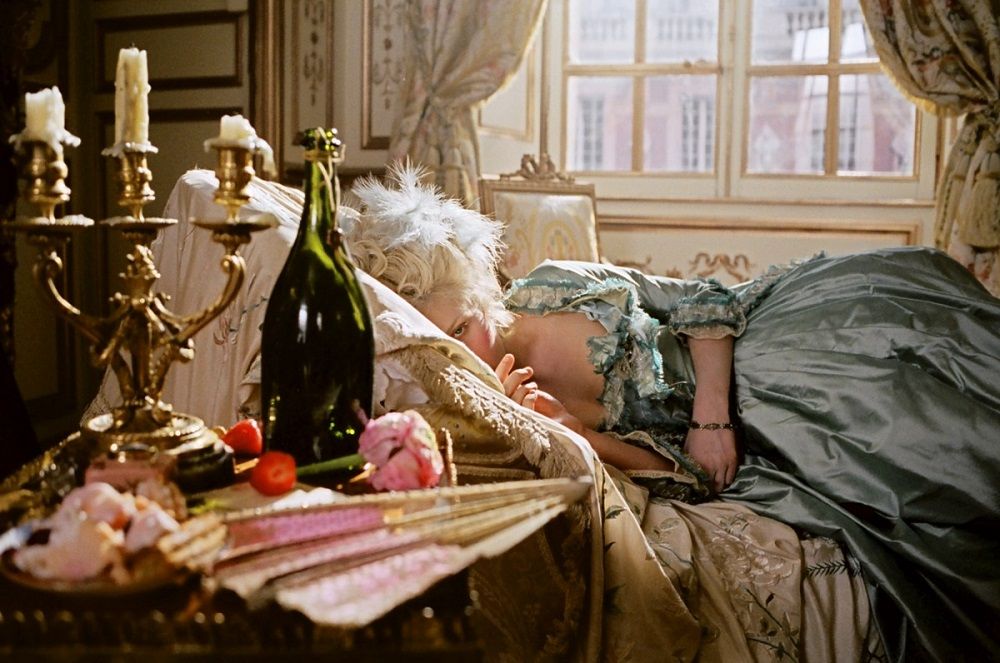
Image Courtesy: Marie Antoinette (2006)
Freshly fourteen and already crowned Queen, Marie Antoinette struck Versailles with a wardrobe so good the French were appalled (in more ways than one). Despite a long legacy of cruelty, the start of the 21st century has lightened her presumably dim image. With several adaptations of French couture making their way into the mainstream, Marie Antoinette has possibly received the most surprising PR makeover, with the most influential addition to her recipe of revival being attributed to a royal in her own right: Sofia Coppola.
Sofia Coppola comes from a lineage of successful creatives, following in the footsteps of her father, Francis Ford Coppola, in her pursuit of filmmaking. Her ultimate goal to “bring Marie into now” began with a stunning, lavish ambiance and stretched far into every girl’s innermost desire to belong. Part of this thematic journey required Kirsten Dunst, Coppola’s esteemed Marie, to dress as a state of mind. Through this, we watched the humanization of the last French Queen unfold upon our screens. Coppola’s film, based on Antonia Fraser’s biography “Marie Antoinette: The Journey”, frames Antoinette as a tragic figure, a young girl who gets married into a life of luxury, absent of love, following the thrill of excess up until her eventual untimely death. More than just an excuse for her fiscal oversight, it provides insight into the cultural flows leading up to the French Revolution, as well as the gaping gap between the wealthy and the working class.
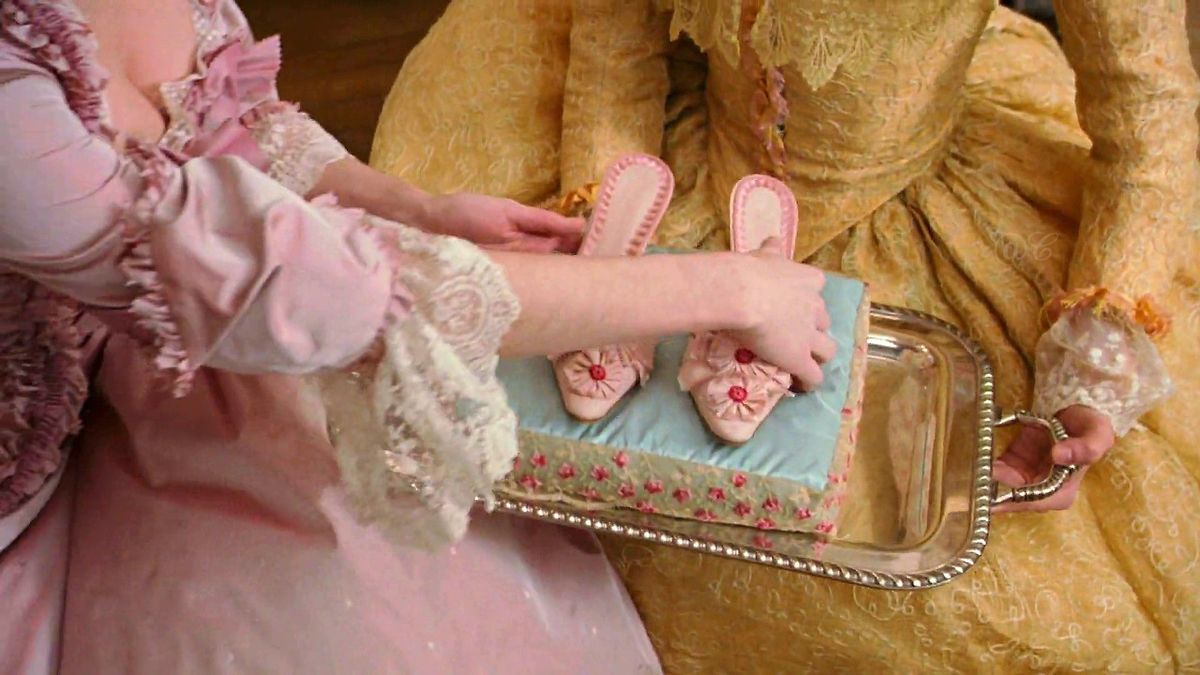
Image Courtesy: Marie Antoinette (2006)
Released in 2006, Coppola’s film predates an influential economic recession, mixing in the glamour of the early 2000s with its contextual 1800s terrain. Stepping into her role as the young Dauphine requires Antoinette to leave behind her past, and this marks the first influential shift in her character arc. Coppola stylistically demonstrates this in her portrayal of light pastels just in time for Spring. As Marie Antoinette arrives in France, she is first undressed by French courtiers and re-dressed in French design. The flowers bloom as she enters a new stage of her life.
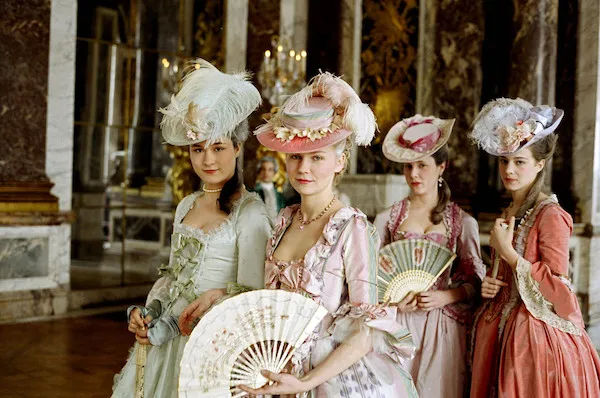
Image Courtesy: Marie Antoinette (2006)
Coppola’s soundtrack, decorated with atmospheric rock and electronic music, pokes fun at the novel and exciting climate of power for the influential youth. In a scene where Antoinette and Louis XVI’s friends gather for her 18th birthday celebration, the irony of her role as Queen is clearer than ever. The combination of Milena Canonero’s Academy Award-winning costumes and the rhythmic drumming of constant noise makes the scene taste of bittersweetness. As Antoinette grows up, summer begins, and the colors brighten to reveal a more intense palette.
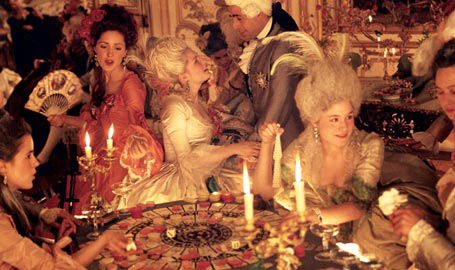
Image Courtesy: Marie Antoinette (2006)
With Coppola’s implementation of the luscious paradise of Versailles, Antoinette’s outfits reflect her adoration of her surroundings, where she is shown to enjoy strolls, parties, and sunrises on the lake.

Image Courtesy: Marie Antoinette (2006)
From the floral brocades effortlessly adding to gowns rich with lace and paired with ruffle detailing, Antoinette’s style is effortlessly feminine, playing with delightful curves and serpentine lines popular in the 18th century. Even the flowers and birds that the Dauphine pins into her massive hair match the garden itself. Or better, the palace walls, decorated with picture frames, even the art is representative of her love of nature. Everything is complementary to a pristine courtly style. Coppola ties this into her girlish attitude towards the beginning, as well as her absence at the end. As her marriage is (finally) consummated, and she becomes a mother, the angelic cream of new life changes the tone. Whereas before the music was loud and bubbly, both the ambiance and her bright colors have quieted down.
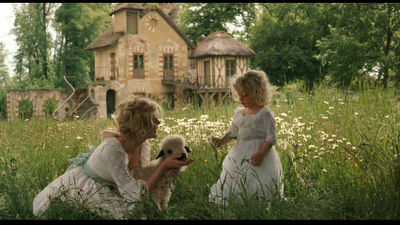
Image Courtesy: Marie Antoinette (2006)
While it’s cruel that Antoinette, at her most tranquil, is also most at odds with her country, her costumes here reflect the desire to step back and focus on moving forward in the life she has. Where before she was attempting to step into her power as Queen, Coppola portrays motherhood as a way to release the tension of pin-tight curls and a corset bodice. The use of patterns to show the relationship between Antoinette and Versailles itself is also abandoned here. In her embrace of creams and neutral colors, she also releases the need to identify fully with the world she was forced to be a part of.
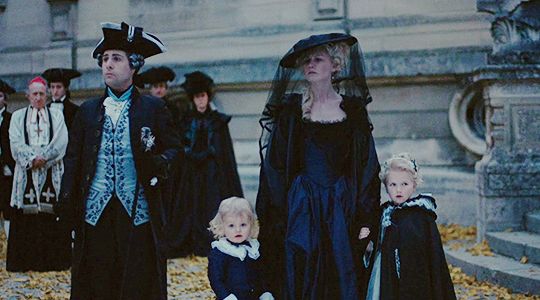
Image Courtesy: Marie Antoinette (2006)
By the end, the dark and gloom of winter catches up with the French royal and her counterparts. Her outfits follow suit, darkening to meet her grim end. As the Revolution nears, the summer fades away. The film's closing shots are merely of Versailles packed away, representing how French royalty has maintained some stature in spite of the ruin of their dynasty. There are no jewels, dresses, or shoes left to represent the short-lived power of the Queen. Her legacy is repackaged, but her fate stays the same.
Strike Out,
Writer: Sarah Weber
Editor: Daniela Mendoza
Graphic Designer:
Tallahassee