When the Ancients Got Tipsy: Humor, Illusion, and Identity in the Symposion
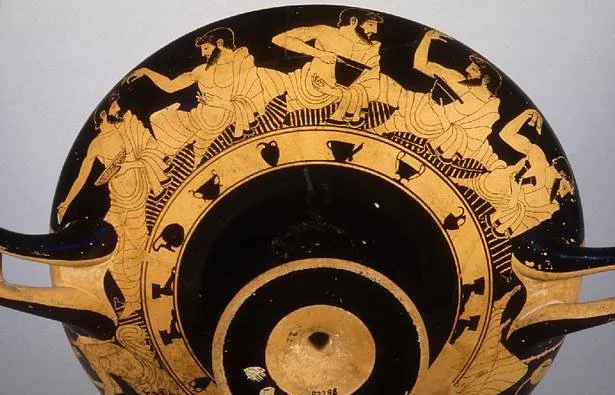
Image Credit: Panoply Project
When we look at ancient objects, their deeply altered state, produced by the power of time, makes us forget that these items once belonged to human beings who were like us: people seeking wisdom, community, and the pleasures of life. Moreover, the past is often veiled by a certain solemnity that makes us disregard that the ancient people, like us, also enjoyed partying and drinking frenetically. In Ancient Aegean culture, the symposion was the place where this self-indulgent lifestyle took place. The symposion consisted of social gatherings where people would drink wine reclined on furniture, exchange in philosophical discussions, listen to music, and have sexual encounters. These were the original Greek life parties. Today, we can see many ceramic objects such as kraters, flasks, and bowls that were originally used in symposia for holding drinks and oils. These vessels often contain philosophical themes, jokes, and illusions that served as a way to entertain those who attended.
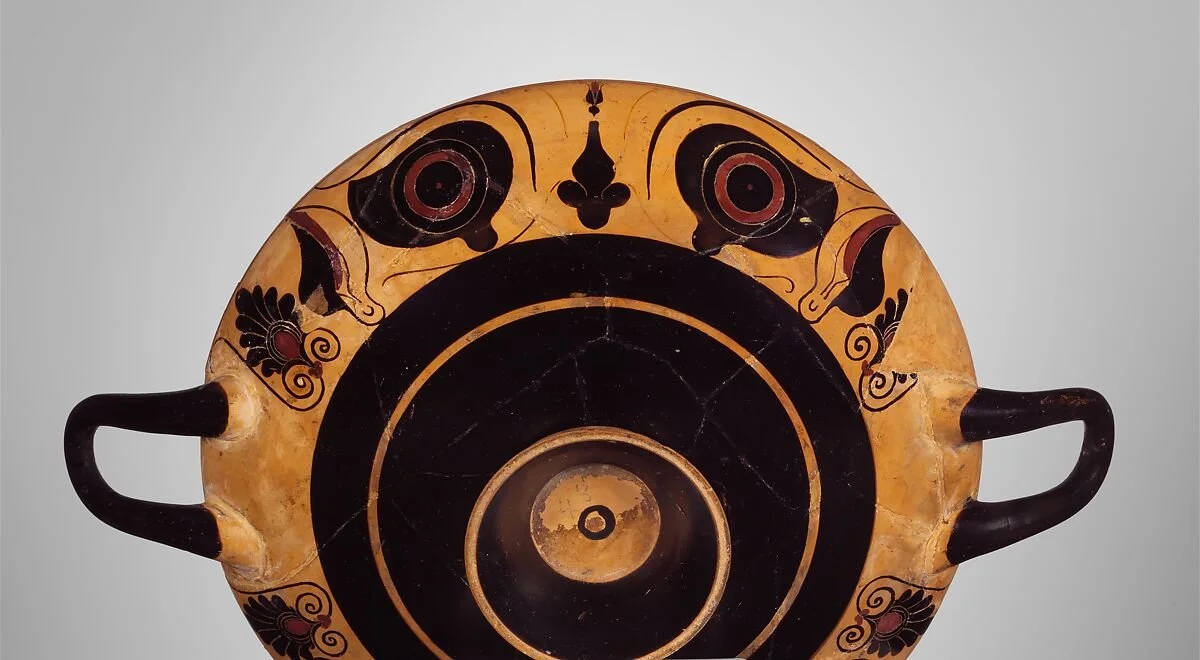
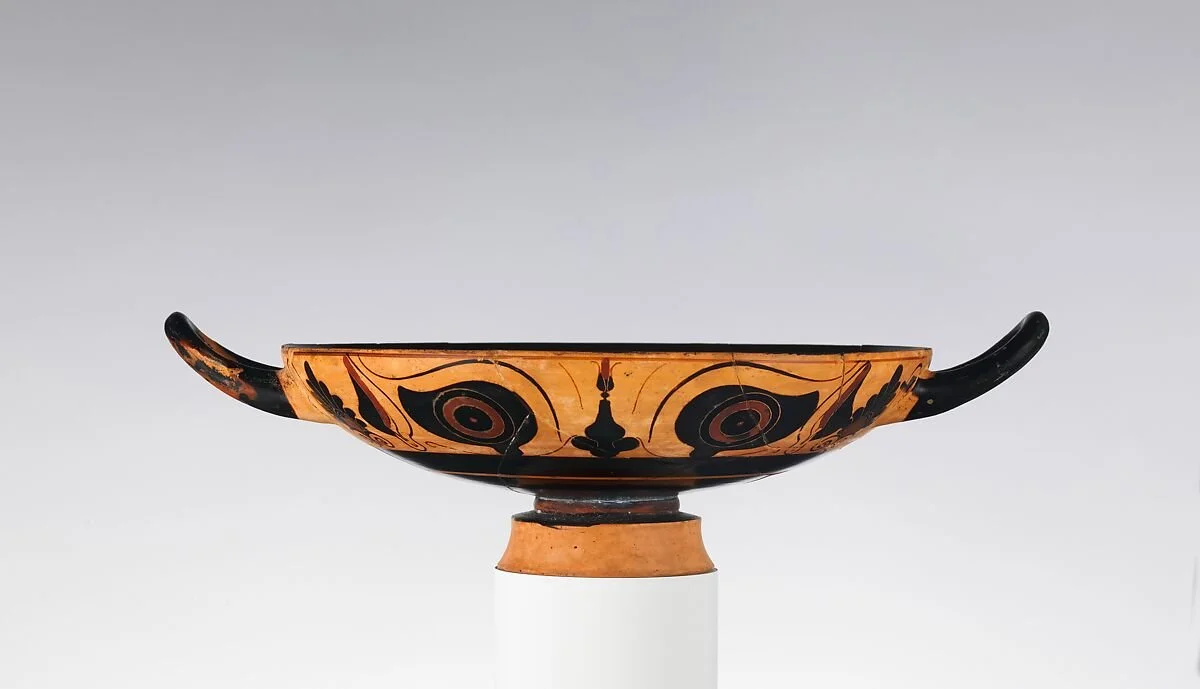
Image Credit: MET Museum
A fascinating type of vase explicitly used in the symposia, the eye cups explored the ever-changing nature of humans under the influence of alcohol. The clay Chalcidian eye cup attributed to Phineus Painter, made in Calabria in approximately 520 BCE, provides an example of this sort of pottery. The creator intelligently uses the face-like structure of the vase to make it look like a mask: it has two big eyes painted on the body meant to be seen when the user is drinking, the handles look like the ears, and the base imitates the mouth. The eye cup seems to indicate that, like an actor playing a role in a theater, a drunk person in a social environment of pleasure changes their nature and identity becomes more blurred. Among the Greek gods, Dionysos was the god of wine, partying, and also theater, so the connection between these ideas makes sense in the context of Ancient Aegean culture. The combination serves as a visual pun, showing the figurative in a literal way. This provides a sense of the sort of humor enjoyed by the symposion-goers, marked by its cleverness and its play with logic.
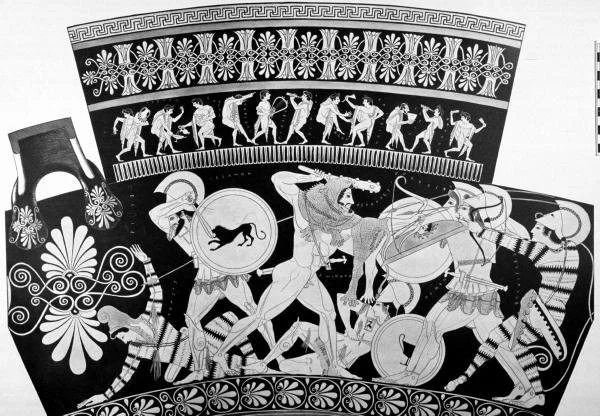
Image Credit: Perseus
Another piece that contains a similar kind of symposion humor is the clay red-figure volute krater of Herakles and Telamon fighting the Amazons, attributed to Euphronios in approximately 490 BCE. The krater depicts the hero Herakles and Telamon combating against the Amazons, warrior women attacking them with arrows. Red-figure vases had light figures on a dark background, which allowed the artisans to create a more intricate interaction between foreground and background. This krater does precisely that, as it shows the dynamism of Herakles moving forward, the mixed perspective of the tumbled warrior with one leg forward, and the detailed Persian-like uniform of one of the Amazons who has a foreshortened foot that suggests tridimensionality. Euphronios, however, playfully eliminates this illusion by adding flat decorative tendrils. This detail indicates that, though the figure looks realistic, it is still a two-dimensional figure on a surface. For a viewer of the krater in the symposion, the idea may be a comical play of the paradoxes of space. Therefore, like the eye cups, it entertains and illustrates how drinking alcohol changes one’s perspective.
From ideas of restraint to plays on reality, the symposion constituted an extremely fruitful source of creativity for Aegean artisans to convey the effects of intoxication and self-indulgence in human nature, a depiction relatable for many of us living millennia after their creation.
Strike out,
Sofia Ramirez Suarez
Miami
Sofia Ramirez Suarez was born and raised in Caracas, Venezuela and she moved to the United States at 16. She received her Associate in Arts degree at Miami Dade College. She has been published by Miambiance Arts & Literature Magazine Vol. 33 and Strike Miami Issues 6, 7, and 8. She is currently pursuing her Art History Bachelor’s degree at Florida International University. Sofia is passionate about the arts, literature, and pop culture.