A Continuous Rebirth
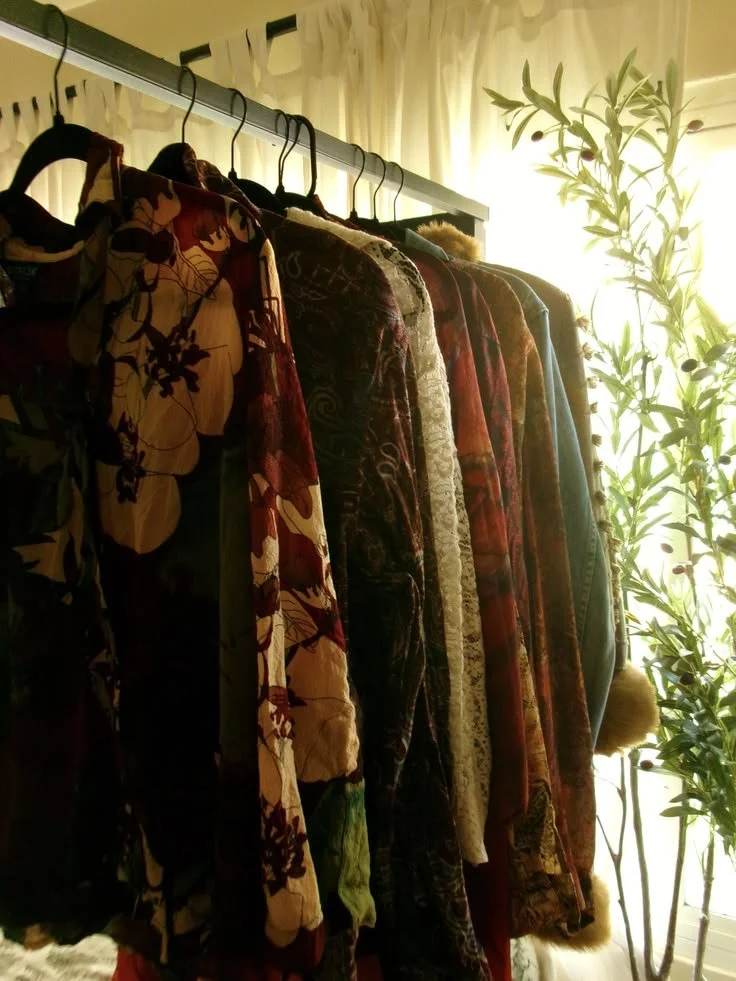
Image Courtesy: Pinterest
What defines a curation as new? Is a rebrand classified as something fresh? Is it possible to forsake past ideas and build something entirely from scratch?
Fashion is always recycling itself. When looking at the fashion of the youth, it’s evident that trends that were raging twenty years ago are reemerging. Popular styles in the 80s resurfaced in the mid-to-late 2000s, and now, a combination of all of those past decades is having a rebirth.
Y2K has become a new way to label articles of clothing that vaguely resemble those commonly worn in the 2000s—tank tops with lace, low-rise flared jeans, Converse, shades of teal and bright pink. Others are taking on trends from even further back, aiming to style themselves in the grungier look of the 90s or the bold colors of the 80s. These labels have become defining factors in the realm of fashion, marking a piece as more desirable. As a result, it allows these articles of clothing to be priced at an extreme amount for second-hand pieces.
It makes me wonder how many of these clothes are actually vintage. Oftentimes, the pieces, unless truly old, are regular articles of clothing—things you could find in your mother’s closet or at a thrift store—with high prices, but we buy them every time. I’ve noticed that this label of “vintage” attracts me as well. I’m more likely to purchase something if it’s dated from ten years ago—why is that?
Last week, I complimented this girl’s shirt, a black lace tank top with bedazzled accents on the bottom. It was nothing out of the ordinary; in fact, I own something similar. I bought it over the summer because on the tag, in scribbled, messy ink, it read: ‘from the 2000s.’ After my compliment, she answered me with this: “Thank you! It’s vintage. I thrifted it.” Vintage is not a brand of clothing, but it acts as one.
As we step into 2026, things dating back less than ten years ago have started to be labeled as retro. I saw a video online where middle schoolers were calling fashion trends from 2020, which essentially was an altered attempt at an 80s style, retro. As time continues, will we constantly grasp onto “vintage” and “retro” trends? As seen time and time again, the fashion industry recycles itself from prior decades, evolving into a varied form of the original.
We always seek inspiration from something, usually from a previous time. It’s a cycle we cannot break, a circle we must complete. Beyond the fashion realm, it’s evident in artists sampling other artists to create new music and poets writing ekphrastic poetry based on a pre-existing art piece. Why is this a cycle, and is it entirely possible to create something that nobody has ever created before? To wear something that nobody has ever worn?
Do we exist in this cycle because it’s comforting? Within the fashion realm, are we choosing to wear pieces from the past because they are familiar? When my dad said he would give me his sweatshirt from the 90s, I immediately took a liking to it before seeing it. It was familiar to me because it came from a decade that he had lived through—a decade when he was around the age I am currently. This appeal is driven by not only familiarity but also nostalgia. Humanity’s desire for the past is so strong that it affects not only older people, but also younger people who are feeling nostalgia for a time when they weren’t even alive.
To answer my previous question: No, I don’t think it’s possible to curate something entirely new—but that’s not a bad thing. Drawing inspiration from previous art or fashion does not discredit the new and fresh ideas that have shaped the original. Our comfort with “vintage” or “retro” concepts allows us to modernize them or shift them to fit the current time and culture. As time continues, the older decades of “vintage” will be replaced by trends and styles that we deem too modernistic to ever be considered as such—although, really, one could claim they were inspired by decades past. It’s all a cycle, truly—a continuous rebirth of trends, ideas, and styles.
Strike Out,
Orlando
Written By: Isabella Menditto
Edited By: Brenda Nunes and Jaz DeGuzman
Isabella Menditto is a staff writer for Strike Magazine, Orlando. Currently, she is pursuing her bachelor's degree in English creative writing with a certificate in editing and publishing at the University of Central Florida. When she's not writing, she's reading, listening to music, or collecting physical media. She hopes her words will resonate with readers’ experiences and allow them to connect to her stories.