Maybe the Real Trend Was the Consumerism We Made Along the Way
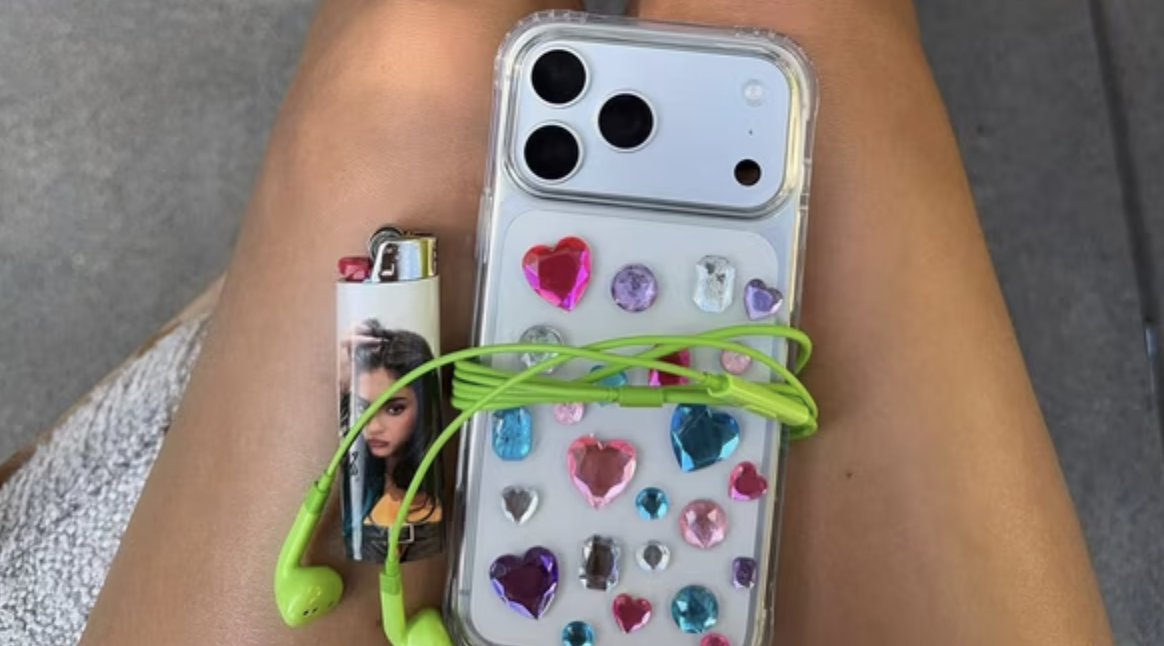
Kylie Jenner via Instagram (@kyliejenner)
It’s 2022 and the world is well. The pandemic is (kinda) over. Joe Biden is president. The housing market is in a boom. Nothing bad is really happening, except all those things happening to all the people far away enough to fall outside of the scope of our own personal reality.
It's a time of economic prosperity, or at least not a downturn, when most working class people are doing well enough, and they can see the faint, hazy pinprick of the American Dream far off in the horizon. The worries of the world are no more than an idea they can choose not to think about. They can imagine that if they work hard enough, or long enough, or get the right job, they too, will one day become rich. People are happy to be sold to because they imagine they can one day buy what’s being sold. The product is a representation of the future they imagine for themselves. More than that, the product becomes a manifestation of this future. Buying expensive things, fitting the uniform of the rich, will in and of itself make you rich.
From this era, the Clean Girl is born. The uniform of the rich has changed many times throughout history, carrying many faces, but right then, in 2022, that face was Hailey Bieber's.
Nobody was buying Rhodes lipgloss because they truly thought it was the best thing on the market. They were buying it so through the product, they could be Hailey Bieber. They could be skinny and rich and beautiful if they too wore minimal makeup and trained a middle part. Fashion was about signaling status if you had it, and emulating it if you didn’t.
In Simulacra and Simulation, Jean Baudrillard explores the idea of visual signifiers replacing that which they signify, and thus becoming wholly self referential, or attached to other concepts which bear no relation to what bred their inception.
Baudrillard used this idea to explore concepts like colonial perceptions of the world and religious iconography. I want to use it to explore something different - how the expression of fashion not only is shaped by, but shapes, economic disparity across the imperial core.
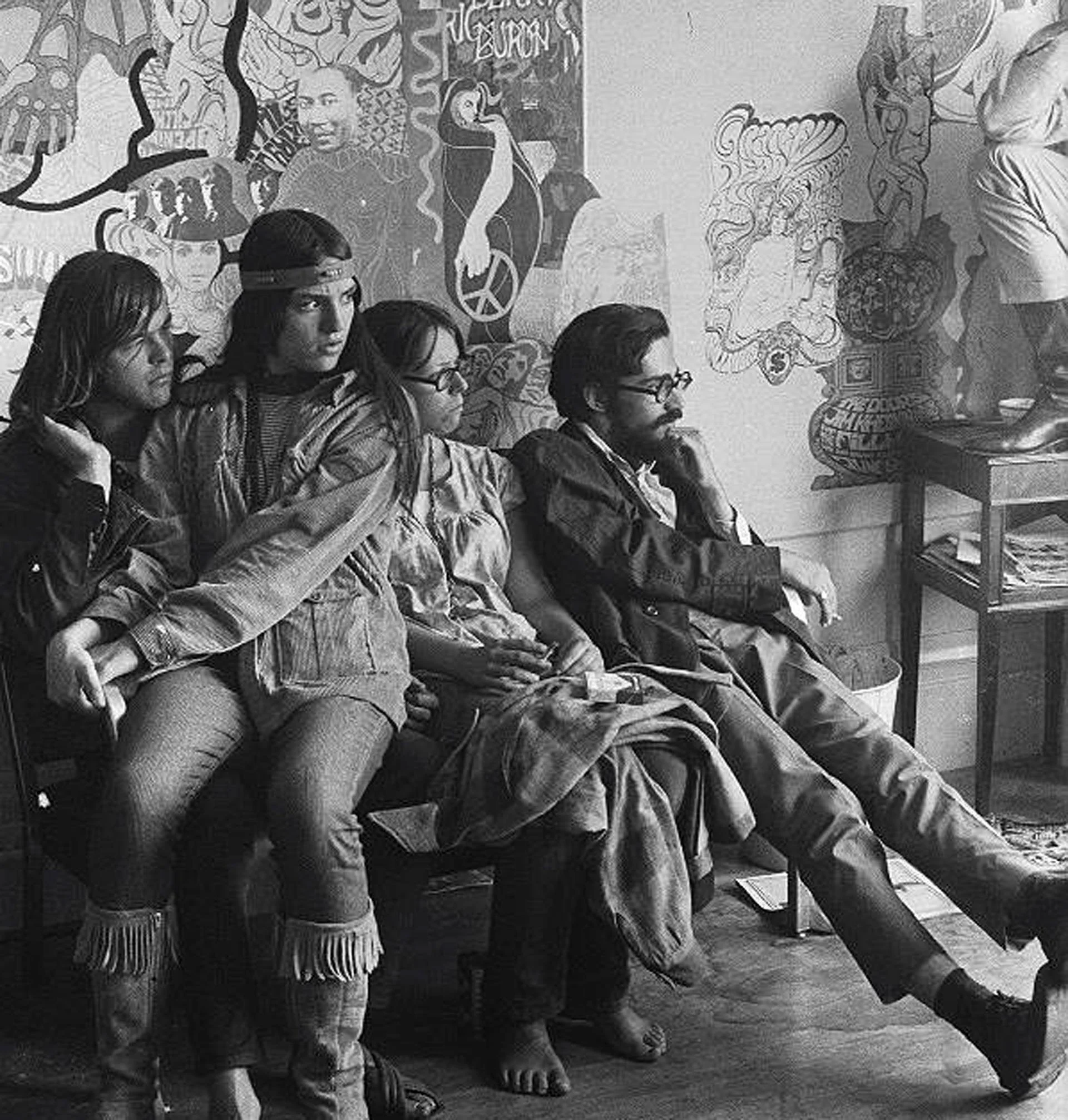
Gene Anthony/David Smith Archives | KQED
Hippies, punks, harajuku girls. We often identify different subcultures by their names and visual manifestations - punks wore safety-pin studded clothing, hippies grew long hair, and harajuku teens wore bright colors and mismatched fabrics. But these signifiers that now encapsulate the subculture previously were just manifestations of the values that created them, specific to the time, culture, and place in which they originated.
Hippies grew long hair and wore it in its natural texture as a rejection of the idea that it was “proper” for a woman to be ultimately manicured and polished at all times, which in the 60’s meant having short, curled hair. Punks used safety pins to mend clothing that was falling apart, rejecting the idea that one should always perform “presentability” through wearing clothes that were so untouched that they made the wearer indistinguishable from the mannequin they plucked it from. Harajuku teens wore brightly colored and heavily textured clothes as a rejection of Japanese culture’s insistence on fitting in by adhering to a particular mold.
All these expressive choices were the result of the rejection of the ideology of conformity, but did so through a rejection of the culture’s time and place bound visual representation of such - curled hair, new clothes, etc. Through this, they became visual signifiers in and of themselves, and eventually were boiled down to just that. Punk, hippie, and harajuku are no longer movements, but aesthetics. In the current collective consciousness, hippie is the babydoll dress, punk is the mohawk, harajuku is the colored hair clips.
Now, with social media algorithms determining what's in and what's out at a moment’s notice, this process of replacing the representation with the symbol is accelerated ten fold - so much so that the symbol often precedes that which it represents - what Baudrillard called the “precession of simulacra”. Before the head of the movement even crowns, the algorithm has already calculated and extracted its symbols; every color, shape, and style, and presented them as that which they represent. When the symbol becomes empty of what it was a symbol of, a chasm is left which can be filled with anything, associated with anything, and sold to anybody.
We can see this very clearly with the “Whimsy” trend - “Clean Girl” dominated our screens for years - the slick back buns, the minimal makeup, the pilates classes and iced matcha lattes and everything else we were all told we needed to have, needed to buy, so we could be the “right kind of person”. Naturally, people got tired of this. On the one hand, people who were not aspiring to conform got tired of being told to do so. On the other, people who were aspiring to conform got fatigued of the visual language they saw over and over and over again. And so the space was left open for something new to take over.
In response to the dulling of individuality in favor of conformity, anti-beige and anti clean girl sentiments exploded. Mismatched colors, textures, and fabrics were now flooding the algorithm. Quickly, this was assimilated too. It became a social currency to be against conformity - to show that you’re not one of those girls who’s just like all the rest, who strives to match herself to an ever changing and ever out of reach ideal of what a woman is and should be. It became cool. The goal was now not to be different, but to show that you were different. And thus being different once again produced its own uniform. Ballerina flats and basketball shorts, baby tees and lace caps, the more discordant the outfit was, the cooler of a girl you were. But again, this did nothing more than change the look of what it was to be the right kind of girl. Now being self aware of these discordancies, consciously and openly rejecting a narrow idea of femininity is what made one a Cool Girl. Which coincidentally, seemed only to work or apply when done by people who already were perceived as inherently feminine, through whiteness, through skinniness, through the same idea of “beauty” that they claimed to be rejecting.
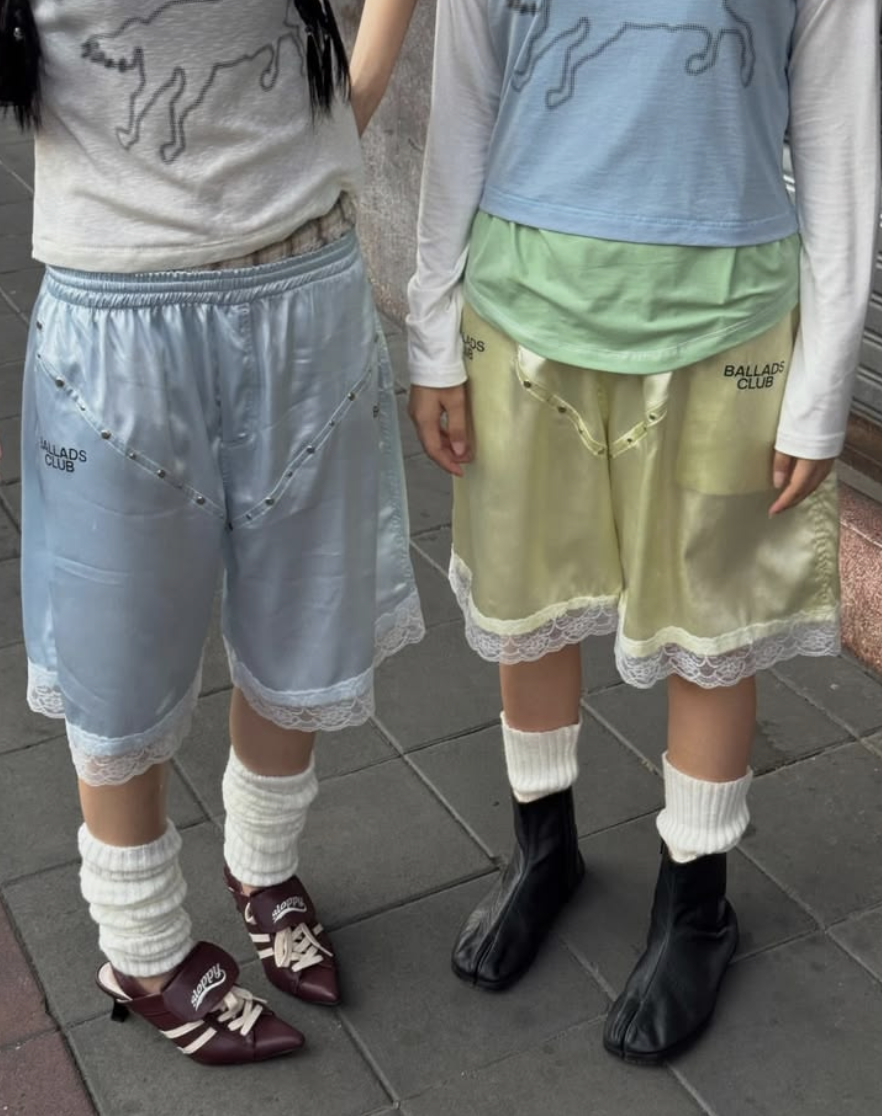
Ballads Club via Instagram (@ballads.co)
Once another rejection of the status quo and movement was co-opted and repackaged for the same small group with the same high barrier to access, those excluded moved on to something else. To be yourself, not caring if you were “cool” or “feminine,” being whimsical…
The whimsy movement was initially characterized by things like wearing whatever you wanted, buying second hand, and learning craft like sewing, knitting, and crochet to make and mend your own clothes and step away from consumerism. It was held down by people who rejected the idea of a Perfect America ™ with Perfect People ™, not just in fashion, but across culture and politics as well. But, just like before, this too was engulfed by consumer culture, violently torn apart, stripped of anything that carried meaning, crudely molded back together into a facsimile of its former self, and spat back out onto our algorithms. And so whimsy became buying rhinestone stickers. It became putting them on disposable face masks that most of the population did not have the surplus income to afford. It became a complete inversion of the values that birthed it.
It’s natural for those who were pushed out of a movement they started to direct that frustration, anger, and sadness towards those who they see flattening and commodifying what once had meaning - to the girls and women bearing whimsy like a mask for social currency. That carries its own blame, as do all the criticisms about wastefulness and giving into consumer culture that come along with it. But I think it’s important to keep in mind that those women did not birth that commodification, they responded to and adopted it. The people who did birth it, who birthed Clean Girl and Whimsy and Quiet Luxury and flattened every movement across generations into nothing more than their visual symbols, are the same ones who created the problems we use these aesthetics to escape from. As long as we continue to view these systemic issues intrinsic to the societal structure we live under through an individualized lens, we will never escape them. Our sole direction of blame towards those who are also responding, in however an unhealthy way, to a consumer driven narrative placed onto them without their consent or understanding, is necessary to perpetuate this structure. Looking to corporations selling us the uniform of rebellion will never lead us to escaping the reality of the system we live under. Looking to corporations selling us the uniform of the rich was never going to lead any working class woman to suddenly inherit a higher rung on that ladder, no matter how many others she stepped on to try. And that faint, hazy pinprick was never going to be anything more than a mirage.
Strike Out,
Mica Zeitlin
Miami
Mica is a Psychology student at Florida International University. They have interests in film analysis, music, fashion, history, social and developmental psychology, and often the intersection between them. In their offtime, Mica enjoys watching movies (duh), cooking, and finding nice bugs to take pictures of.
Edited by Samantha Vital