
Ethereal to Eerie: The Neon Demon
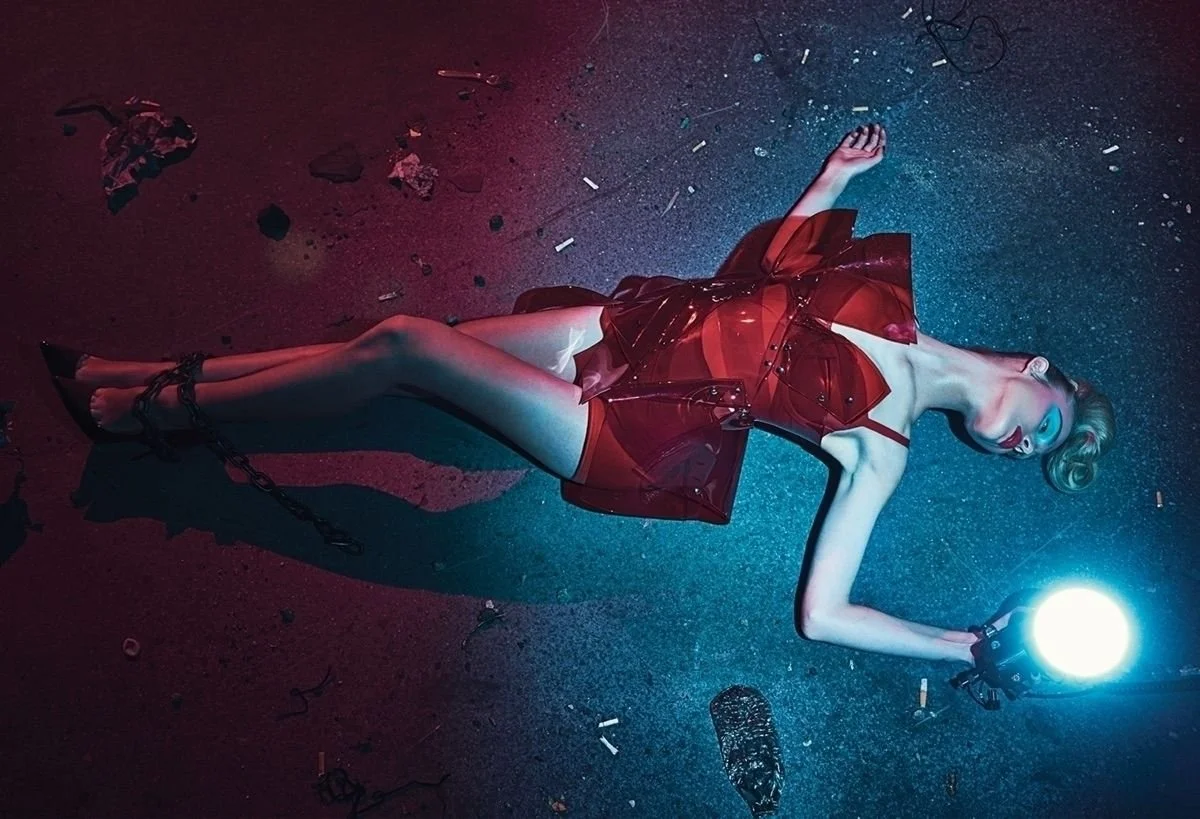
In Nicolas Winding Refn’s neon-lit nightmare, beauty becomes punishment. The Neon Demon shows fashion as more than just clothing. It becomes a way to shape identity and a tool for social climbing. The film explores how appearances can carry both power and danger, using style to reflect a character’s transformation and status. Throughout the story, the visuals move from soft and glowing to cold and unsettling, achieved through deliberate choices in color, wardrobe, and lighting. The film follows a woman’s brief but intense rise in the fashion world, showing how something that begins as delicate and ethereal can quickly turn eerie, making this change central to the story’s impact.
ANGELIC INNOCENCE
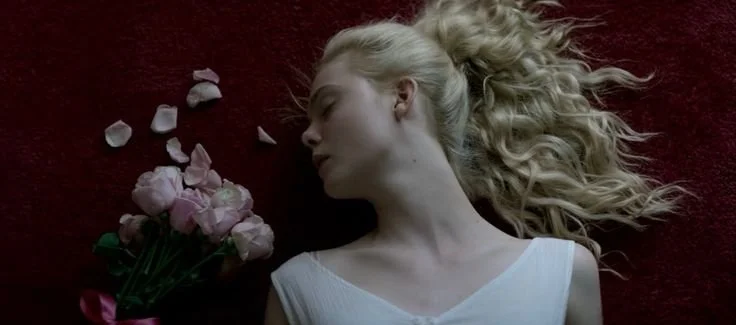
When we first meet Jesse, played by Elle Fanning, she is dressed in gentle, romantic clothing that reflects her innocence and youth. She wears flowing gowns, delicate lace, and soft pastels like faded pinks and creams. Her hair is loosely styled, and her makeup is minimal, highlighting her natural features. The spaces she occupies: a quiet hotel room, an almost empty photo studio, and a rooftop at dusk, are calm, sterile, and softly lit. These settings often show her alone, emphasizing her vulnerability and purity.
Jesse’s clothes in these early scenes do more than cover her body; they communicate an ideal of beauty. She represents the kind of perfection the fashion industry craves but has not yet fully realized. Many of her outfits are slightly too large or loosely fitted, hinting that she is still adjusting to this new world. Her wardrobe reflects her position between innocence and becoming part of a highly stylized, demanding environment.
THE RUNWAY AS A MIRAGE
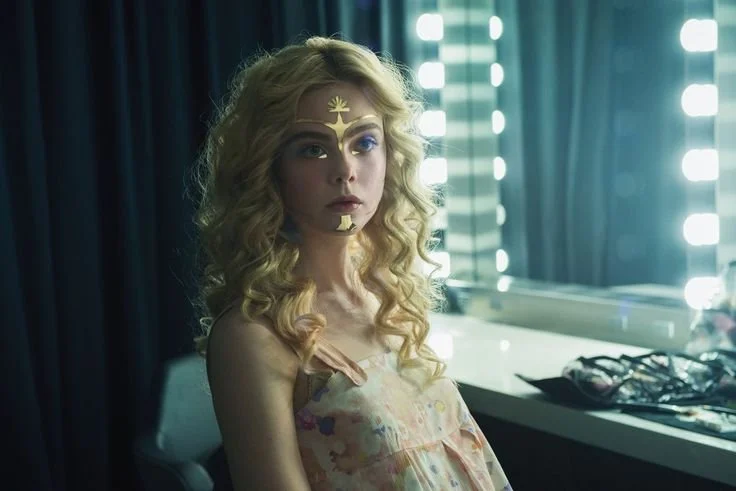
Once Jesse enters the fashion industry, the film’s visual style shifts dramatically. The soft pastels and natural lighting of her earlier world are replaced by bright, artificial colors, strong contrasts, and hyper-stylized settings. The runway scenes are filled with electric blues, vivid reds, and geometric designs, creating a cold, abstract space. Sounds are muted, and reflective surfaces multiply her image, turning Jesse from a girl into a symbol of beauty. As the visual colors grow sharper and unnatural, Jesse’s innocence dramatically fades. In this way, Refn uses color and light to chart Jesse’s descent from purity to self-obsession.
In these moments, fashion takes on a spiritual quality. The camera lingers on her makeup, her skin, and the textures of her clothing, treating these elements almost like sacred objects. Her outfits appear sculptural and otherworldly, sometimes unsettling. The combination of clothing, lighting, and camera angles blurs the line between fashion as art, using fashion as a tool for obsession, showing how her image becomes both desirable and dangerous.
FASHION AS EERIE HORROR
By the third act, Jesse has transformed both physically and mentally. Her wardrobe becomes darker and sharper, with blacks, metallics, and deep crimson dominating her look. The clothes are sleek and form-fitting, signaling confidence that borders on arrogance. Her expressions harden, and her makeup grows more defined, showing that her innocence has been replaced by awareness of her power and beauty.

Image Courtesy: Vanity Fair
The lighting and production design intensify, with neon lights, deep shadows, and bold, almost violent colors. Jesse is often framed in front of geometric, shimmering shapes, including a triangle that marks her rise as a style icon. In one striking moment, she kisses her reflection, and mirrors multiply her image, making her presence both overwhelming and mesmerizing. At this point, Jesse is no longer just a person or model; she has become a product and a symbol. Her wardrobe and styling now convey power, obsession, and the darker side of beauty, completing her transformation from innocence to something unsettling and unforgettable.

Strike Out,
Writer: Kavya Akkiraju
Editor: Daniela Mendoza
Graphic Designer:
Tallahassee