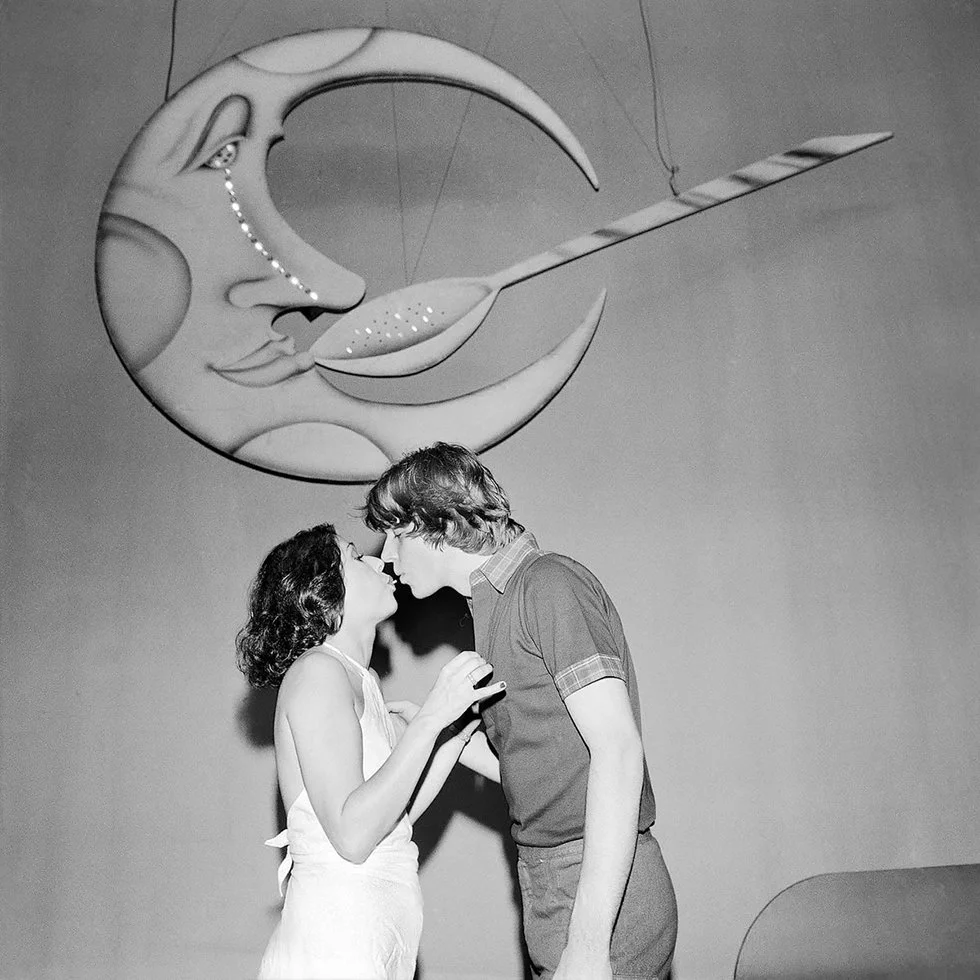
Image Courtesy: Meryl Meisler
The genre of dance music, specifically, has a history of becoming popular when people need somewhere to release their stress. In the 1970s, at the start of disco music, the country faced economic hardships and a financial crisis where high unemployment was paired with economic inflation following the end of the Vietnam war. Coincidence? Both times, dance music was seen as an escape from the grim reality that we faced then, and now.
Let’s talk about the historic phenomenon of how disco music has made a comeback this past year, starting with its evolution.
New York City nearly went bankrupt in 1975, following the end of the Vietnam war, as shrinking tax revenue and the loss of manufacturing jobs forced deep cuts to police, fire and public services. Those cuts landed hardest in poorer Black and Latino neighborhoods. These groups already faced systematic racism and searched for a safe haven alongside LGBTQ+ communities battling homophobic harassment. Together, they used abandoned buildings from the economic decline, as underground club scenes, and used dancing to disco music, emerging from the root of soul and funk rhythms in African and Latin communities, as a spiritual release from stress.
Disco became a mainstream force, peaking between 1977 and 1979, before declining as mass production of the genre left listeners drained. It also faced strong backlash from rock fans. One example includes “Disco Demolition Night”, a 1979 event organized by White Sox promotions director Mike Veeck and rock DJ Steve Dahl, in which a stadium of over 50,000 attendees was asked to bring disco records to be destroyed in controlled explosions between games.
There were many reasons behind the hate of disco music, partly from the underlying racism towards the marginalized groups who built the scene, but also due to the fact that disco music started to grow into an elitist standing, which unsettled rock culture fans who were used to casual bands in dive bars. Strict door policies, expensive designer clothing, and exclusivity in nightclubs emerged from disco’s high-stakes lifestyle, most notably at Studio 54.
Studio 54, a reconstructed opera house from 1927 in midtown Manhattan, became one of the most exclusive and famous disco clubs. “The Man On The Moon” was an iconic art piece that hung above the dance floor, featuring a smiling crescent man in the moon and a glowing silver spoon at its nose, representing the widespread cocaine use of the 70s. Conservative and religious groups condemned disco culture due to its hedonistic qualities, adding to the hostility from rock fans.
Shortly after the collapse of disco music, a new term called “house music” came out of Chicago clubs in the mid 1980s in which DJs would take old disco records and modify them, leaning into a heavier and more hypnotic soundwave. The idea of house music spread to neighboring cities, with Detroit developing techno, and New Jersey developing garage house. In 1987-1989, House Music traveled to the UK and absolutely exploded, fueling rave culture in the youth and in the party scene of Ibiza.
The 1990s took a different turn with hip hop dominating the charts and decentralizing dance music. By the 2010s, however, electronic music returned in the form of dubstep and bass-heavy EDM, becoming a huge part of American culture through music festivals.
Today, in 2026, house music has become a dominant force in the industry and among young people. On the dance floors I’ve been to, hip hop plays less as house returns. Many clubs now host both “house nights” and “disco nights”, which makes the story feel like a full circle: house music has become so dominant that it has revived the genre that created it.
Disco music is built to help us switch off the stress in our external lives and focus on the groove and tempo inside our own bodies. This pivot back to disco is not a random trend, it’s history repeating itself in times of stress, and you can see it right on the dance floor.
Strike Out,
Derin Alyanak
Boca Raton
Derin Alyanak is a content writer for Strike Magazine Boca. As a journalism student and self-diagnosed shopping addict, you can find her adding more items than she can afford to her Pinterest wishlist or curating another Spotify playlist. Reach her by email at @derinalyanak1@gmail.com or on Instagram @derinalyanakk