
From Costume Art to John Galliano: Where Did We Go Wrong?
Two weeks ago, I experienced the privilege of working at New York Fashion Week.
On one of the days of this experience, my friends and I were let out early. We decided to hit up the Met, making every fashion girl’s pilgrimage to The Costume Institute's annual spring show.
After spending a week learning all the inner workings of an industry, thoughts of it began to eat away at my mind. I was left peaceless, and everything was a lightbulb popping into my head reminding me of something I had experienced. Going to the Met nearly caused an existential implosion.
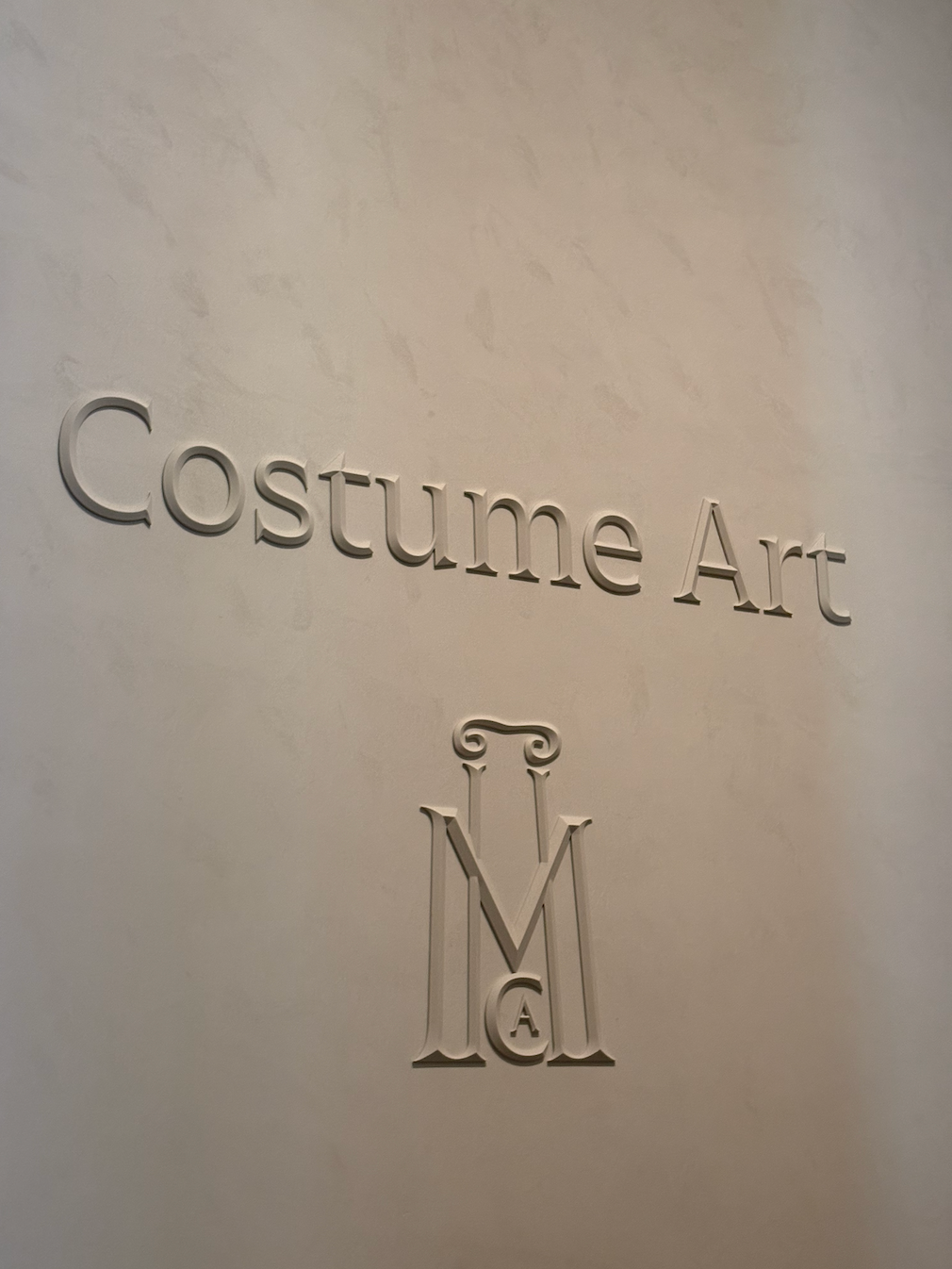
The entrance to the Met’s Costume Art exhibition.
Photo courtesy of Steffi Sarmiento Mena
Walking into the exhibition, all the memories of watching the Met Gala overflowed me. Curled up in my mom’s arms, sat on the couch, and tuned in to Vogue’s YouTube red carpet livestream: my judgmental glasses were on, and I was ready to critique. To my surprise, I was highly impressed by the fashions, and I was particularly moved by the Costume Institute’s commitment to making this theme as multi-dimensional as it is.
Even before having seen the exhibition in person, it rested on my mind. This summer, I went to the Victoria and Albert’s Schiaparelli exhibition in London. One of my largest complaints was the lack of body diversity in its mannequins. Some gowns looked unbelievably boxy only because they were too big for the mannequins. I immediately thought of the fact that I had seen how all these differently shaped and abled mannequins were featured at the Costume Institute.
Not only do I think that this year’s Met Gala theme and spring institution were crafted near perfectly, but also that the maturity of the concepts demonstrated in the theme revealed true potential for the fashion industry to climb out of the deep pit of public perception it has fallen into. As someone building a future in the industry, it gave me hope.
As I read the exhibition description, I was reminded of just why I was so moved the first time I found out about it. The Met describes the exhibition as one that “explores depictions of the dressed body across The Met’s vast collection, pairing garments with artworks to reveal the inherent relationship between clothing and the body.”
The Costume Institute showed all the intricacies behind the clothing and body relationship. The scale of curation that went into crafting this exhibition was unlike any I had ever seen. It was a journey of the body, immersing me into everything we know and love about it.
The Naked & Nude Body, The Classical Body, The Abstract Body, The Reclaimed Body and The Pregnant Body.
The Corpulent Body, The Disabled Body, The Inscribed Body and The Anatomical Body.
The Vital Body, the Aging Body, the Mortal Body and the Epidermal Body.
Each was a separate world one could enter while visiting this exhibition.
Looking at each piece felt like a gateway. One where I could crawl into each concept and rest on the thought of it. At the same time, what gnawed at me was just how impressive everything about this was in comparison to what was originally supposed to be next year’s theme: John Galliano: Horizons.
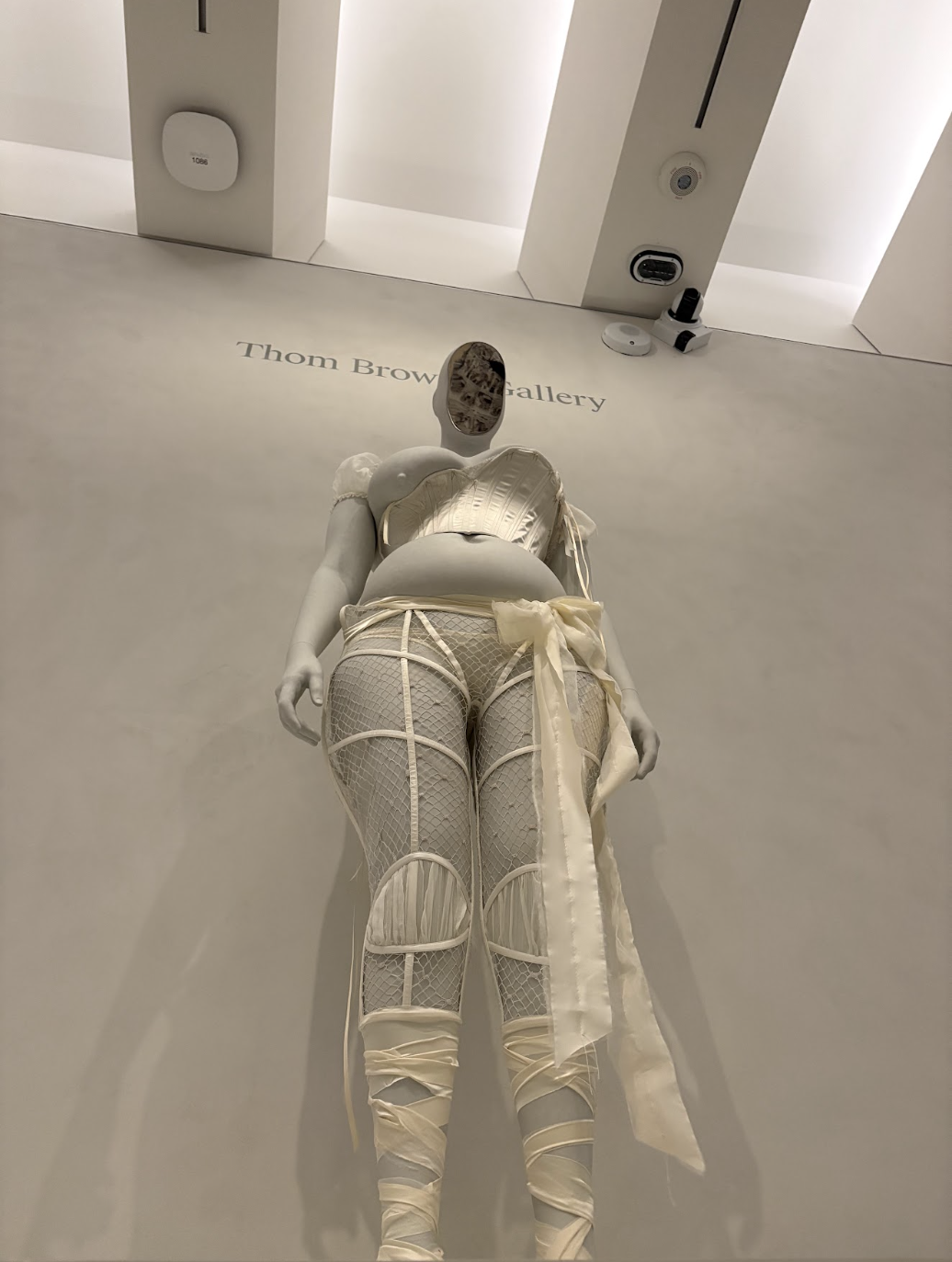
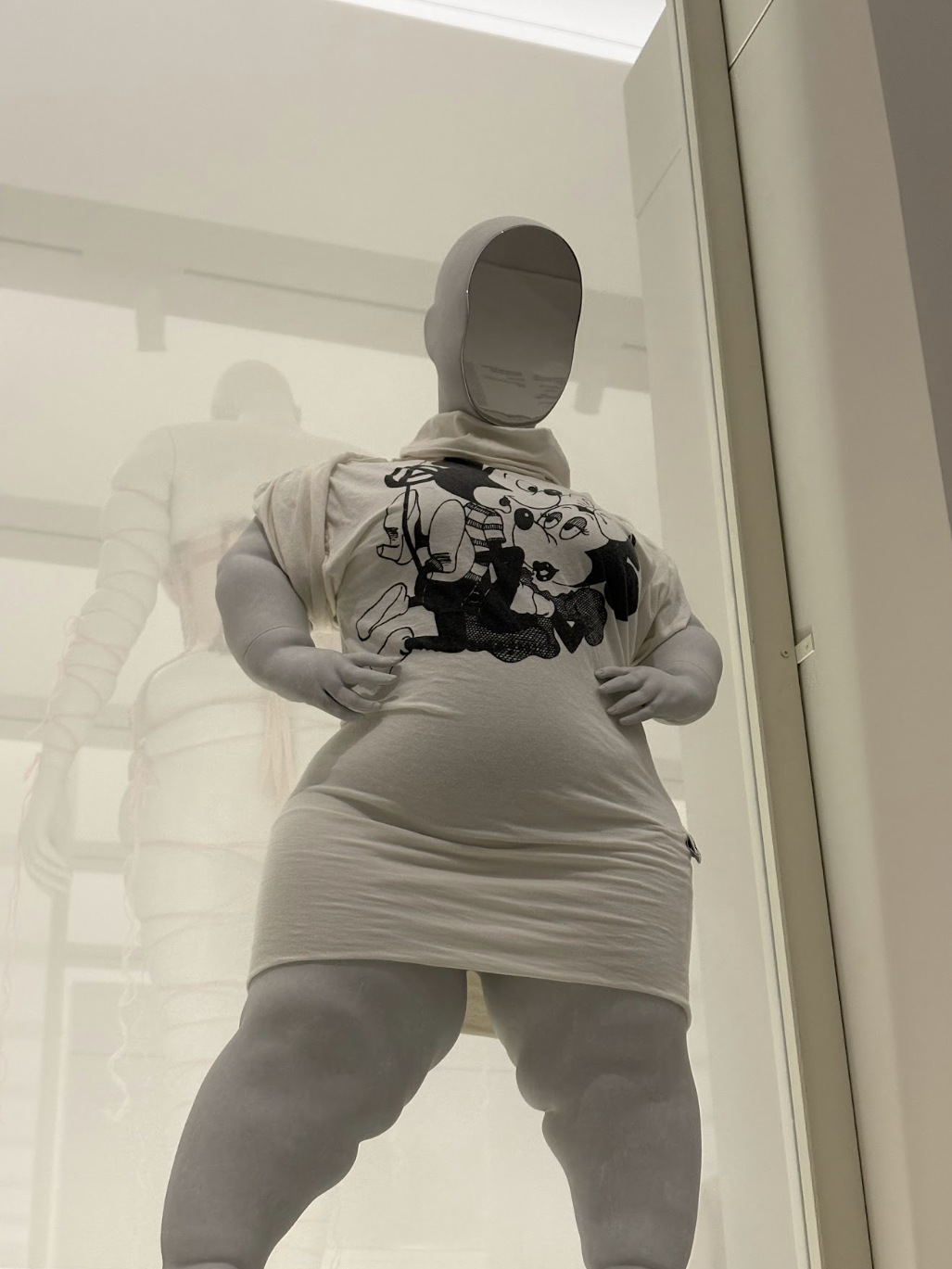
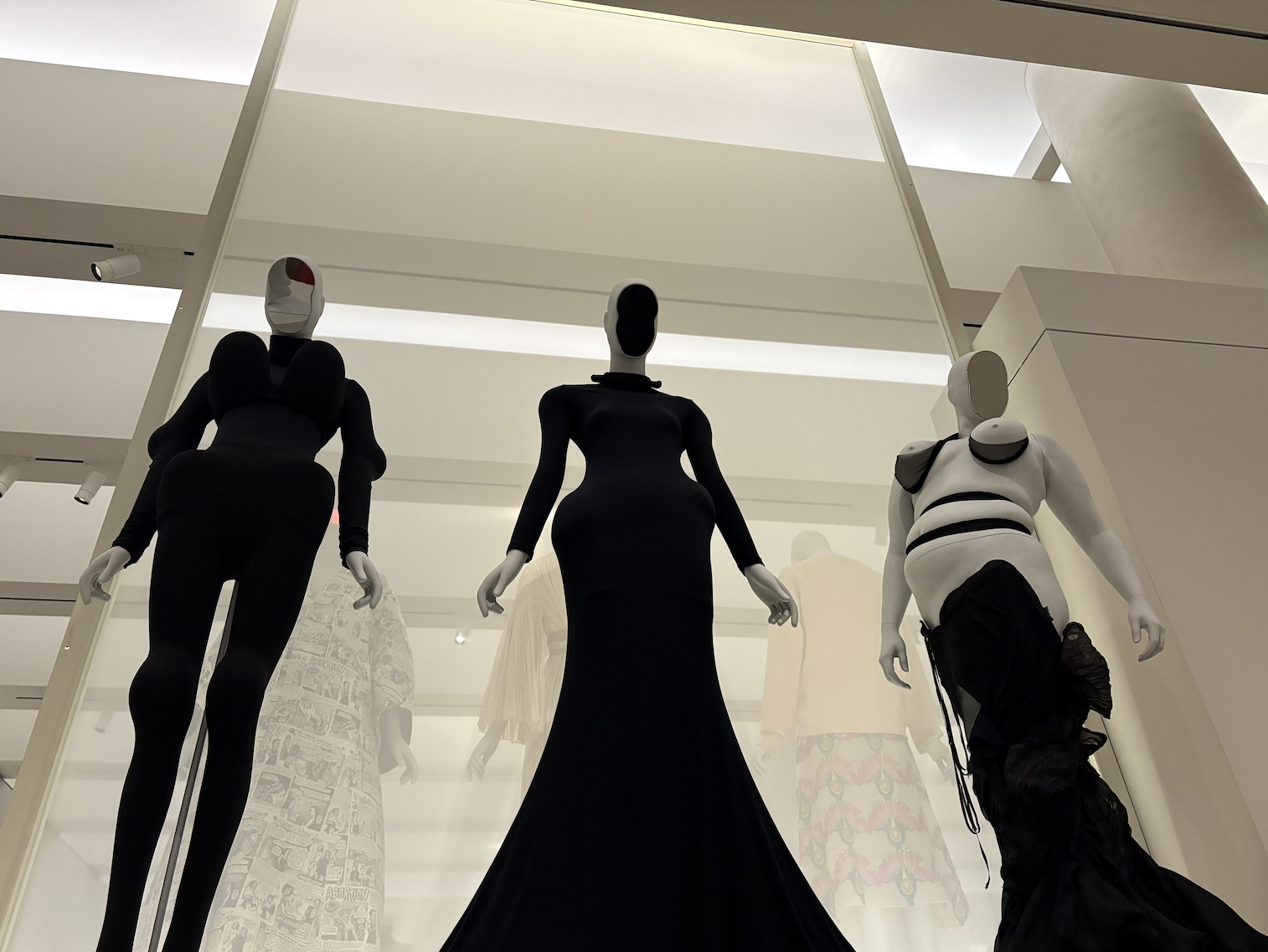
Differently molded mannequins don avant-garde garments at the Costume Art exhibition.
Photo courtesy of Steffi Sarmiento Mena
It got to the point where I was barely focusing on the exhibition anymore. How could something that brought me to tears be followed up by a collection as worldly and superficial as just John Galliano’s designs? He might be responsible for some of fashion’s most extravagant pieces, but that does not mean that his designs can rival an exhibition that bridges inclusivity, fashion design and fine art.
Similarly to the Karl Lagerfeld theme from 2023, honoring a controversial past fashion figure does absolutely nothing to prevent criticism from the court of public opinion. It also doesn’t help when the 2024, 2025 and 2026 themes have been some of the best we have seen in Met Gala history.
In 2024, the theme was “Sleeping Beauties: Reawakening Fashion,” which focused on garment preservation and placed historical emphasis on dressing. The 2025 theme was “Superfine: Tailoring Black Style,” and the Costume Institute put together a highly informative exhibit on the history of Black fashion. It was not even that the outfits were particularly good; it was simply the fact that the themes were so relevant and actually important to discuss.
In the context of today’s hostile climate toward the fashion industry, the world quickly loses faith at just about any faulty decision. This was apparent almost immediately after the John Galliano theme and exhibition were announced. External viewpoints arrived to strike down everything surrounding the fashion conversation.
In 2011, Galliano was convicted in France for the hate crime of making public antisemitic and racist insults. He was at the height of his career as creative director at Christian Dior. After his conviction, he was fired. One would think that this was the last we would hear of him.
Of course, like all forms of evil, this one resurrected, too.
He became creative director of Maison Margiela from 2014 to 2024 and has now started working with Zara.
There are many mixed opinions on his situation. After recovering from addiction, which is what the industry attempted to use as an excuse for his hate speech, it is said that he met with Jewish community leaders and rabbis to earn forgiveness and learn about the history of their struggles. This could be true or could just be a front to get back into the limelight. Aside from the fact that the average person will not know or care about what John Galliano did or what his rehabilitation process was, having someone with such a rocky past at the forefront of fashion’s biggest night is probably the worst look the Costume Institute has ever worn.
The excuse of the season has involved people hiding under the guise that because Galliano is this visionary, he is to be honored regardless of what he did. I raise that his work was genuinely not influential enough to overlook his incredibly recent past. I mean, it’s only been 15 years. At least allow him to suffer a second longer.
In New York Times’ writer Jacob Gallagher’s article, “Can a Fashion Designer be a Genius,” New York Times Styles editor Stella Bugbee said, “[Galliano] treated multicultural dress codes as costumes to be borrowed at will. And I’m unable to defend couture inspired by extreme poverty. There can be brilliance in pastiche, but are people conflating decadence and provocation with genius?”
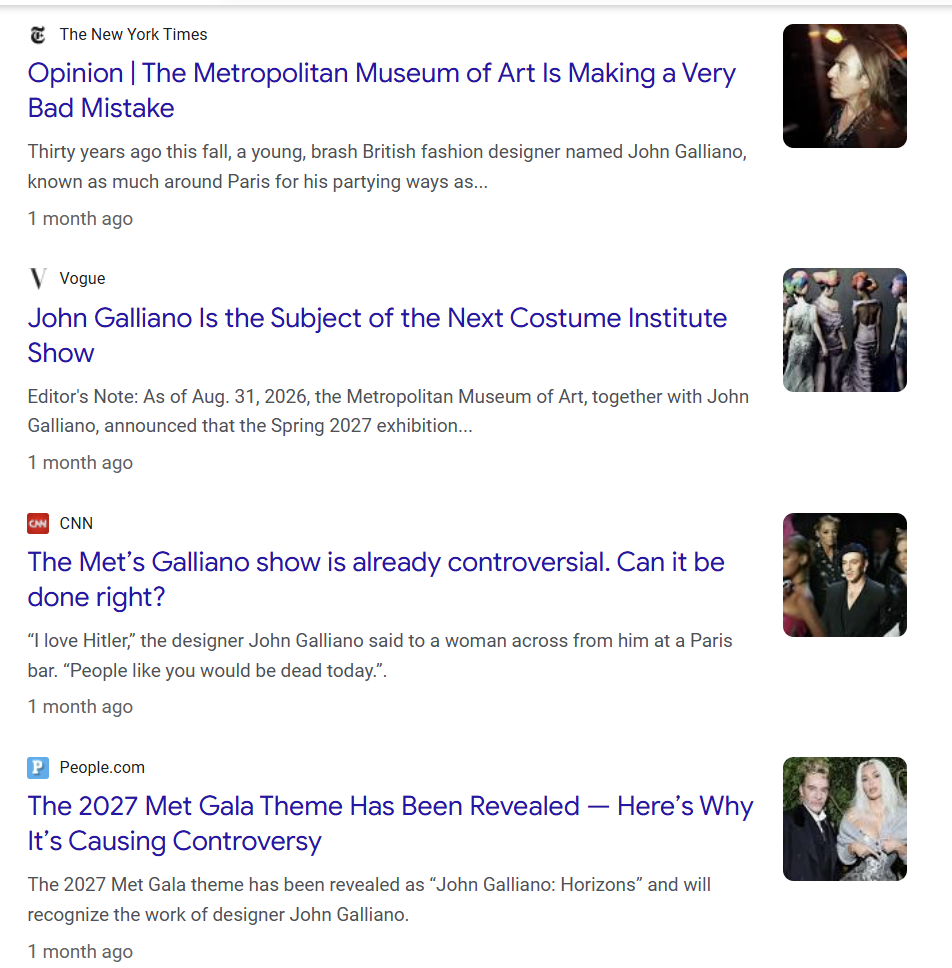
A screenshot of the News tab on Google upon searching “John Galliano Met Gala.”
Photo courtesy of Steffi Sarmiento Mena
Aside from how outlandish the thought of focusing on someone so controversial was, the theme in itself dulls in comparison to what the Costume Institute has come up with in recent years.
I’ve heard defenders of the theme say that one can only come up with so many themes before running out and choosing a designer, and I couldn’t think of a statement that is more untrue. In a world full of inspiration, beauty, creativity and diversity, is there nothing or no one more worthy than John Galliano? To have as a theme for an event that sets the tone for how the public will perceive the fashion industry for the year?
The Met has managed to go from a concept as outstanding and intricate as the execution of Costume Art to a failed attempt at John Galliano. As of now, there are many questions for the Costume Institute and for the fate of the fashion industry as a whole.
Strike out,
Writer: Steffi Sarmiento Mena
Editor: Reagan Alapa
Copy Editor: Annalise Bodine
Steffi Sarmiento Mena is a writer for Strike Magazine Gainesville. Walking through Plaza like it's Bryant Park and talking like she's Joan Rivers, she makes fashion a problem in everyone's lives. To reach her, dm her on Instagram @raspberrymilkchocolate or send an email to steffismena@gmail.com
